

Domestic Institutions Continue to Drive Indian Stock Market Growth
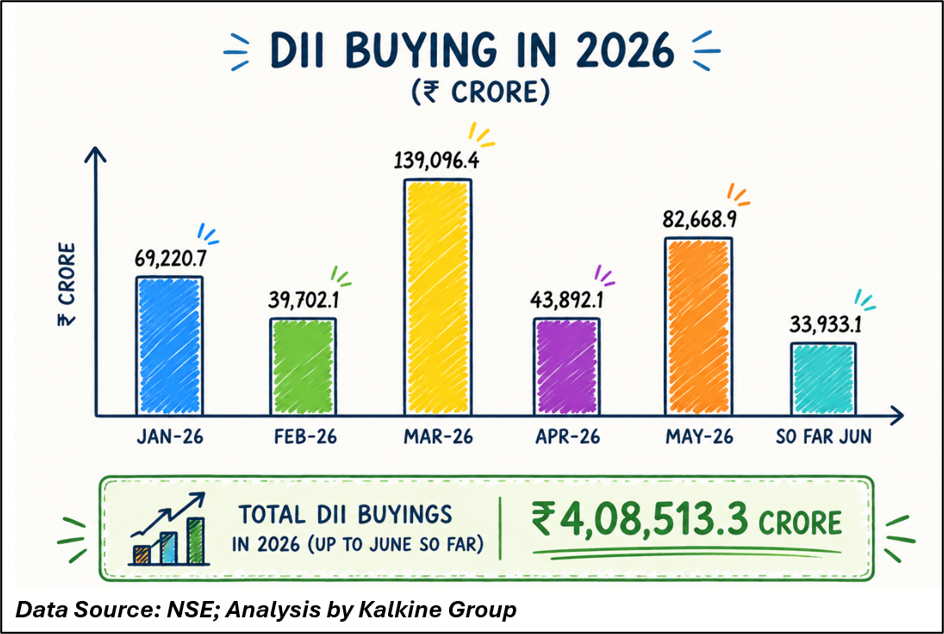
Domestic Institutional Investors (DIIs) have emerged as the backbone of the Indian equity market, investing more than ₹4 lakh crore into stocks during the first five months of 2026. The milestone highlights the growing influence of domestic capital in supporting markets amid fluctuating global investor sentiment and continued foreign portfolio outflows.
The robust inflows underscore a structural shift in India's capital markets, where mutual funds, insurance companies, pension funds, and other domestic institutions are increasingly shaping market direction. Analysts believe sustained participation from local investors has helped absorb volatility and maintain liquidity despite challenging global conditions.
Record-Breaking Trend Continues
The latest investment figure builds on a remarkable trend witnessed over the past few years. Domestic institutions invested approximately ₹7.75 lakh crore in 2025, marking the highest annual inflow on record. Before that, DIIs invested around ₹5.23 lakh crore in 2024, which was also among the strongest yearly inflows ever recorded.
In comparison, DII investments stood at approximately ₹1.82 lakh crore in 2023 and ₹2.76 lakh crore in 2022, illustrating the rapid acceleration of domestic participation in Indian equities.
Why DII Investments Matter
Domestic Institutional Investors play a critical role in stabilizing the market. Unlike foreign investors, whose investment decisions are often influenced by global economic events, DIIs typically adopt a longer-term approach focused on India's growth story. Their consistent buying activity often cushions the impact of foreign selling pressure and supports overall market sentiment.
The growing popularity of systematic investment plans (SIPs), rising retail participation through mutual funds, and increasing household financial savings have strengthened the investment firepower of domestic institutions. These factors continue to channel substantial capital into the equity markets on a regular basis.
Domestic Money Gains Market Influence
The increasing dominance of domestic investors is also reflected in ownership patterns. DII holdings in several benchmark companies have reached record levels, highlighting a significant transformation in market dynamics. Local institutions are gradually becoming a more influential force in determining stock market trends and valuations.
Market experts believe this shift could reduce the historical dependence on foreign capital and create a more resilient investment ecosystem for India's long-term growth.
Outlook for the Indian Equity Market
With domestic inflows remaining strong and retail participation continuing to expand, analysts expect DIIs to remain a key pillar of support for Indian equities throughout 2026. While global uncertainties may continue to impact foreign investment flows, the growing strength of domestic capital could help sustain market stability and support long-term wealth creation opportunities.
Frequently Asked Questions (FAQs)
- What are Domestic Institutional Investors (DIIs)?
DIIs are Indian financial institutions such as mutual funds, insurance companies, banks, and pension funds that invest in domestic financial markets.
- How much have DIIs invested in Indian equities in 2026?
DIIs have invested more than ₹4 lakh crore in Indian equities during the first five months of 2026.
- Why are DII inflows important for the stock market?
DII inflows provide liquidity, support market stability, and often offset foreign investor selling during periods of volatility.
- What drove the rise in domestic investments?
Increasing SIP contributions, growing mutual fund participation, and rising household financial savings have contributed significantly to DII inflows.
- Can DIIs offset FII selling?
Yes. In recent years, strong DII buying has frequently absorbed the impact of foreign investor outflows, helping stabilize Indian equity markets.