

Highlights
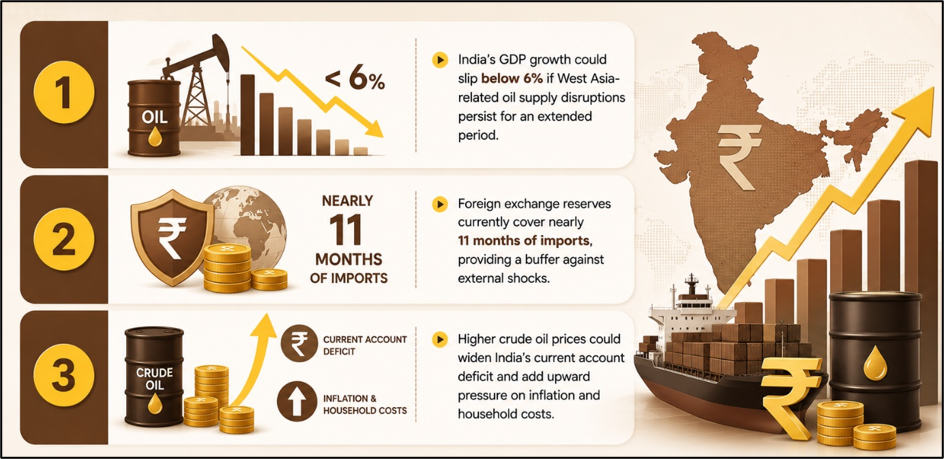
- India’s growth could fall below 6% if oil disruptions persist for months.
- Higher crude prices may increase inflation and pressure household spending.
- Government finances, currency stability, and imports remain under close watch.
India’s economic outlook remains closely linked to developments in West Asia, particularly the impact of the ongoing conflict on global energy markets. Chief Economic Adviser (CEA) V. Anantha Nageswaran has indicated that while India’s economy has remained resilient so far, a prolonged disruption in oil supplies could create challenges for growth, inflation, and fiscal management.
The warning comes as policymakers assess the implications of higher crude oil prices and uncertainty surrounding energy supplies from the Gulf region, a critical source of India's energy imports.
Source: Analysis by Kalkine
Oil Prices Remain the Biggest Concern
According to Nageswaran, the primary risk facing India is the possibility of a sustained increase in crude oil prices if the conflict continues into the second half of the year. While oil prices initially surged following the outbreak of tensions, they later moderated closer to previous levels. However, prolonged disruptions to production and refining activities could reverse that trend.
Global estimates discussed in various market circles suggest crude prices could rise significantly if geopolitical tensions escalate further. Such a scenario would affect both importing countries and global economic activity.
Growth Risks Under a Prolonged Conflict
The CEA stated that continued disruptions to oil production and shipping routes could slow economic growth. In a severe scenario, India’s growth rate could slip below 6%, reflecting the impact of higher input costs, reduced consumer spending, and weaker business activity.
Economists and policymakers have also highlighted broader risks from the conflict, including slower trade activity, elevated logistics costs, and increased pressure on external balances. These factors could affect economic momentum if uncertainty persists for an extended period.
Inflation Pressures Could Increase
Higher crude oil prices tend to influence transportation, manufacturing, and logistics costs across the economy. As costs rise, businesses may absorb part of the burden or pass it on to consumers through higher prices.
Nageswaran noted that inflationary pressures could emerge if consumers ultimately bear these additional costs. Rising fuel expenses could also affect household budgets, reducing discretionary spending and impacting overall economic activity.
Recent forecasts have already pointed to increasing inflation risks due to higher fuel and food costs amid global uncertainties.
Impact on Government Finances
The government's fiscal position could also come under pressure if authorities decide to absorb part of the increase in energy costs. Subsidies, tax adjustments, or other support measures may affect fiscal calculations and borrowing requirements.
Nageswaran indicated that policymakers are monitoring developments closely and may consider additional support if conditions worsen. However, authorities currently prefer a measured response rather than large-scale interventions.
Forex Reserves Provide a Buffer
One area of relative comfort is India's foreign exchange reserve position. The CEA noted that reserves currently cover nearly 11 months of imports, providing a cushion against external shocks and helping manage volatility arising from global uncertainties.
He also stressed that India is not facing circumstances comparable to the balance of payments crisis experienced in 1991. The country's reserve position and precautionary policy measures provide additional flexibility during periods of global stress.
Currency and External Sector Challenges
The Indian rupee has experienced pressure alongside several other Asian currencies. According to the CEA, global investors remain cautious about emerging markets due to geopolitical risks and energy market uncertainty.
A prolonged period of elevated oil prices could widen India's current account deficit and increase demand for foreign currency to pay for imports. Such developments may place additional pressure on the rupee and external balances.
Four Key Risks to Monitor
- Sustained crude oil prices above recent levels.
- Disruptions to Gulf energy production and refining.
- Higher inflation reducing household purchasing power.
- Widening current account deficit and rupee pressure.
Outlook Depends on Energy Markets
The CEA emphasized that energy prices and supply conditions remain the most significant variables for India's economic outlook. While current indicators suggest resilience, the duration and intensity of the West Asia conflict will play a major role in determining future growth and inflation trends. Policymakers continue to monitor developments while relying on reserves, economic buffers, and targeted measures to manage emerging risks.
Summary
India's economic outlook remains tied to developments in West Asia and global energy markets. Chief Economic Adviser V. Anantha Nageswaran has identified crude oil prices as the most significant risk. A prolonged conflict could increase inflation, affect government finances, pressure the rupee, and slow economic growth. While foreign exchange reserves provide support, future outcomes will largely depend on energy supply stability.
FAQs
Q: Why is crude oil important for India's economy?
A: India imports significant crude oil volumes, making energy prices important for inflation, growth, and external balances.
Q: What could cause India's growth to fall below 6%?
A: Prolonged oil supply disruptions, higher energy costs, inflation, and weaker economic activity could lower growth.
Q: How do foreign exchange reserves help during crises?
A: They help finance imports, support currency stability, and provide protection against external economic shocks.