

Highlights
- Lack of documentation can leave families struggling after an unexpected loss.
- Nominations help, but they may not determine final ownership of assets.
- A Will, asset records and shared financial awareness can ease transitions.
Many families depend on a single person to manage finances, investments, insurance policies, property records and banking relationships. While this arrangement may seem efficient, it can create significant challenges if that individual passes away unexpectedly.
In such situations, family members often face emotional distress alongside the practical burden of locating financial records, understanding asset ownership and completing legal formalities. Experts say that succession planning and proper documentation can help families avoid confusion during already difficult times.
 Source: Analysis by Kalkine
When Financial Knowledge Is Concentrated in One Person
In many households, one family member takes responsibility for managing investments, insurance policies, bank accounts, tax filings and property-related matters.
While other family members may be aware that assets exist, they may not know where documents are stored, which institutions hold the assets or how ownership is structured. This lack of visibility can create delays when survivors need to access funds, settle claims or transfer ownership.
The challenge often becomes more complicated when investments are spread across multiple platforms, financial records are stored digitally and passwords or access details are unavailable.
Why Nominations Alone May Not Be Enough
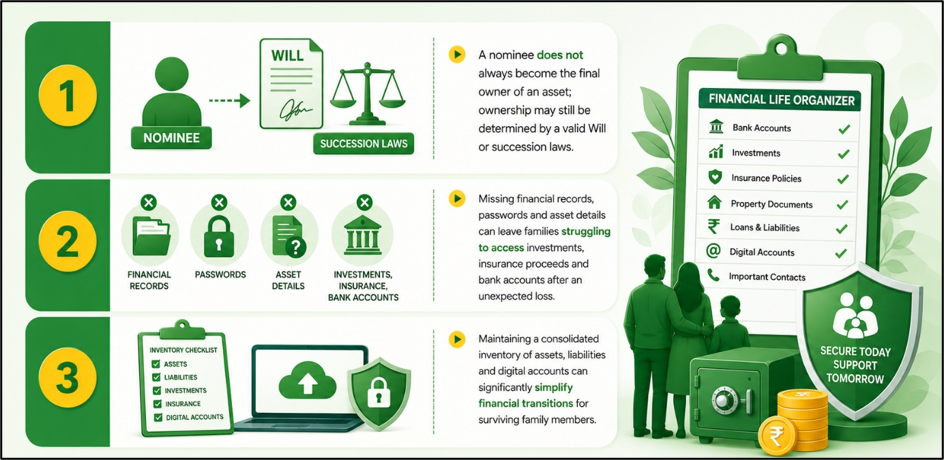
One of the most common misconceptions is that a nominee automatically becomes the legal owner of an asset. In many cases, a nominee acts as a custodian or recipient of the asset until ownership is determined according to a valid Will or applicable succession laws.
As a result, even when nominations exist, additional legal procedures may still be required before assets can be distributed among legal heirs. This distinction is particularly important because many families assume that adding a nominee completes the succession process.
Different Assets Follow Different Procedures
Each asset category can have separate documentation and transfer requirements. Bank accounts may require nominee verification and KYC compliance. Insurance claims often involve claim forms and supporting documents.
Demat accounts may require transmission procedures, while property transfers can involve mutation, legal heir certificates and other records. As a result, families dealing with multiple asset classes may have to interact with several institutions simultaneously, each with its own requirements and timelines.
The Importance of a Consolidated Asset Inventory
Maintaining a consolidated inventory of assets and liabilities is an important aspect of financial planning. Financial planners often recommend creating a comprehensive record that includes bank accounts, investments, mutual funds, insurance policies, property documents, locker details, loans, tax records, digital assets, online accounts, and emergency contact information.
Having all this information organised in one place can help family members quickly understand the household’s financial position and access essential documents when needed. Such a centralised record reduces confusion, simplifies financial management, and can be especially valuable during emergencies or unexpected situations.
Why a Valid Will Remains Important
A Will remains one of the most effective tools for succession planning. It helps clarify how assets should be distributed, identifies beneficiaries and can reduce the likelihood of disputes among family members. A properly drafted Will can also provide guidance regarding the management of assets and the protection of dependent family members.
This becomes particularly relevant in modern family structures involving dependent parents, financially independent daughters, blended families or unequal caregiving responsibilities.
Digital Assets Need Attention Too
An increasing share of personal finances now exists online. Investment accounts, insurance portals, digital wallets, email accounts, cloud storage services and financial applications often contain important records.
Without access information, family members may struggle to identify or recover assets. Maintaining secure but accessible records can help ensure continuity when unexpected events occur.
Starting the Conversation Before It Is Needed
Many families avoid discussions about succession planning because the subject feels uncomfortable. However, financial preparedness is not about expecting adverse events.
Instead, it is about ensuring that family members understand key responsibilities, know where important documents are located and can manage financial matters if necessary. Open communication, organised records and legal documentation can help reduce administrative burdens and provide greater clarity during challenging periods.
Key Risks
- Missing records can delay access to financial assets.
- Outdated nominations may create ownership complications.
- Absence of a Will can increase legal formalities.
- Lack of digital access may leave assets undiscovered.
Summary
When one family member manages all financial matters, surviving relatives may face significant challenges after an unexpected loss. Nominations help but do not always determine final ownership, while different assets often require separate legal procedures.
Maintaining an asset inventory, updating nominations, documenting digital assets and preparing a valid Will can simplify succession processes and reduce stress for family members during difficult times. Proper planning is ultimately about continuity, clarity and financial preparedness.
FAQs
Q: Does a nominee automatically become the owner of an asset?
A: Not always. Ownership may still be governed by a Will or applicable succession laws.
Q: Why is a consolidated asset inventory important?
A: It helps family members quickly identify accounts, investments, liabilities and important documents.
Q: What role does a Will play in succession planning?
A: A Will clarifies asset distribution, reduces ambiguity and can help minimise future disputes.