

Investor Stake Sale Triggers Near-Term Pressure; BlueStone's Profitability Milestone and Jewellery Market Opportunity Remain Key Positives
Shares of BlueStone Jewellery and Lifestyle Ltd. witnessed selling pressure on June 9 after a ₹300 crore block deal was launched by several early investors, leading to a sharp intraday decline in the stock. The transaction involved the sale of up to 58 lakh shares, representing nearly 3.8% of the company's outstanding equity, at a floor price of ₹520 per share.
While the discounted transaction weighed on investor sentiment in the short term, market experts view the development largely as a monetization event by early institutional investors rather than a reflection of any deterioration in the company's fundamentals.
The selling shareholders reportedly included prominent investors such as 360 ONE, Accel India III, IvyCap Ventures Trust, and Iron Pillar India Fund I. Importantly, the transaction was executed as a secondary sale, meaning BlueStone itself will not receive any proceeds from the stake divestment.
For long-term investors, the focus is likely to remain on the company's improving profitability, accelerating revenue growth, and its position within India's rapidly formalizing jewellery retail industry.
FY26 Marks a Major Inflection Point
BlueStone delivered one of its strongest financial performances in FY26, demonstrating that its omnichannel jewellery retail model is beginning to translate into sustained profitability.
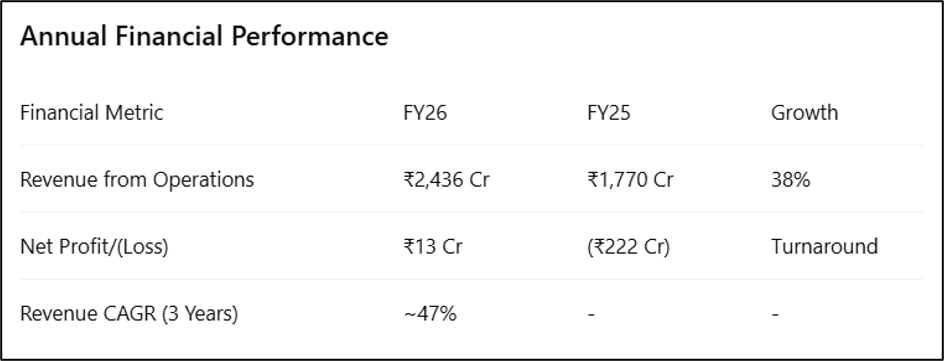
The company moved from a significant loss in FY25 to profitability in FY26, marking an important milestone in its evolution from a high-growth digital jewellery platform into a scalable consumer retail business.
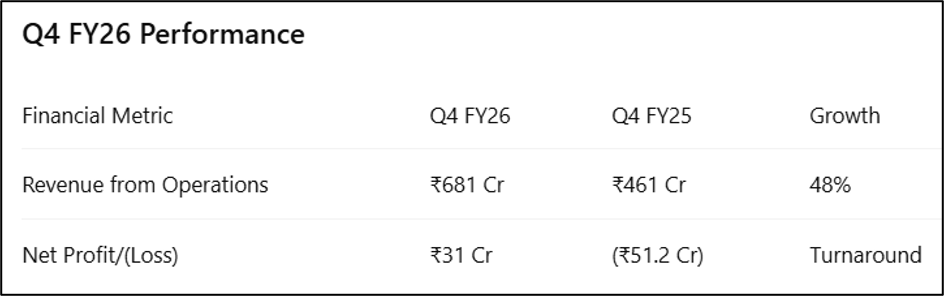
The March quarter further reinforced the strength of the operating model, with robust revenue growth translating into meaningful earnings expansion.
Why BlueStone's Growth Story Is Attracting Investors
Unlike traditional jewellery retailers that are primarily store-led, BlueStone has built a technology-enabled omnichannel ecosystem where online discovery and offline conversion work together to improve customer acquisition and engagement. According to the company's Investor Day 2026 presentation, the business is designed around changing consumer behaviour, where digital research increasingly influences jewellery purchases.
A Large and Expanding Market Opportunity
Management estimates that India's jewellery market could expand from approximately $75 billion currently to $130–140 billion by 2029, driven by rising affluence, formalization, and increasing demand for lifestyle jewellery beyond weddings.
The company also expects organized jewellery retailers to continue gaining market share from the unorganized sector, a trend that could benefit branded players such as BlueStone.
Strong Consumer-Centric Product Portfolio
BlueStone has built one of the largest design ecosystems among new-age jewellery retailers.
- More than 15,000 jewellery designs
- 20 product categories
- Over 220 sub-categories
- Presence across 150 gemstones and 13 material combinations
- Approximately 74% of the portfolio consists of studded jewellery
- Around 6,000 designs priced below ₹60,000
The diversified catalogue enables BlueStone to target both everyday jewellery purchases and occasion-based demand.
Technology at the Core
BlueStone's competitive advantage extends beyond product offerings. The company has invested heavily in technology infrastructure, AI-driven personalization, customer analytics, inventory optimization, and omnichannel engagement capabilities. The management believes technology is deeply integrated into sourcing, merchandising, design, retail operations, and customer experience rather than functioning as a standalone layer.
Rapid Store Expansion Model
One of the notable aspects of BlueStone's business model is store-level economics.
According to management disclosures:
- Operational breakeven typically achieved within 3-4 months
- Same-store sales growth of approximately 34% in Q4 FY26
- Strong store productivity and customer retention metrics
- Scalable omnichannel infrastructure supporting expansion
These metrics suggest that offline expansion is contributing meaningfully to profitability rather than merely driving top-line growth.
Technical Summary
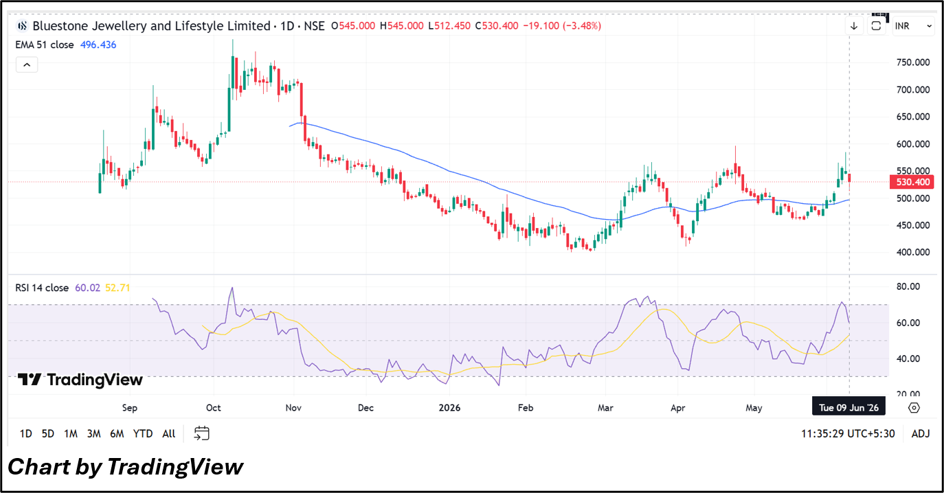
Bluestone Jewellery and Lifestyle Ltd. is trading at ₹530.40, remaining above its 51-day EMA of ₹496.44, indicating a positive near-term trend. However, the stock is witnessing profit booking after a recent sharp rally. RSI near 60 suggests moderate bullish momentum. Immediate support lies around ₹500, while resistance is placed near ₹550–580. Sustaining above the EMA could keep the recovery trend intact.
Investment Outlook
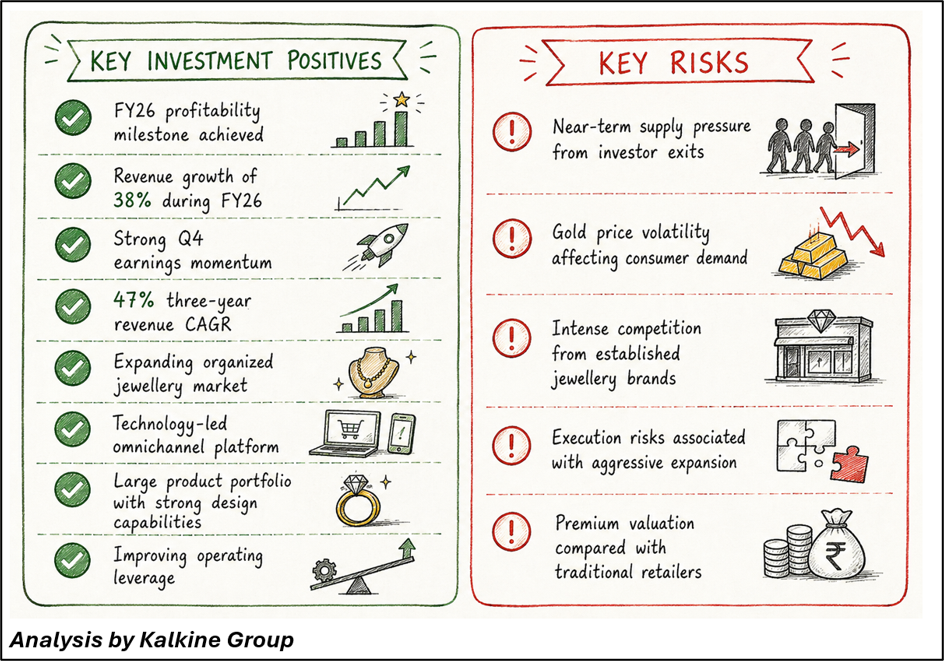
The recent block deal has introduced temporary volatility in BlueStone shares, but the company's fundamental trajectory remains encouraging. FY26 represented a watershed year, with the company delivering profitability, strong revenue growth, and continued market share gains within India's organized jewellery sector.
As consumer preferences shift toward branded jewellery, digital engagement increases, and organized players capture a larger share of the market, BlueStone appears well-positioned to benefit from these long-term structural trends.
While near-term stock performance may remain influenced by block deal overhang and broader market sentiment, the company's improving financial profile and scalable omnichannel model could continue to attract investor interest over the longer term.
FAQs
- Why did BlueStone shares fall on June 9, 2026?
The stock declined after a ₹300 crore block deal involving approximately 58 lakh shares was launched by existing investors at a discounted floor price. - How did BlueStone perform in FY26?
The company reported revenue of ₹2,436 crore and a net profit of ₹13 crore, compared with a net loss of ₹222 crore in FY25. - What was BlueStone's Q4 FY26 performance?
BlueStone posted revenue of ₹681 crore and net profit of ₹31 crore during Q4 FY26, supported by strong demand and operating leverage. - What are the key growth drivers for BlueStone?
Growth is driven by omnichannel retailing, store expansion, rising organised jewellery demand, technology integration, and an extensive product portfolio. - What is the long-term outlook for BlueStone?
The company is positioned to benefit from India's growing organised jewellery market, increasing digital adoption, and a shift toward branded jewellery consumption.