

India’s retail inflation edged higher in February 2026, with the Consumer Price Index (CPI) rising to 3.21% year-on-year, according to data released by the Ministry of Statistics and Programme Implementation. The increase marks a 47-basis-point rise from January 2026, when inflation stood at 2.74%. Despite the uptick, inflation remained relatively moderate, reflecting mixed price movements across food, housing, and personal care categories.
CPI Inflation Trends in February 2026
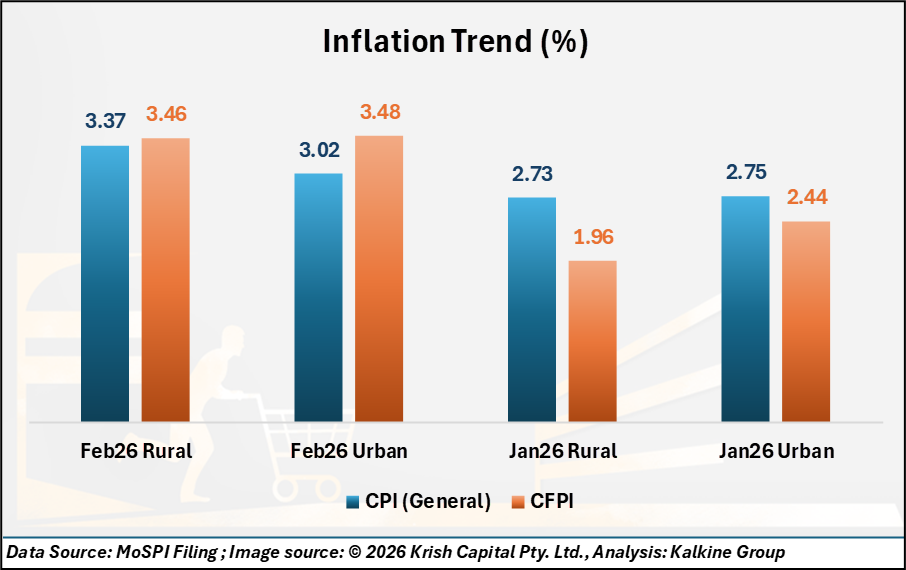
At the national level, the CPI index (base year 2024=100) stood at 104.57 in February 2026, slightly higher than 104.45 recorded in January 2026. Inflation differed marginally between rural and urban regions. Rural inflation was recorded at 3.37%, while urban inflation came in slightly lower at 3.02%.
The data highlights that rural areas continue to experience marginally higher price pressures than urban centers, mainly due to stronger fluctuations in food prices and essential commodities.
Food Inflation Moves Higher
Food inflation also showed an increase during the month. The Consumer Food Price Index (CFPI) rose to 3.47% year-on-year in February 2026, compared with 2.13% in January 2026. Rural and urban food inflation rates were nearly identical, recorded at 3.46% and 3.48% respectively.
While the broader food inflation rate increased, several vegetables experienced sharp month-on-month price corrections. Prices of tomato, peas, and cauliflower declined significantly compared with January levels. In fact, the vegetable category saw more than a 10% month-on-month drop in index values for these items during February.
Housing Inflation Remains Stable
Housing inflation remained relatively stable in February. The year-on-year housing inflation rate stood at 2.12%, with rural housing inflation at 2.43% and urban housing inflation at 2.00%. Stable rental costs and moderate energy prices helped keep housing-related inflation contained during the period.
Items Recording Lowest Inflation
Several food items continued to witness deflation due to improved supply conditions. The top items showing the lowest inflation at the all-India combined level included:
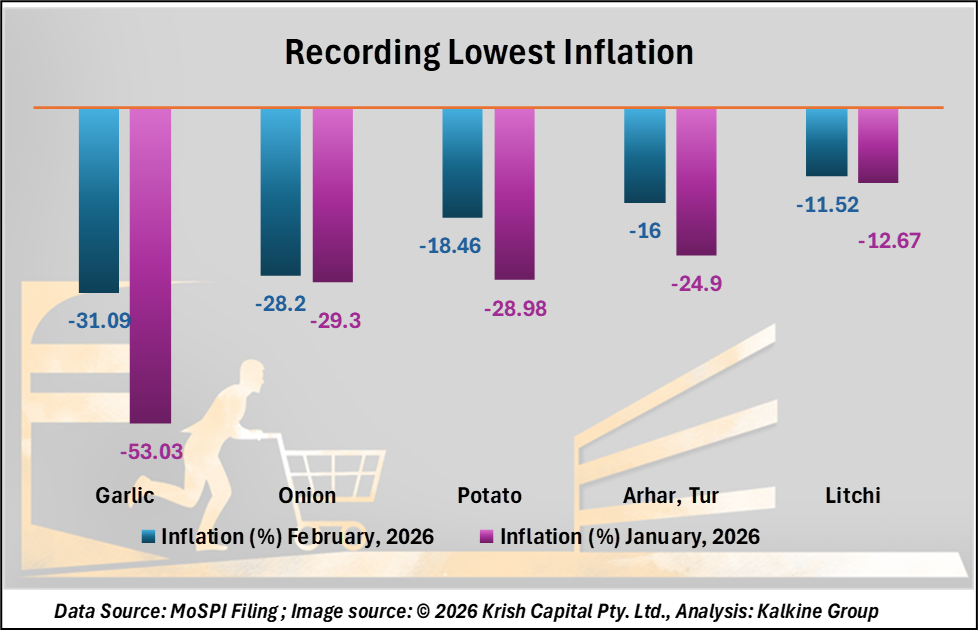
These declines suggest strong supply levels in agricultural markets and improved distribution during the month.
Items Showing Highest Inflation
On the other hand, certain commodity categories saw significant price increases. Precious jewellery and select agricultural commodities led the inflation chart in February. The top items recording the highest inflation included:
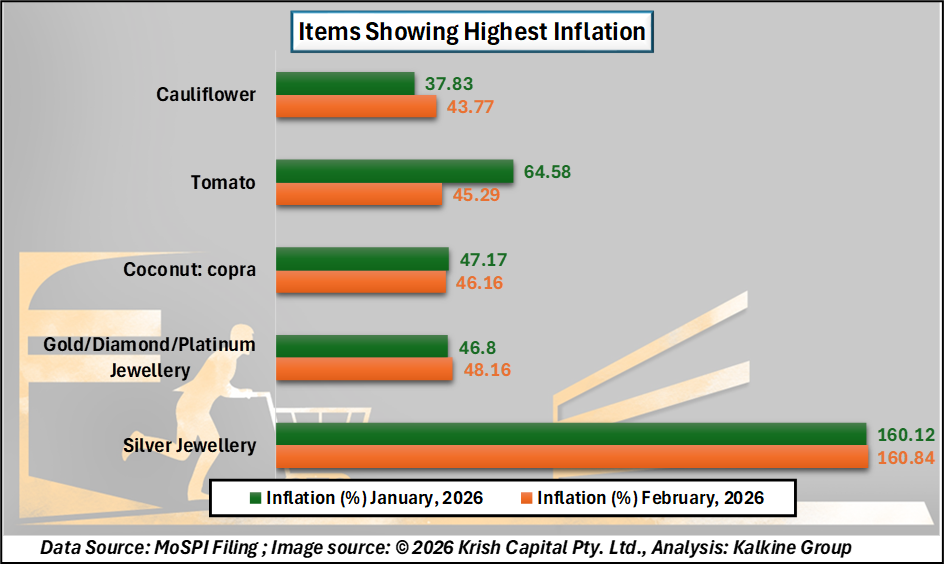
The surge in precious metal jewellery prices reflects global commodity price trends and continued demand in the domestic market.
Sector-Wise Inflation Overview
Division-wise inflation data showed that food and beverages inflation stood at 3.35%, while clothing and footwear inflation reached 2.81%. Inflation in health services remained moderate at 1.90%, and transport inflation recorded a slight decline of –0.05%, indicating relatively stable fuel and mobility costs.
However, personal care and miscellaneous goods and services recorded the highest inflation at 19.64%, driven primarily by strong increases in personal effects such as jewellery.

State-Level Inflation Trends
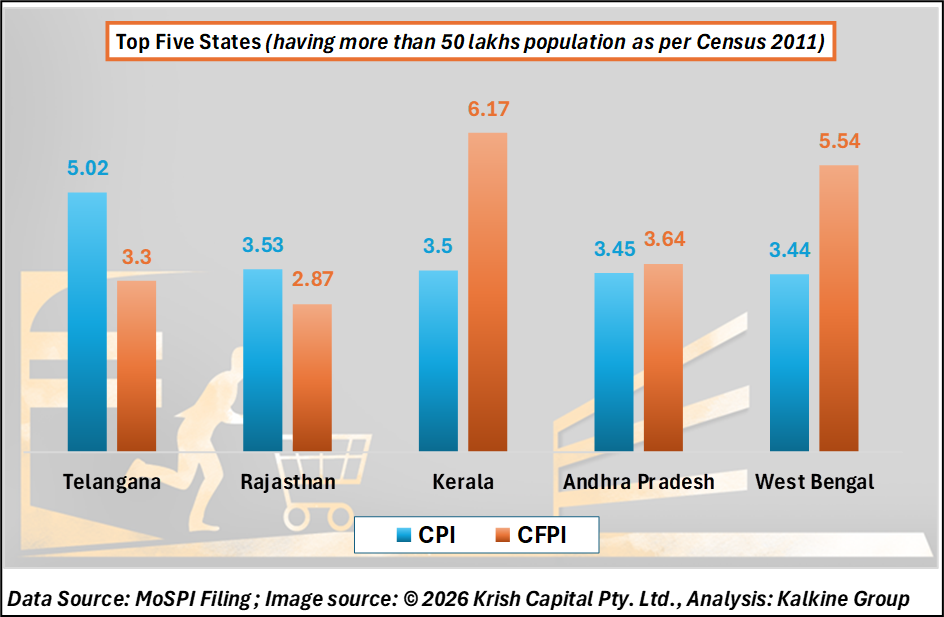
At the state level, inflation varied across regions. Telangana recorded one of the highest combined inflation rates at around 5.02%, reflecting stronger price pressures compared with the national average. Meanwhile, Delhi reported relatively lower inflation at about 1.96%, indicating more stable consumer prices in the national capital region.
Outlook
Although inflation rose modestly in February, it remains within a relatively comfortable range compared with historical levels. Falling prices of several food items helped offset increases in jewellery and select commodities. The next CPI data release for March 2026 is scheduled for 13 April 2026, which will provide further clarity on whether inflationary pressures continue to build or begin to ease in the coming months.