
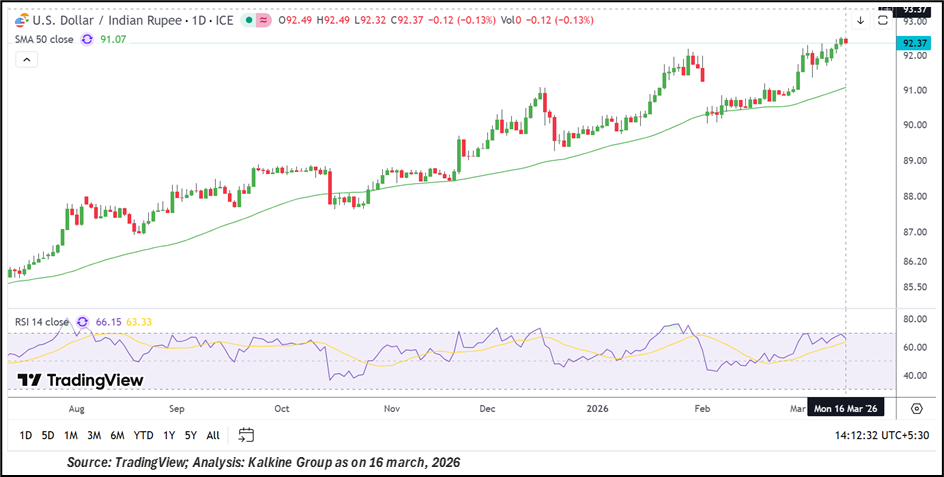
The Indian rupee is under pressure, recently trading near ₹92.37 against the US dollar, hovering close to its record lows. The currency briefly touched an intraday high of ₹92.49 before dipping to ₹92.32. A major driver of this weakness is the surge in global oil prices. WTI crude futures have surpassed $100 per barrel, the highest since July 2022, after US strikes on Iran’s Kharg Island, a hub handling nearly 90% of Iran’s oil exports. The Strait of Hormuz, a key oil transit route, remains effectively closed, increasing supply concerns and raising India’s import costs.
Foreign Investors Pull Out Big Money
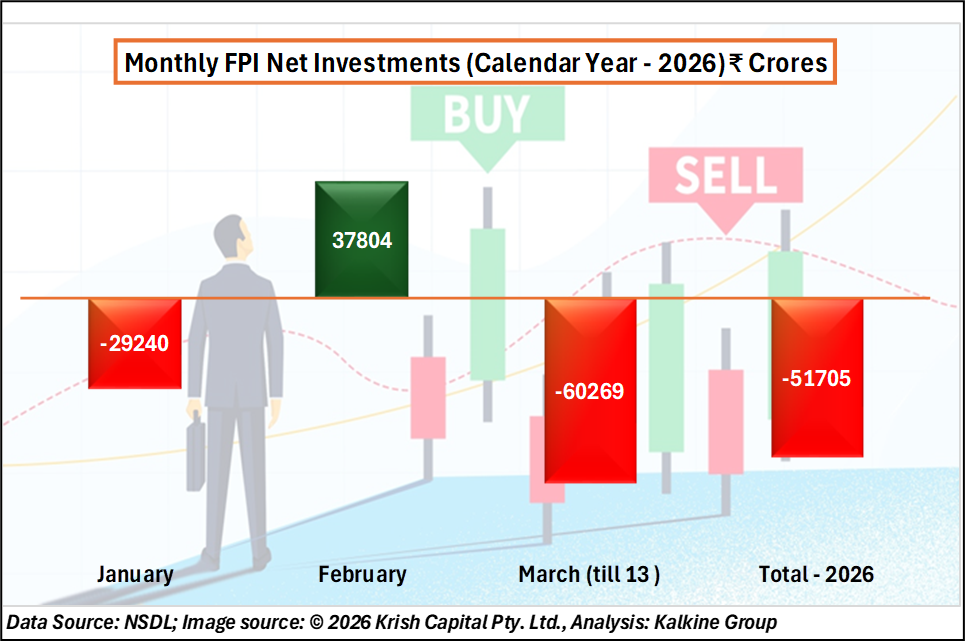
Foreign Portfolio Investors (FPIs) have added to the rupee’s decline. In January, FPIs were net sellers in equities, pulling out ₹35,962 crores. While February saw a temporary recovery with inflows of ₹22,615 crores, March witnessed massive equity outflows of ₹52,704 crores. Overall, cumulative FPI withdrawals in 2026 have reached ₹51,705 crores. This volatile sentiment is fueling pressure not only on the rupee but also on domestic equity markets, as investors move toward safer assets.
Domestic Markets Reflect Nervousness
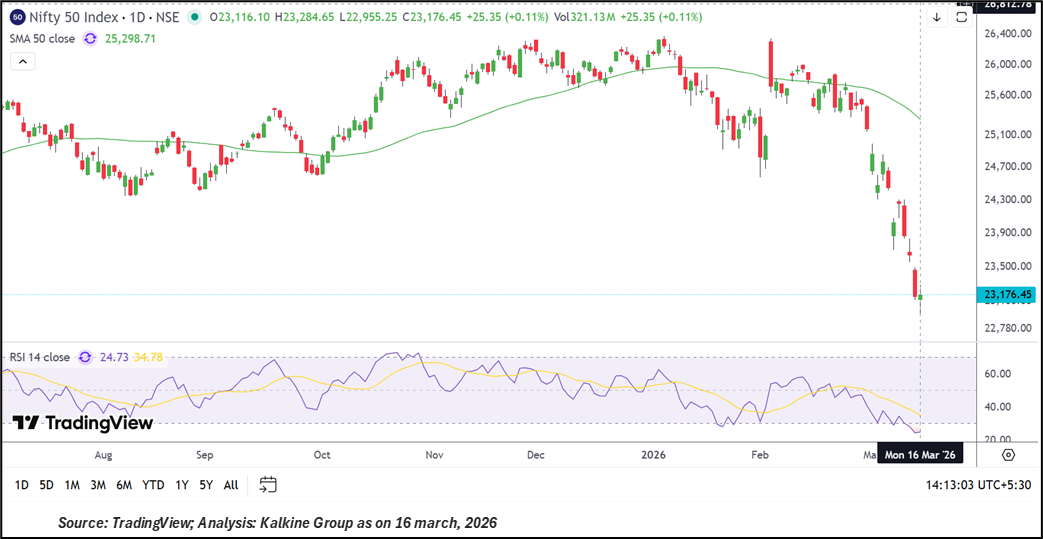
Indian stock markets have mirrored the currency’s stress. The Nifty 50 index is trading below its 50-day moving average of 25,298.71, following a pattern of lower highs and lower lows. Technical indicators, such as the 14-day Relative Strength Index (RSI) at 24.73, suggest oversold conditions, highlighting ongoing market weakness. Analysts identify short-term support for Nifty around 22,800–22,200, while resistance may appear between 24,200–24,800.
Technical Outlook Suggests Caution

Despite recent falls, the rupee remains above its 50-day moving average at ₹91.07, signaling that the broader trend is not entirely negative. Momentum indicators like the RSI at 66.15 suggest strong near-term momentum, but volatility is expected. Support levels for the rupee lie in the ₹91–₹90 range, while resistance could emerge between ₹94–₹95. Any further escalation in oil supply tensions or foreign outflows could push the rupee even lower.
Outlook:
The Indian rupee faces continued pressure amid rising global oil prices and persistent FPI outflows. Domestic markets remain cautious, with technical indicators signaling oversold conditions. While support near ₹91–₹90 could offer temporary relief, any escalation in geopolitical tensions or further foreign withdrawals may push the currency lower, keeping volatility high and market sentiment fragile in the near term.