
The Indian Premier League (IPL) 2026 is more than cricket — it's India's largest advertising and investment ecosystem. With record-breaking sponsorship deals, surging digital viewership, and a powerful April consumption spike, IPL 2026 is actively shaping stock market momentum and corporate marketing strategies across India.
This comprehensive guide covers the biggest IPL 2026 sponsorship deals, key sector trends, the "April surge" phenomenon, and how investors can identify stocks set to benefit most.
- IPL 2026 Sponsorship Overview
IPL 2026 has attracted one of the most diverse and high-value sponsorship lineups in the league's history. From legacy conglomerates to new-age fintech brands, corporate India — and global players — are betting big on cricket's most-watched property.
Key highlights:
- Tata Group continues as Title Sponsor (2024–2028 multi-year deal)
- JioStar (broadcaster) has onboarded 27 major sponsors across industries
- Franchise-level sponsorship revenue growing at ~20% year-on-year
- IPL's estimated brand valuation: ~$18.5 billion
The shift in 2026 is notable: traditional legacy industries are reclaiming premium ad inventory previously dominated by startups and fantasy gaming platforms.
- Key League-Level Sponsors in IPL 2026
|
Sponsor |
Category |
Role |
|
Tata Group |
Conglomerate |
Title Sponsor |
|
Angel One (NSE:ANGELONE) |
Fintech |
Official Partner |
|
RuPay |
Banking/Payments |
Payment Partner |
|
CEAT (NSE:CEATLTD) |
Tyres |
Strategic Timeout Sponsor |
|
Wonder Cement |
Infrastructure |
Umpire Partner |
|
JioHotstar / Star Sports |
Media & Streaming |
Broadcast Platform |
These partnerships reflect the IPL's ability to attract brands across every sector of India's economy, from financial services to infrastructure.
- IPL 2026 Franchise Sponsorship Highlights
Each IPL franchise operates as an independent commercial powerhouse. Here's a snapshot of the most notable team-level deals in 2026:
|
Franchise |
Key Sponsor |
Sector |
|
Royal Challengers Bengaluru (RCB) |
Nothing |
Consumer Electronics |
|
Mumbai Indians (MI) |
Lauritz Knudsen |
Industrial Automation |
|
Chennai Super Kings (CSK) |
Etihad Airways |
Aviation |
|
Kolkata Knight Riders (KKR) |
VIDA (Hero MotoCorp) |
Electric Vehicles |
|
Delhi Capitals (DC) |
Hero FinCorp |
NBFC / Financial Services |
|
Rajasthan Royals (RR) |
Waaree Solar |
Renewable Energy |
Mumbai Indians alone have secured 30+ brand partnerships, making them the most commercially active franchise in IPL 2026.
- Sector Trends Driving IPL 2026 Ad Spend
Shift from Startups to Legacy Industries
After years dominated by fantasy gaming and venture-backed startups, 2026 marks a clear pivot toward established industries. Tighter capital markets and a focus on profitability have pushed traditional sectors — cement, aviation, banking, and real estate — back into premium advertising slots.
Gaining sectors in IPL 2026:
- Cement and infrastructure
- Aviation and travel
- Banking, financial services, and insurance (BFSI)
- Real estate and manufacturing
Continued Dominance of Digital and Tech
Technology brands remain a powerful force in IPL advertising:
- Consumer tech (Nothing, Boat) targeting youth demographics
- Big Tech players (Google and gaming firms) using IPL for digital campaigns
- Streaming-first advertising through JioHotstar, as OTT metrics increasingly rival linear TV
Rise of New-Age Economy Sectors
IPL 2026 mirrors India's macroeconomic transformation, with strong representation from:
- Electric Vehicles (EVs): VIDA by Hero MotoCorp (NSE:HEROMOTOCO) (KKR sponsor)
- Renewable Energy: Waaree Solar (NSE:WAAREERTL) (Rajasthan Royals sponsor)
- Fintech and payments: Angel One (NSE:ANGELONE), RuPay
- Security and surveillance tech: CP Plus (NSE:CPPLUS)
These brands are leveraging IPL's mass reach for mainstream adoption — using cricket as a bridge between niche sectors and Bharat-level audiences.
FMCG and Consumer Brands Remain the Backbone
Fast-moving consumer goods (FMCG) continues to be among the highest spenders on IPL advertising, with brands like Coca-Cola, Bisleri, and Surf Excel (NSE:HINDUNILVR) capitalizing on match-time consumption habits and high-frequency viewer touchpoints.
- The IPL April Surge: Why Advertising Peaks Mid-Season
What Is the April Surge?
The "April surge" refers to the sharp spike in advertising spend, consumer engagement, and stock market momentum that occurs mid-IPL season — typically in April — when viewership peaks and brands activate conversion-focused campaigns.
Key Drivers of the April Surge
- Peak Viewership Windows
As IPL enters its high-stakes middle phase, daily match viewership hits its peak. This drives premium ad inventory pricing and higher competition for broadcast slots.
- Summer Consumption + Early Festival Spending
April's rising temperatures directly boost:
- Beverage and soft drink demand
- Packaged snack consumption
- FMCG promotional cycles
Combined with early festive spending patterns, this creates a powerful consumption window for advertisers.
- Staggered Campaign Activation
Savvy brands structure their IPL campaigns in phases:
- March: Brand awareness and recall
- April: Conversion-focused campaigns with offers and CTAs
- May (playoffs): Re-engagement and finale spikes
- Quick Commerce and Food Delivery Boom
Match nights fuel a dramatic spike in quick-commerce orders. Platforms like Zomato and Swiggy — along with restaurant chains — aggressively push IPL-linked offers during this period, boosting gross merchandise value (GMV) and customer acquisition metrics.
- IPL Sponsorship Economics: Why Brands Keep Investing
IPL remains one of the top five most valuable sports properties in the world, and its financials reflect that status.
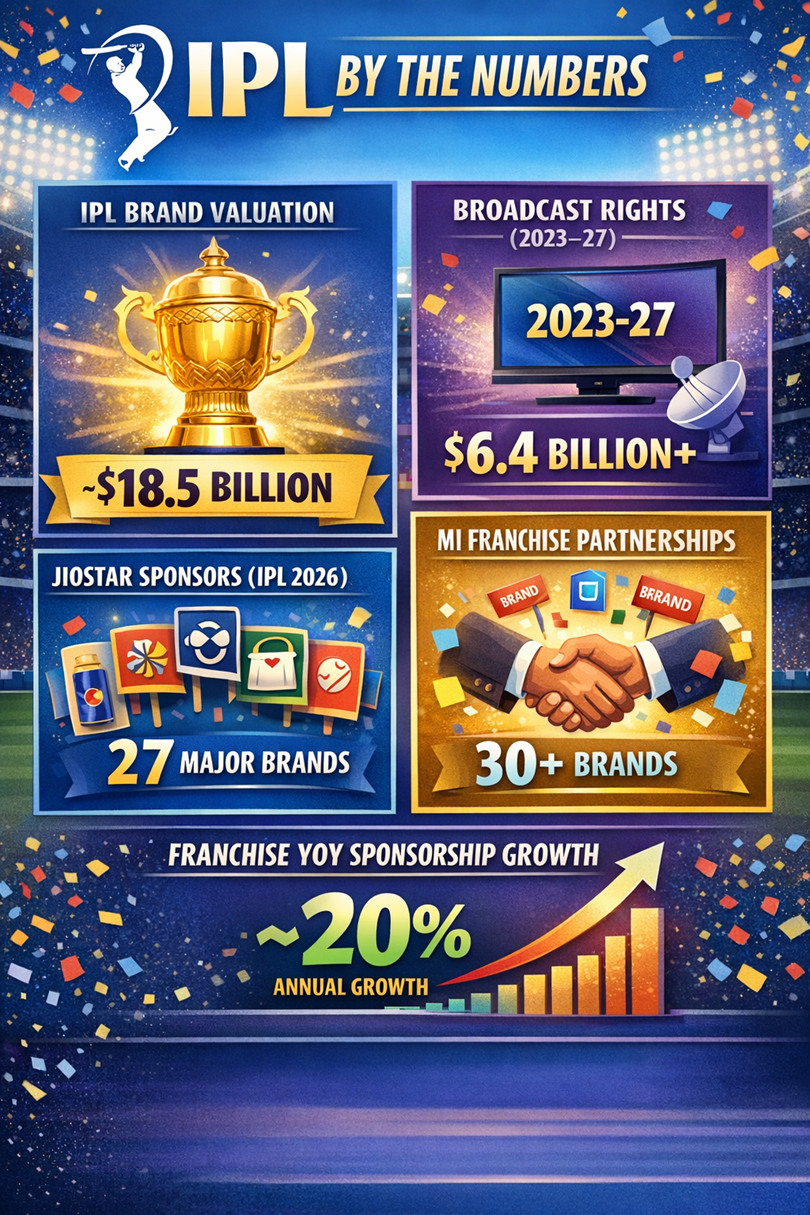
Source: Analysis by Kalkine Group
Why Sponsors Get Strong ROI
- Massive dual-screen reach: 500M+ viewers across TV and digital
- Pan-India + global audience: NRI viewership adds international brand exposure
- Live sports premium: Highest engagement format in advertising
- Multi-touchpoint branding: Jerseys, pitch-side boards, OTT overlays, social media activations
Even in a challenging macroeconomic environment, IPL sponsorship spend continues to grow — a sign of the league's proven returns for advertisers.
- IPL 2026 Impact on Indian Stocks: Sector-by-Sector Analysis
Media and Broadcasting Stocks
Why they benefit:
- Advertising revenues surge during the IPL quarter
- OTT subscription spikes on JioHotstar and competing platforms
- Improved revenue visibility boosts analyst sentiment
IPL quarters historically deliver positive earnings surprises for media companies, and 2026 is on track to be no different given the 27 sponsors onboarded by JioStar.
FMCG and Beverage Stocks
Why they benefit:
- Higher sales volumes during match nights
- Heavy promotional spend drives consumption
- Q1/Q2 earnings often beat estimates due to IPL-season uplift
Investors should watch for volume growth metrics in upcoming quarterly results from leading FMCG companies in the packaged beverages and snacks segment.
Quick Commerce and Food Delivery Stocks
Why they benefit:
- Match-time ordering surges boost GMV
- IPL-linked bundles drive customer acquisition
- Retention metrics improve with loyalty offers
For listed quick-commerce players, the April surge translates directly into improved unit economics and higher order frequencies — metrics closely watched by institutional investors.
Cement, Infrastructure, and Industrial Stocks
Why legacy sectors are spending big:
The presence of Wonder Cement, JK Cement (NSE:JKCEMENT), and Shree Cement (NSE:SHREECEM) as IPL sponsors sends a clear signal to investors:
- These companies have strong balance sheets and marketing confidence
- They are targeting Tier-2 and Tier-3 market penetration via IPL's mass reach
- Brand recall in housing and construction markets supports long-term volume growth
While the stock impact is gradual rather than immediate, sustained IPL visibility tends to support brand equity and pricing power for cement stocks.
BFSI and Fintech Stocks
Why they benefit:
- Customer acquisition campaigns during peak IPL engagement
- Demat account openings and trading app downloads spike
- IPL association builds brand trust with first-time investors and borrowers
Angel One (NSE:ANGELONE) and Hero FinCorp's prominent IPL roles are expected to contribute to improved retail participation metrics — a key growth lever for listed fintech and NBFC stocks.
Consumer Tech and New Economy Stocks
Why they benefit:
- Youth-first audience aligns with EV and consumer tech adoption curves
- Product launches amplified by IPL's massive media ecosystem
- Brands like VIDA (EV) and Waaree Solar (renewables) gain mass market visibility overnight
For investors, EV and clean energy stocks tied to IPL sponsorships can see sentiment-led momentum during the tournament window.
- Franchise Valuations and Investor Sentiment
IPL franchise valuations in 2026 reflect the market's long-term confidence in the league's commercial trajectory:
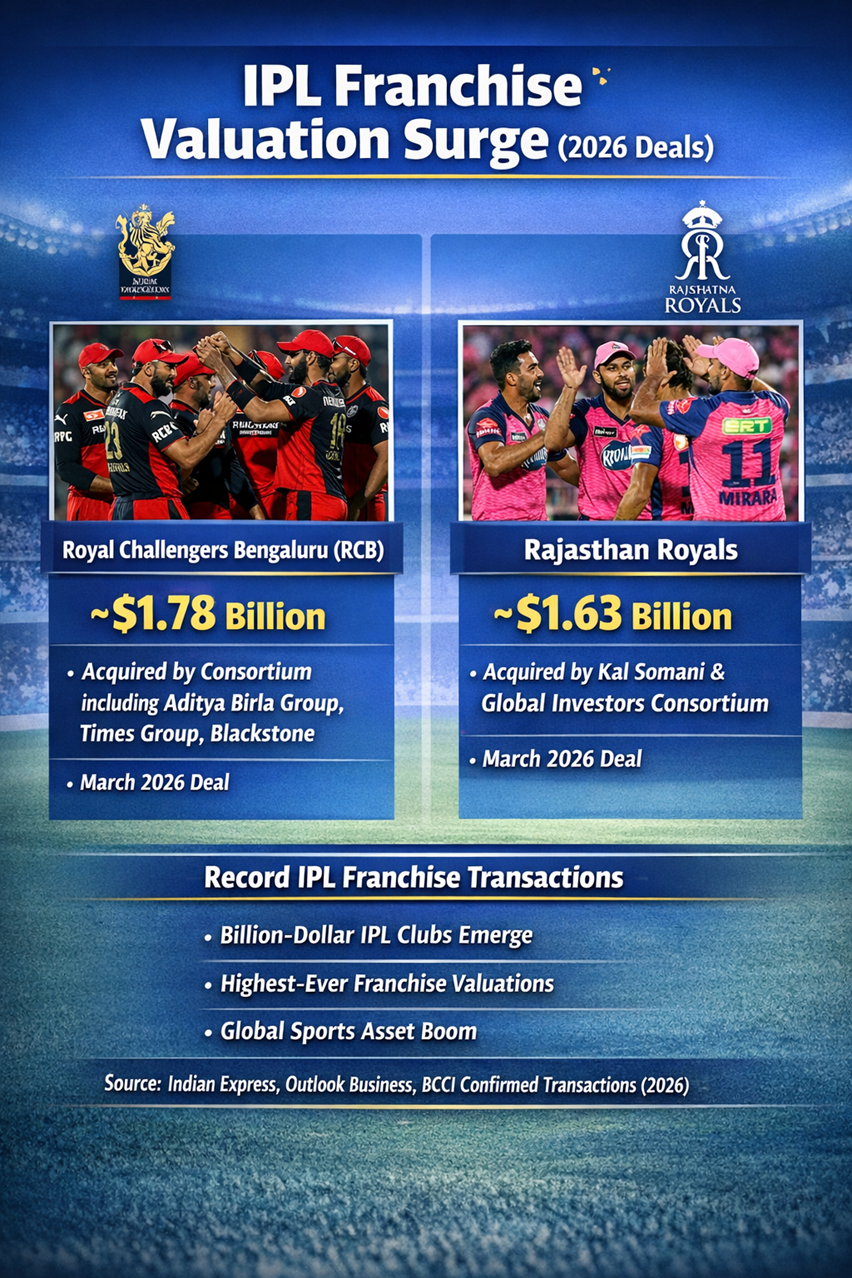
These valuations signal:
- Strong future revenue expectations from media rights and sponsorships
- Growing interest from institutional and global investors
- Expansion of India's sports economy as an investable asset class
For public markets, rising franchise valuations are a leading indicator of advertiser confidence and the sustained growth of IPL's commercial ecosystem.
- Risks Investors Should Watch
Despite the IPL's commercial strength, investors should factor in the following risks:
- Ad Spending Cyclicality Economic slowdowns or consumption fatigue can compress marketing budgets, reducing the IPL premium for advertisers.
- Sector Concentration Risk Over-reliance on specific sectors — as seen with the fintech/fantasy gaming dominance in earlier years — can distort trends and signal overheating.
- Franchise Valuation Excess Elevated franchise valuations may embed over-optimism, creating downside risk if growth in media rights or sponsorship revenues moderates.
- ROI Measurement Gaps Not all IPL sponsorships result in measurable financial outcomes. Brands with unclear attribution models may scale back spend, affecting broadcaster and franchise revenues.
- Future Outlook: IPL as a Permanent Marketing and Investment Superpower
Three structural trends will define IPL's role in India's economy beyond 2026:
- Hybrid Media Monetization The integration of linear TV and OTT advertising into unified measurement frameworks will unlock new revenue streams and improve advertiser ROI attribution.
- Sector Diversification The balanced participation of legacy industries (cement, aviation, BFSI) alongside new-age sectors (EVs, renewables, fintech) will make IPL's revenue base more resilient.
- Global Capital Inflows Foreign investment in IPL franchises is growing. This signals that IPL is transitioning from a domestic league to a globally traded sports investment asset, comparable to NFL or Premier League franchises.
Conclusion
IPL 2026 is India's most powerful intersection of sport, advertising, and capital markets. With 27 broadcaster-level sponsors, franchise revenues growing at 20% YoY, and a diverse mix of legacy and new-economy brands, the league continues to set benchmarks for sporting commercial success.
For investors, the IPL is a real-time macroeconomic indicator — reflecting consumption trends, corporate confidence, and sectoral momentum. Stocks in media, FMCG, fintech, cement, and quick commerce are all positioned to benefit from the IPL season, particularly during the high-impact April surge.
As global capital flows in and franchise valuations climb, IPL 2026 reinforces one truth: in India, cricket is not just a sport — it is an economy.