

Highlights
- Take Solutions shares declined 4.99% to ₹23.61, hitting the lower circuit during the session.
- The company reported a standalone net profit of ₹439.19 lakh for the quarter ended March 2026.
- Revenue for the quarter stood at ₹518.49 lakh, while earnings per share came in at ₹0.30.
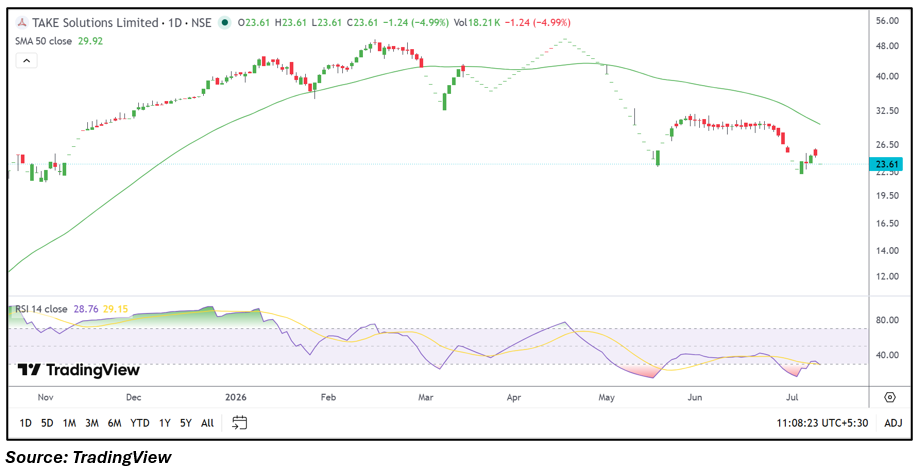
- The stock continues to trade below its 50-day moving average, reflecting a subdued price structure.
- RSI remained below the neutral mark, indicating weaker near-term momentum.
- Market participants are monitoring whether the stock can stabilize near current levels.
Overview
Take Solutions Limited remained under pressure as the stock fell 4.99% to ₹23.61 and hit the lower circuit in the latest trading session. The decline followed continued weakness in price action despite the company reporting a profitable March 2026 quarter. The stock has been trading below key moving averages in recent weeks, reflecting cautious market sentiment while investors assess the company's operational performance and future business outlook.
Fundamental View
For the quarter ended March 2026, Take Solutions reported standalone total income of ₹518.49 lakh. Profit before tax stood at ₹439.19 lakh, while net profit also came in at ₹439.19 lakh, translating into earnings per share of ₹0.30. Although the company remained profitable during the quarter, the relatively modest revenue base and ongoing focus on business execution continue to influence market sentiment. Investors are likely to watch future earnings consistency, business growth initiatives, and improvements in operating performance over the coming quarters.
Technical View
Take Solutions remains in a broader downtrend, with the stock trading below its 50-day simple moving average of around ₹29.92. The latest lower-circuit session reflects continued weakness in price momentum, while the 14-day RSI near 28.76 suggests the stock has entered an oversold zone after the recent decline. Trading volumes remained relatively limited, indicating that market participants may continue monitoring whether the stock can establish stability before any sustained directional move develops.
Key Technical Levels
Immediate support is placed near ₹23.00, with the next important support around ₹22.00. On the upside, immediate resistance is seen near ₹25.00, while the next resistance is positioned around ₹26.50. A sustained move beyond these levels could provide greater clarity on the stock's near-term direction.
Risks to Watch
- Slow recovery in business revenue.
- Execution risks across ongoing projects.
- Earnings volatility in future quarters.
- Broader weakness in the technology services sector.
- Low trading liquidity and heightened price volatility.
- Changes in client spending and contract wins.
Summary
Take Solutions witnessed another weak trading session as the stock hit the lower circuit despite remaining profitable in its latest quarterly results. While the company reported positive earnings, the current technical structure remains cautious, with the stock trading below its key moving average and momentum indicators remaining subdued. Going forward, investors are likely to monitor earnings consistency, revenue growth, operational execution, and price stability for signs of improving market sentiment.
FAQs
Q: Why did Take Solutions shares hit the lower circuit?
A: The stock declined 4.99% during the session, reflecting continued weakness in market sentiment and extending its recent corrective trend.
Q: What were Take Solutions' latest quarterly results?
A: The company reported standalone total income of ₹518.49 lakh and a net profit of ₹439.19 lakh for the quarter ended March 2026.
Q: What is the current technical outlook for the stock?
A: The stock is trading below its 50-day moving average, while the RSI indicates oversold momentum after the recent decline.
Q: Which levels are important for Take Solutions shares?
A: Immediate support is around ₹23.00 and ₹22.00, while resistance is seen near ₹25.00 and ₹26.50.
Q: What should investors monitor going forward?
A: Investors may track future quarterly earnings, revenue growth, operational execution, and whether the stock stabilizes around current price levels.