

Shares of Tata Power Company (NSE:TATAPOWER)have witnessed renewed investor interest following Gujarat’s approval of a revised long-term power supply agreement for its 4,000 MW Mundra coal-based plant. The plant, which had remained idle for nearly six months due to tariff disputes linked to expensive imported coal, is now set to resume operations pending regulatory clearance.
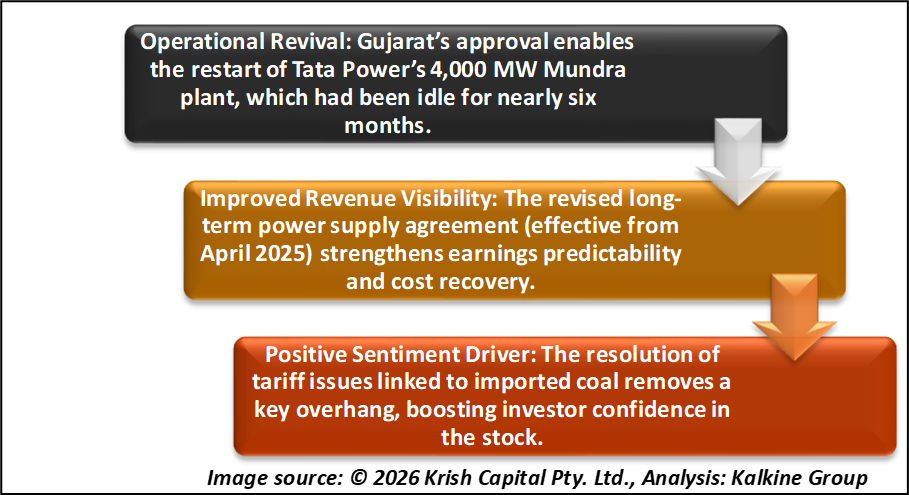
This development marks a significant turnaround for the company, as the Mundra plant has been a key underutilized asset. The revised agreement, reportedly effective retrospectively from April 2025, enhances revenue visibility and supports cost recovery, addressing one of the major overhangs on the stock in recent months.
Operational Strength Reflected in Q3 FY26 Results
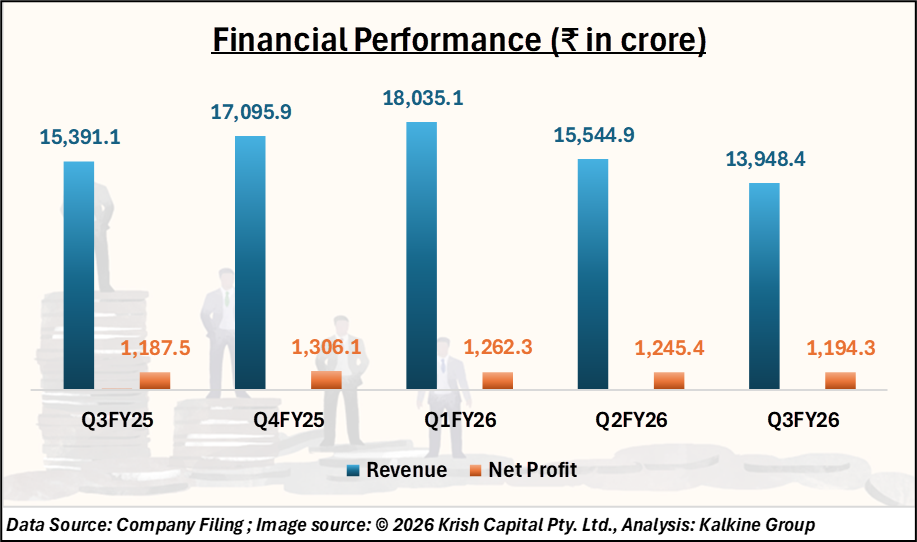
Revenue shows volatility across the last five quarters, peaking at Q1FY26 before declining to ₹13,948.4 in Q3FY26, indicating demand or execution pressure. Net profit remains relatively stable, fluctuating within a narrow range, though it trends mildly downward in recent quarters. Margins appear under pressure as revenue declines outpace profit, suggesting cost control or operating leverage challenges.
Technical Summary

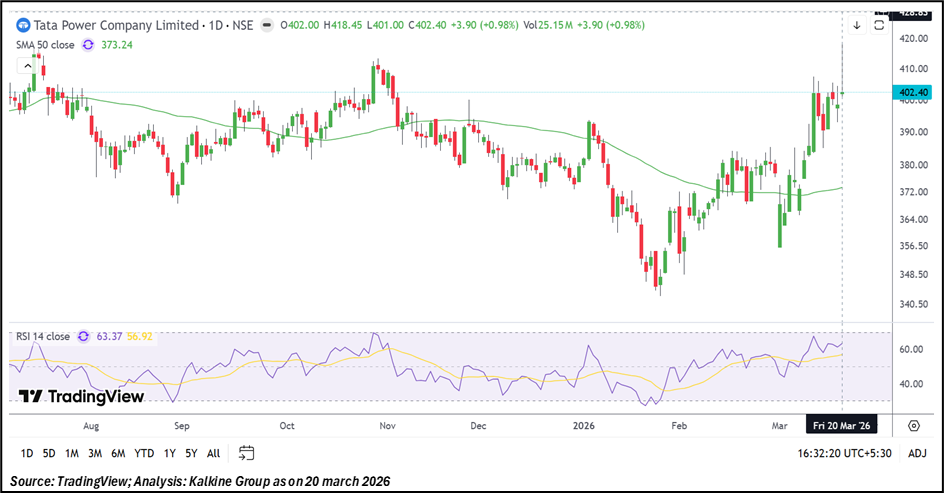
Tata Power Company Limited (NSE:TATAPOWER) closed near ₹402.40 as of March 20, 2026, gaining nearly 0.98% in the session. The stock moved above its 50-day Simple Moving Average around ₹373.24, indicating an improvement in the broader price structure.
The recent price action reflects a recovery phase after a prior downtrend, with higher lows forming in the near term and a gradual upward shift in momentum. The 14-day RSI near 63.37 suggests strengthening momentum while approaching the higher end of the neutral zone. In the near term, support is placed around ₹370.00–₹340.00, while resistance is seen near ₹440.00–₹470.00.
Outlook
The combination of regulatory clarity on Mundra, strong earnings visibility, and continued expansion in renewable energy positions Tata Power favorably for the medium to long term.
With rising power demand, ongoing clean energy transition, and improved asset utilization, the company appears well-placed to sustain growth momentum. However, investors will continue to monitor regulatory developments, cost pressures, and legal proceedings as key risks.