

Overview
Bitcoin traded above the USD 60,000 mark after recovering from its recent lows, although the broader trend remained under pressure following a difficult second quarter. The world's largest cryptocurrency had declined around 14% during the quarter as investors remained cautious amid expectations that U.S. interest rates could stay higher for longer. The recovery came as market participants assessed fresh macroeconomic developments, institutional fund flows, and regulatory updates that continue to influence sentiment across digital assets.
ETF Outflows Continue to Weigh on Institutional Sentiment
One of the biggest headwinds for Bitcoin has been continued institutional selling through U.S. spot Bitcoin exchange-traded funds. According to Soso Value data, spot Bitcoin ETFs recorded net outflows of approximately USD 4.50 billion during June, marking the largest monthly withdrawal since the products were launched in early 2024. The selling streak also extended to nine consecutive trading sessions, with another USD 222.60 million leaving the funds on June 30.
BlackRock's iShares Bitcoin Trust accounted for the largest share of the monthly withdrawals, with around USD 3.55 billion in outflows. Total assets managed by U.S. spot Bitcoin ETFs have declined to nearly USD 70.90 billion from levels above USD 110 billion earlier this year. Despite the recent weakness, cumulative net inflows since the ETF launch remain positive at more than USD 51 billion.
Higher U.S. Rate Expectations Continue to Pressure Crypto Assets
Bitcoin also remains sensitive to expectations surrounding U.S. monetary policy. Markets continue to price in the possibility of at least one Federal Reserve interest rate increase during the year after policymakers maintained a cautious stance on inflation. Higher interest rates generally reduce the appeal of non-yielding assets such as cryptocurrencies by increasing returns available from fixed-income investments.
Federal Reserve Chair Kevin Warsh also avoided providing forward guidance on future policy decisions while reiterating that the central bank remains focused on achieving its inflation objective. Investors are now closely watching upcoming economic data, particularly labor market and inflation reports, for further clues on the Fed's next move.
Global Regulatory Developments Remain in Focus
Beyond market flows, regulatory developments continued to shape sentiment. Taiwan approved the Virtual Asset Service Act, introducing a comprehensive regulatory framework for cryptocurrency exchanges and stablecoin issuers. The legislation establishes licensing requirements while strengthening rules related to cybersecurity, client asset protection, and operational governance, reflecting continued global efforts to build clearer oversight of digital assets.
Trump's Crypto Holdings Highlight Growing Political Interest
The cryptocurrency sector also remained in focus after financial disclosures showed that U.S. President Donald Trump reported more than USD 1.40 billion in income from crypto-related ventures during 2025. The earnings included proceeds from World Liberty Financial, digital token sales, and the TRUMP meme coin. The disclosure highlighted the growing political and institutional attention surrounding digital assets as governments continue shaping regulatory policies for the industry.
Bitcoin Remains Below Its Medium-Term Trend
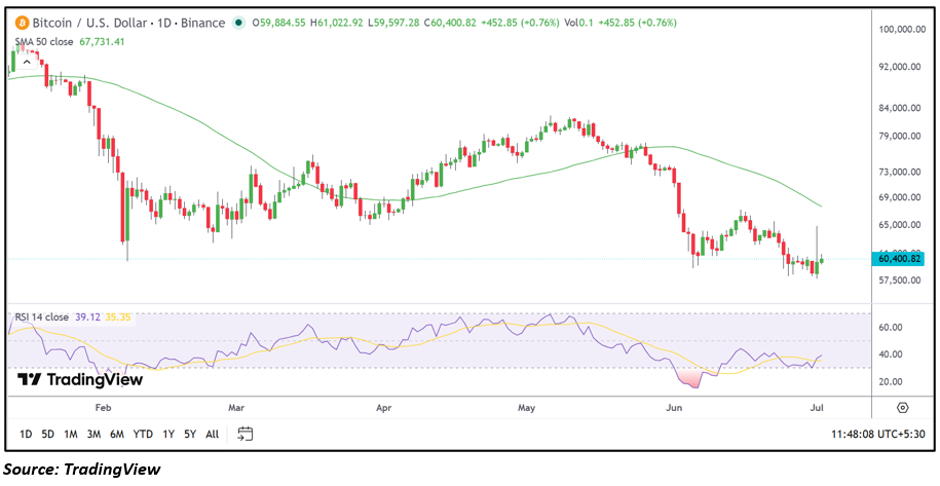
From a technical perspective, Bitcoin continues to trade below its 50-day Simple Moving Average near USD 67,731.41, indicating that the broader medium-term structure remains under pressure despite the recent recovery above USD 60,000. Price action has stabilized after testing lows near USD 57,800, but the overall chart still reflects lower highs and lower lows over recent months. Meanwhile, the 14-day Relative Strength Index stood near 39.12, improving from deeply oversold conditions but remaining below the neutral 50 level, suggesting momentum has recovered only modestly.
Can Bitcoin Sustain Its Recovery Above USD 60,000?
Bitcoin is currently trading around USD 60,400 after bouncing from recent lows, with immediate chart resistance seen near USD 61,000. A sustained move above this region could improve short-term momentum, while the 50-day moving average around USD 67,731 remains a key medium-term level to watch. On the downside, the recent low near USD 57,800 remains an important reference area if volatility returns. Market participants are likely to continue monitoring ETF flows, Federal Reserve policy expectations, institutional positioning, and global regulatory developments for the next direction in Bitcoin prices.
Summary
Bitcoin has recovered above USD 60,000 after a challenging quarter, but the cryptocurrency continues to face multiple macroeconomic and institutional headwinds. Record spot Bitcoin ETF outflows, expectations of higher U.S. interest rates, cautious Federal Reserve commentary, and evolving global regulations remain key factors influencing sentiment. While the recent rebound offers some stability, upcoming economic data and institutional fund flows are likely to play a major role in determining Bitcoin's next move.
FAQ
Q: Why is Bitcoin trading above USD 60,000 today?
Bitcoin recovered above USD 60,000 after rebounding from recent lows, although sentiment remains influenced by ETF outflows, Federal Reserve policy expectations, and broader macroeconomic developments.
Q: Why are spot Bitcoin ETFs seeing heavy outflows?
Institutional investors have reduced exposure amid uncertainty over interest rates and broader market conditions, resulting in record monthly withdrawals from U.S. spot Bitcoin ETFs.
Q: How do higher interest rates affect Bitcoin?
Higher interest rates can reduce demand for cryptocurrencies by increasing the attractiveness of income-generating assets such as bonds and money market instruments.
Q: What new crypto regulation was announced?
Taiwan approved the Virtual Asset Service Act, introducing a comprehensive regulatory framework for cryptocurrency exchanges and stablecoin issuers.
Q: What should investors watch next for Bitcoin?
Market participants will closely monitor U.S. economic data, Federal Reserve policy signals, ETF fund flows, institutional participation, and global regulatory developments for further direction in Bitcoin prices.