

India’s solar manufacturing stocks witnessed sharp volatility after the United States announced steep countervailing duties on solar imports, triggering concerns over export exposure and global supply chain disruptions. Although stocks recovered partially from intraday lows following management clarifications, investor sentiment remained cautious, leading to meaningful declines across frontline renewable energy counters.
Solar Stocks React to Trade Uncertainty
Shares of leading domestic solar manufacturers came under pressure as markets assessed the implications of proposed US duties exceeding 120% on certain solar imports.
Market leaders such as Waaree Energies Limited and Premier Energies Limited ended the session with notable losses after early panic selling. Other export-linked players including Vikram Solar Limited, Solex Energy Limited, and Websol Energy System Limited also traded lower, reflecting broader sectoral risk repricing.
However, glass manufacturer Borosil Renewables Limited bucked the trend, supported by its relatively lower dependence on direct module exports to the US market.
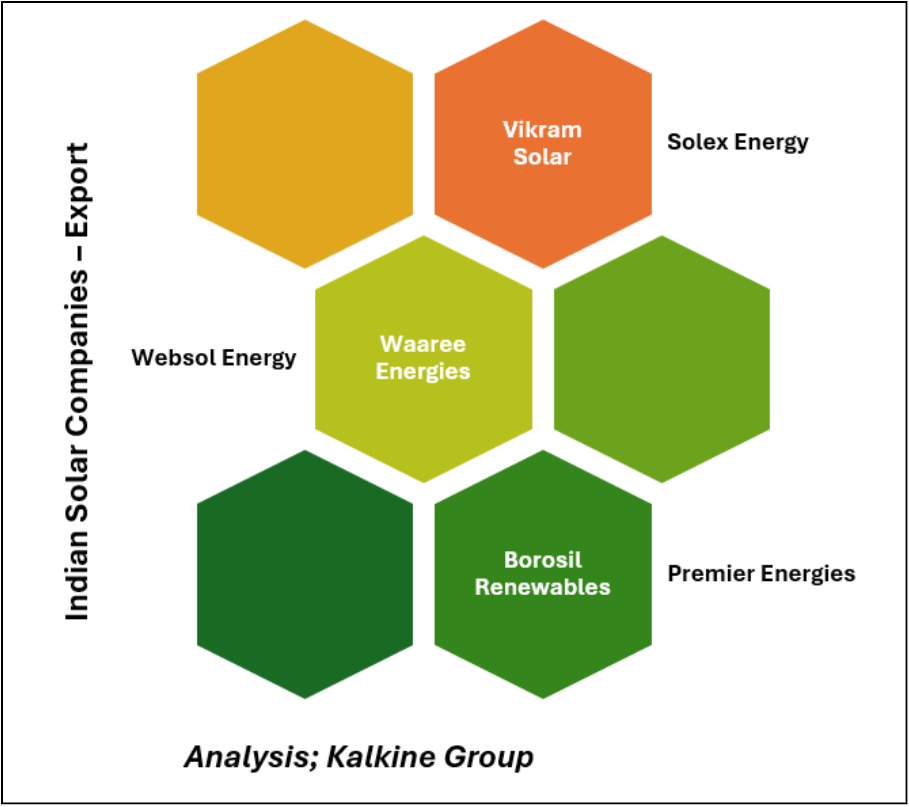
The selloff highlighted how sensitive Indian renewable stocks have become to global trade developments as companies increasingly scale export-oriented manufacturing capacities.
Clarification Eases Worst-Case Fears
Investor sentiment stabilised later in the session after industry clarification indicated that the duties primarily apply to solar cells manufactured in India, rather than panels assembled domestically using imported cells.
This distinction is crucial.
Most Indian module manufacturers currently follow an import-cell, assemble-module model for exports, particularly to the US. As a result, immediate operational disruption may remain limited for several players.
Management commentary from industry leaders suggested that exports based on imported cells could continue without attracting the newly proposed duty structure, significantly reducing near-term earnings risk compared to initial market fears.
Why Markets Still Reacted Sharply
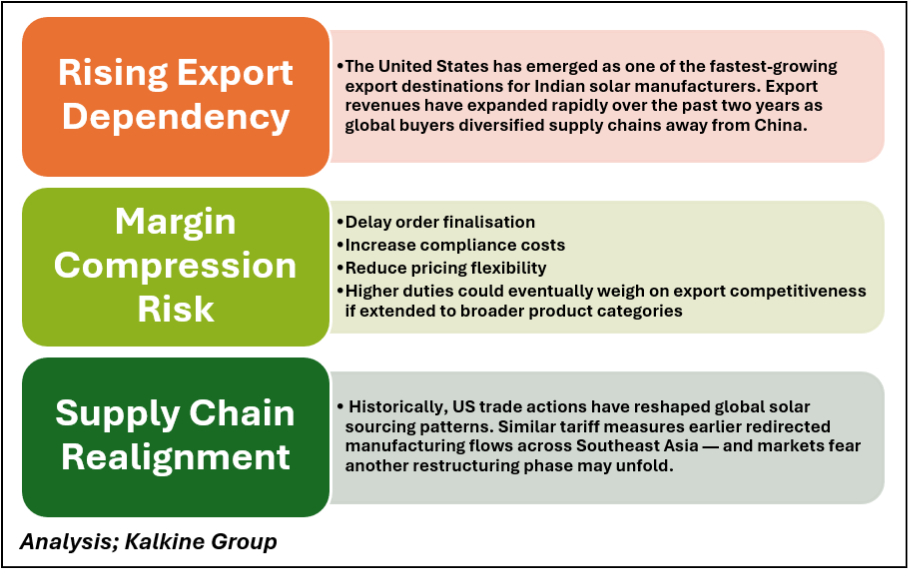
Despite operational relief, markets priced in three structural concerns:
Domestic Demand: India’s Structural Cushion
While export concerns dominated near-term sentiment, India’s solar growth story remains fundamentally strong.
Government initiatives such as:

continue supporting domestic order visibility.
India aims to significantly expand renewable capacity by 2030, creating sustained demand for locally manufactured modules, cells, and balance-of-system components.
For companies like Waaree Renewable Technologies Limited and integrated manufacturers expanding domestic footprints, this internal demand cycle could offset temporary export volatility.
Conclusion
Despite near-term volatility triggered by US tariff concerns, the fundamental outlook for India’s solar sector remains intact. Strong domestic demand, policy support, and expanding renewable capacity targets are expected to cushion export-related risks, positioning Indian solar manufacturers for long-term growth once global trade uncertainties stabilise.