

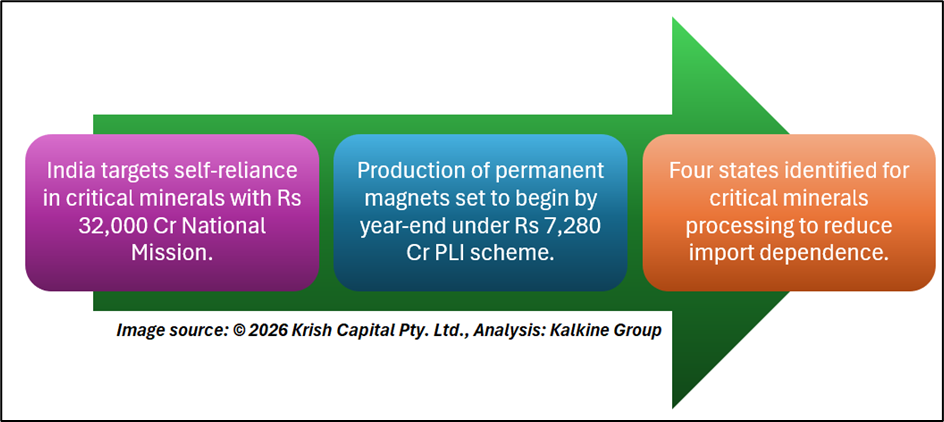
India is taking strategic steps to transition from dependency on imported critical minerals to domestic value creation. The government, under the National Critical Minerals Mission with an outlay of Rs 32,000 Cr, is working to develop a self-reliant ecosystem covering exploration, extraction, processing, recycling, and advanced manufacturing.
Currently, India depends on imports for 95% of critical minerals. Over 4,000 exploration activities have already been launched nationwide, while nine Centers of Excellence (CoE) have been identified to support R&D, innovation, and skill development across the sector.
Permanent Magnet Production and State-Level Processing
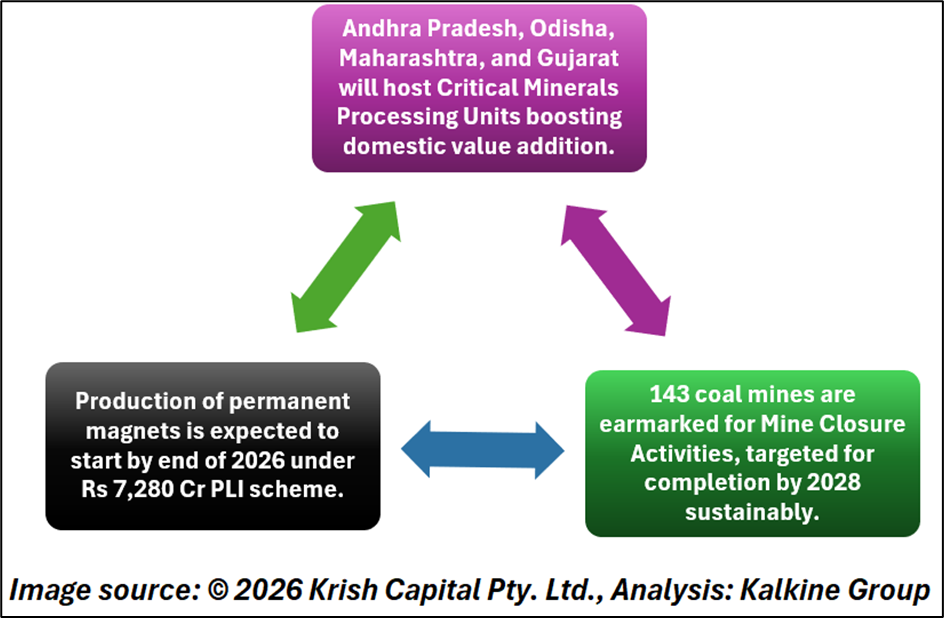
Production of permanent magnets is expected to begin by the end of 2026, supported by a Rs 7,280 Cr Production Linked Incentive (PLI) scheme. Andhra Pradesh, Odisha, Maharashtra, and Gujarat have been selected to host Critical Minerals Processing Units aimed at increasing domestic value addition.
Additionally, 143 coal mines have been earmarked under Mine Closure Activities, with completion targeted by 2028 to support sustainable resource management.
Global Collaboration and Investment
The government is working on strengthening international partnerships to acquire overseas mineral assets. These efforts reflect growing confidence in India’s mineral strategy and create avenues for collaboration in exploration, processing, and supply chain resilience.
International stakeholders, including Canada, have expressed interest in supporting India’s critical minerals initiatives to build stable and responsible supply chains.
Industry Engagement and Knowledge Platforms
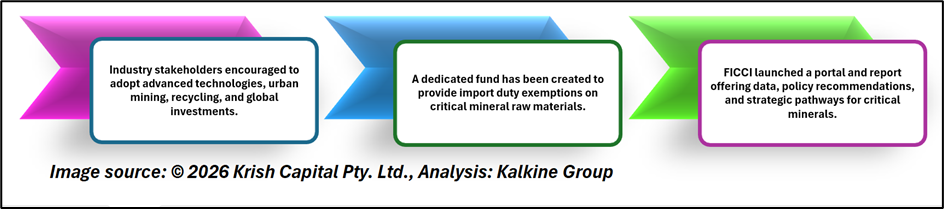
Industry stakeholders are encouraged to participate in advanced technologies, urban mining, recycling, and global investments. A dedicated fund has been created to exempt import duties on raw materials for critical minerals.
During the summit, FICCI unveiled a portal on global critical minerals assets, offering data on mineral blocks, exploration status, ownership, and resource estimates. The FICCI-Deloitte report released at the event provides policy recommendations and strategic pathways to strengthen India’s critical minerals ecosystem.
Outlook
India is taking strategic steps to reduce its dependence on imported critical minerals by promoting domestic value creation. Under the National Critical Minerals Mission, with an outlay of Rs 32,000 Cr, the government is focusing on exploration, extraction, processing, recycling, and advanced manufacturing.
Production of permanent magnets is set to begin by 2026 with a Rs 7,280 Cr PLI scheme, while critical minerals processing units are planned in Andhra Pradesh, Odisha, Maharashtra, and Gujarat. International collaborations, industry engagement, and policy support aim to build a self-reliant, sustainable, and globally competitive minerals ecosystem.