

Highlights
- A temporary US sanctions waiver may reopen access to Iranian crude for India.
- Additional crude supplies could expand sourcing options for Indian refiners.
- Developments may influence oil prices, energy security and import diversification efforts.
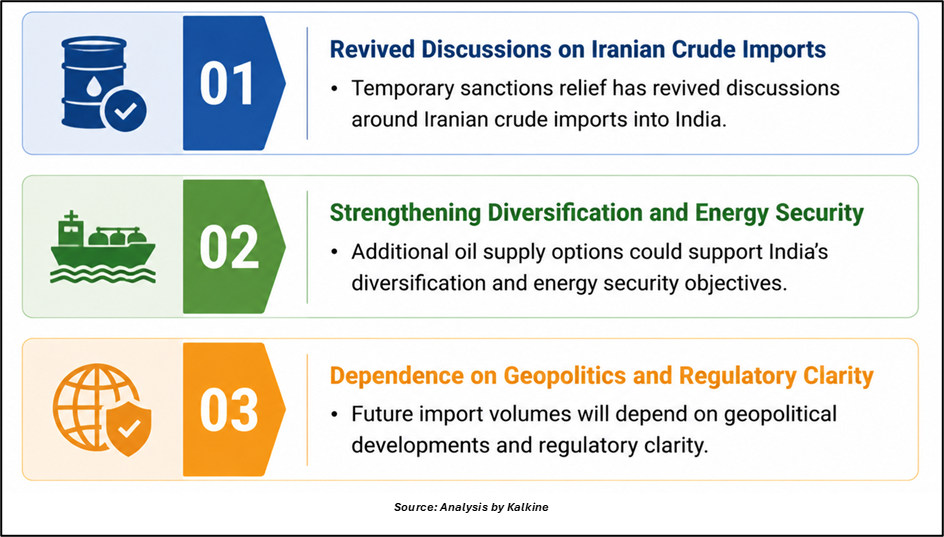
India's energy sector could witness a significant development following the United States' decision to temporarily ease sanctions on Iranian oil exports. The move has revived discussions around the possible return of Iranian crude to India's import basket after several years, potentially providing refiners with an additional source of supply amid evolving global energy dynamics.
The temporary waiver, issued as part of ongoing diplomatic efforts between the US and Iran, allows the sale and transportation of Iranian crude oil and related products for a limited period. The development could have implications for India's energy security, crude sourcing strategy, and refining sector.
Why Iranian Oil Matters To India
Before sanctions disrupted trade flows, Iran was among India's important crude oil suppliers. Indian refiners valued Iranian grades due to their compatibility with existing refinery configurations and competitive commercial terms.
Following the reimposition of sanctions in 2019, India diversified its crude purchases across suppliers including Iraq, Saudi Arabia, the UAE, Russia and the United States. The absence of Iranian oil altered sourcing patterns and increased reliance on alternative producers.
The latest sanctions relief could provide refiners with another procurement option if commercial and regulatory conditions permit purchases.
Expanding The Supplier Base
For a country that imports the majority of its crude oil requirements, diversification remains a key element of energy security.
The potential return of Iranian oil may increase the number of available suppliers and improve purchasing flexibility. A broader supplier base can help refiners manage geopolitical risks, supply disruptions, and price fluctuations across global energy markets.
Industry observers note that access to additional crude sources may strengthen negotiating leverage with existing suppliers while enhancing procurement choices.
Impact On Oil Prices And Refining Economics
The return of Iranian crude to international markets could contribute to higher global oil supply availability. Increased supply generally has the potential to ease market tightness, although actual price movements depend on demand conditions, geopolitical developments and production decisions by other exporters.
Reports indicate that significant volumes of Iranian crude remain available for export, creating expectations of additional supply entering international markets if sanctions relief continues.
For Indian refiners, access to additional crude grades may improve feedstock flexibility and allow optimization of procurement strategies based on pricing and refinery requirements.
Challenges Beyond Policy Announcements
While the sanctions waiver creates an opportunity, several operational and commercial factors remain important.
Refiners typically require clarity on payment mechanisms, shipping arrangements, insurance coverage, cargo certification and compliance requirements before committing to purchases. The temporary nature of the waiver may also encourage a cautious approach until there is greater visibility on long-term policy direction.
Market participants are expected to closely monitor diplomatic developments between Washington and Tehran over the coming weeks.
Broader Implications For Energy Security
India's long-term energy strategy focuses on securing reliable supplies from diverse regions. Access to crude from multiple producing countries can reduce concentration risk and provide greater resilience during periods of market volatility.
The possible re-entry of Iranian oil into global trade flows aligns with broader efforts by importing nations to maintain flexibility in sourcing decisions. Whether the opportunity evolves into sustained trade activity will depend on geopolitical developments and the future of sanctions policy.
What The Market Will Watch
Energy markets are likely to focus on the duration of the sanctions waiver, the pace of Iranian export recovery, and the response of major importing nations.
Investors and industry participants will also assess how increased supply influences global crude balances and whether refiners across Asia expand purchases. Any extension or modification of the current waiver framework could shape future trade flows and procurement strategies.
Key Risks
- The sanctions waiver remains temporary and subject to policy changes.
- Payment and banking mechanisms may face compliance challenges.
- Geopolitical tensions could affect supply continuity.
- Global crude price volatility may influence procurement decisions.
Summary
The temporary easing of US sanctions on Iranian oil has renewed the possibility of Iranian crude returning to India's import basket. Additional supply options could support diversification efforts, improve sourcing flexibility and strengthen energy security. However, commercial, regulatory and geopolitical considerations remain critical. The long-term impact will depend on the future of US-Iran negotiations and the durability of sanctions relief.
FAQs
Q: Why is the return of Iranian oil important for India?
A: It could provide refiners with another crude source and support import diversification efforts.
Q: Has India imported Iranian oil in recent years?
A: India halted imports in 2019 after sanctions but may regain access under current waivers.
Q: What factors will determine future imports from Iran?
A: Sanctions policy, payment systems, shipping arrangements and diplomatic developments will remain key factors.