

Highlights
- NITI Aayog released India's first comprehensive semiconductor roadmap.
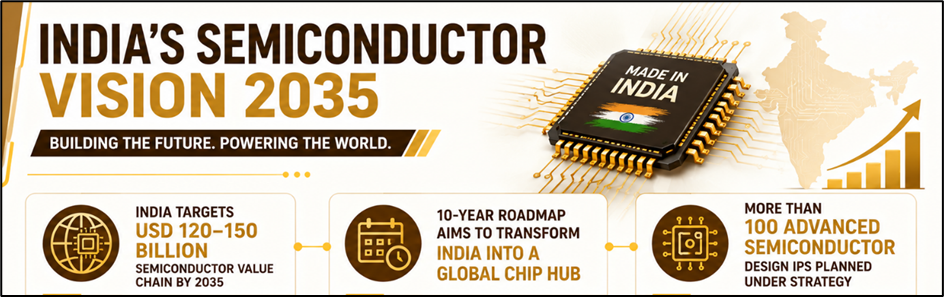
- The roadmap targets a USD 120-150 billion semiconductor value chain by 2035.
- Advanced packaging, chip design, and compound semiconductors remain key focus areas.
NITI Aayog's Frontier Tech Hub has released "Future of India's Semiconductor Industry," a 10-year roadmap aimed at transforming India from a major semiconductor importer into a significant participant in the global semiconductor value chain by 2035.
The roadmap was unveiled by Finance Minister Nirmala Sitharaman and Electronics and Information Technology Minister Ashwini Vaishnaw, alongside senior government officials, industry leaders, and semiconductor experts. According to NITI Aayog, the roadmap provides a structured framework to develop a semiconductor value chain worth between USD 120 billion and USD 150 billion by 2035.
 Source: Analysis by Kalkine
Five Pillars to Drive Growth
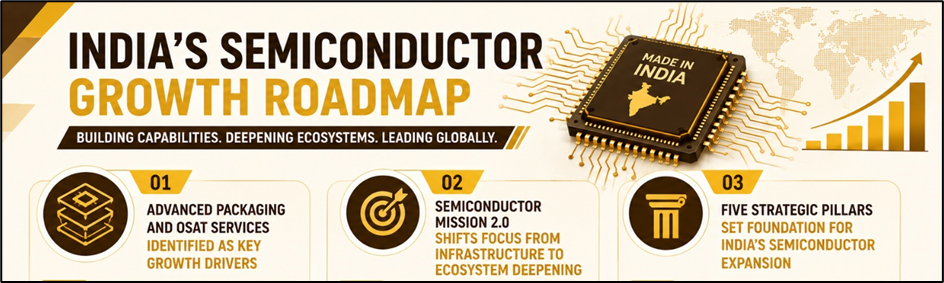
The roadmap is built around five interconnected pillars designed to strengthen India's semiconductor ecosystem. These include frontier research and design intellectual property, policy and investment support, production capabilities, talent development, and international partnerships.
The strategy seeks to leverage India's existing strengths in semiconductor design talent, growing electronics manufacturing capabilities, expanding domestic demand, and innovation ecosystem.
Focus on Advanced Packaging and Design
A major objective of the roadmap is to position India as a leading destination for advanced packaging and Outsourced Semiconductor Assembly and Test (OSAT) services.
The document also outlines plans to strengthen India's capabilities in compound semiconductor manufacturing and wide-bandgap semiconductors, technologies increasingly used in electric vehicles, renewable energy systems, industrial electronics, and advanced computing applications.
Another target is the creation of more than 100 advanced semiconductor design intellectual properties (IPs), reflecting the emphasis on developing indigenous design capabilities.
Alignment With Semiconductor Mission 2.0
The roadmap supports priorities announced under the India Semiconductor Mission (ISM) 2.0 in the Union Budget 2026.
According to NITI Aayog, the strategy represents a transition from ecosystem creation to ecosystem deepening. The focus is shifting from attracting investments and establishing foundational infrastructure toward developing expertise in design, manufacturing, packaging, materials, talent development, research, and international collaboration.
Finance Minister Nirmala Sitharaman stated that semiconductors have become foundational infrastructure for sectors such as artificial intelligence, electric mobility, telecommunications, defence, healthcare technology, digital public infrastructure, and advanced manufacturing.
Source: Analysis by Kalkine
Semiconductor Supply Chains Under Global Spotlight
The roadmap comes at a time when global semiconductor supply chains are undergoing significant changes due to geopolitical developments, technology competition, and efforts by countries to diversify production networks.
India currently remains heavily dependent on semiconductor imports but is seeking to expand its role across various segments of the industry, including design, packaging, manufacturing, and research.
Electronics and IT Minister Ashwini Vaishnaw said the government's focus is on building the entire semiconductor ecosystem, including design, materials, equipment, fabrication facilities, and advanced packaging capabilities.
Key Risks
- Semiconductor manufacturing requires significant long-term capital investment.
- Global technology competition may intensify over the coming decade.
- Talent shortages could affect ecosystem development.
- Rapid technology changes may alter industry priorities.
Summary
NITI Aayog has released India's first comprehensive semiconductor industry roadmap, targeting the creation of a USD 120-150 billion semiconductor value chain by 2035. The strategy focuses on advanced packaging, chip design, compound semiconductors, talent development, research, and international partnerships. Aligned with India Semiconductor Mission 2.0, the roadmap aims to strengthen India's role in global semiconductor supply chains and reduce long-term dependence on imports.
FAQs
Q: What is the target size of India's semiconductor industry under the roadmap?
A: The roadmap targets a semiconductor value chain worth USD 120-150 billion by 2035.
Q: Which areas are prioritized in the semiconductor roadmap?
A: Advanced packaging, semiconductor design, compound semiconductors, talent development, R&D, and international partnerships are key focus areas.
Q: How does the roadmap support India's semiconductor ambitions?
A: It provides a 10-year framework to strengthen design, manufacturing, packaging, research, and ecosystem capabilities.