

Union Commerce and Industry Minister Piyush Goyal underscored India’s commitment to diversifying its export markets, as the country faces mounting trade pressures stemming from the unilateral actions of certain nations. Speaking at a recent industry forum, Goyal stressed that India will not allow external measures to derail its growth trajectory and is intensifying efforts to expand into non-traditional geographies.
Strategic Pivot in Trade Policy
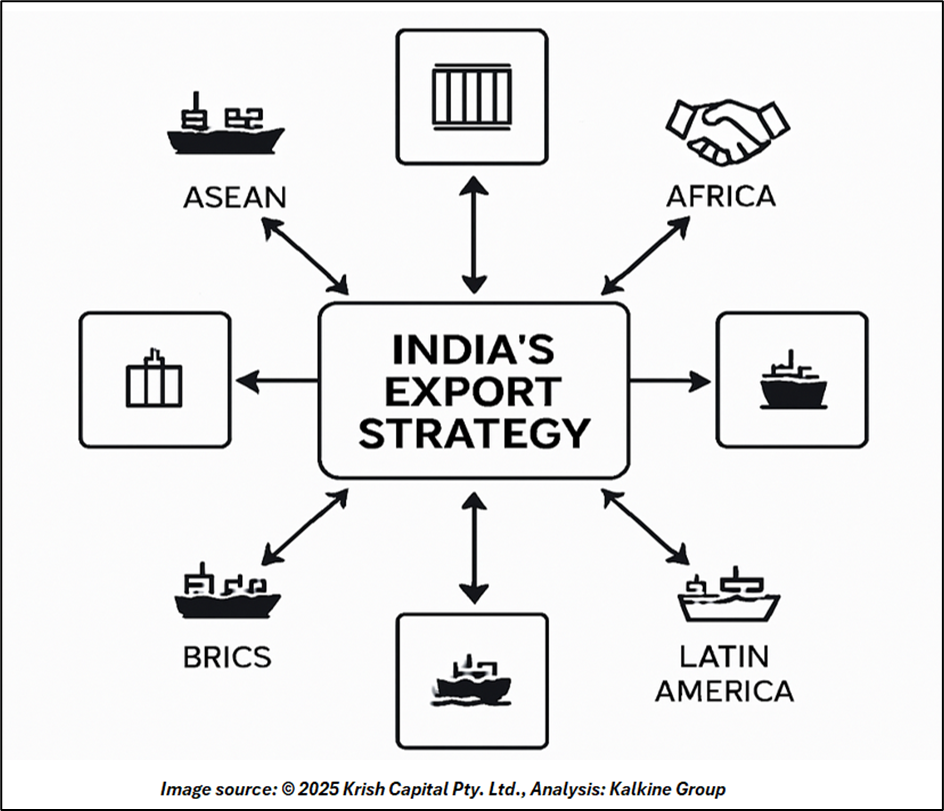
India has been recalibrating its global trade strategy in response to heightened risks from tariff impositions and protectionist measures. According to Goyal, the government is accelerating its push into ASEAN, Middle East, Africa, Latin America, and BRICS markets to reduce excessive reliance on any single trading partner. This strategy is aligned with India’s “Atmanirbhar Bharat” vision, while still integrating deeply with global supply chains.
Impact of Unilateral Trade Measures
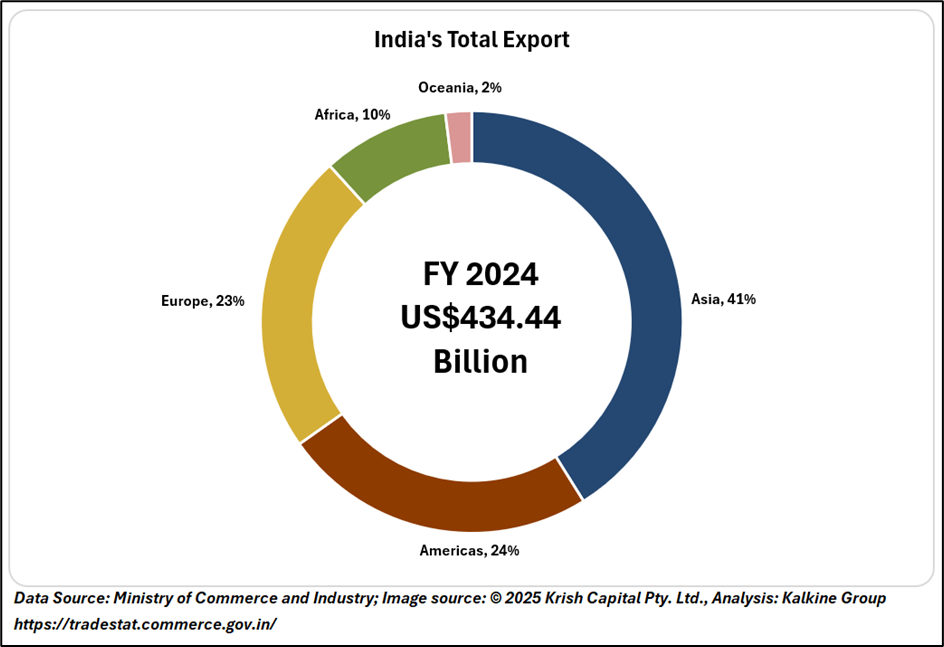
Recent tariff escalations, particularly from the United States, have placed nearly $60 billion worth of Indian exports at risk, with sectors such as gems & jewellery, textiles, engineering goods, and IT services facing uncertainty. While these measures are seen as politically driven rather than economically justified, they underline the vulnerability of concentrated export exposure.
Strengthening Supply Chain Resilience
To reduce vulnerabilities, India is adopting the following strategies:
- Expanding bilateral and multilateral trade partnerships with ASEAN, GCC, and African nations.
- Implementing Production Linked Incentive (PLI) programs to strengthen competitiveness in sectors such as electronics, semiconductors, and renewable energy.
- Enhancing trade facilitation by streamlining customs procedures and integrating digital solutions for cross-border logistics
- Promoting sectoral diversification by encouraging exporters to tap into high-value markets instead of depending mainly on commodity-driven trade.
Industry and Investor Outlook
Industry leaders have welcomed the government’s stance, highlighting that a diversified export base enhances resilience against geopolitical disruptions and currency volatility. For investors, this policy shift presents opportunities in sectors like defence exports, renewable energy, pharmaceuticals, and agro-tech, which are poised for rising global demand.
Conclusion
India’s proactive trade realignment underscores its determination to shield its economy from unilateral shocks while simultaneously unlocking new opportunities. By broadening its export footprint across emerging economies, India is not only securing its trade future but also positioning itself as a linchpin in the evolving global economic order.