

New Delhi Eyes Bigger Support for Exporters Amid Rising Global Uncertainty
India is preparing to reinforce one of its most crucial export support mechanisms as geopolitical tensions in the Middle East continue to disrupt global trade flows, increase shipping costs, and weaken overseas demand for Indian goods.
According to government sources, New Delhi is considering expanding financial support under the Remission of Duties and Taxes on Export Products (RoDTEP) scheme while also extending the programme for another five years. The move comes at a critical time for exporters already grappling with elevated freight costs, supply chain disruptions, and slowing global trade momentum.
The proposed policy push signals the government’s intent to shield exporters from mounting external risks and preserve India’s competitiveness in international markets.
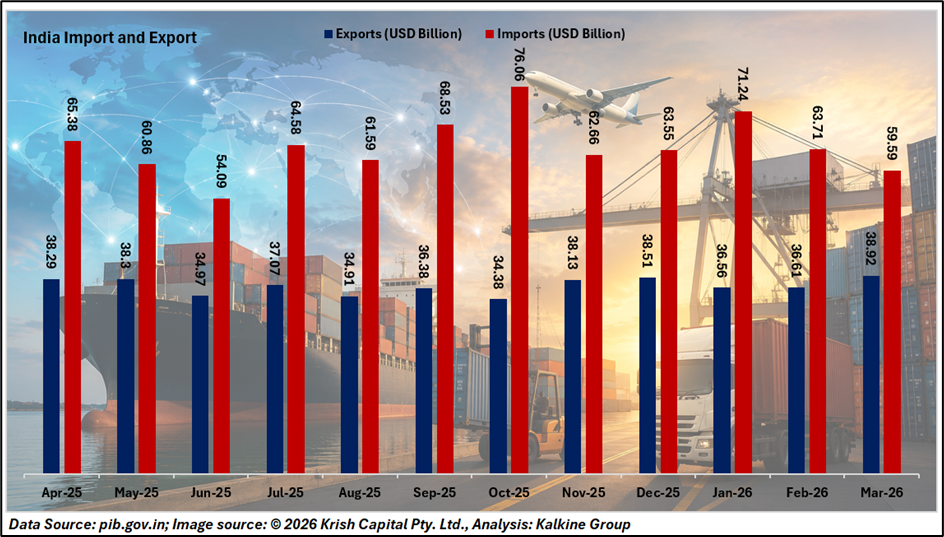
Export Sector Faces Fresh Pressure
India’s export-driven industries have entered a challenging phase following escalating tensions across key Gulf trade corridors. Shipping routes through the Middle East have become increasingly volatile, leading to higher insurance premiums, surging freight charges, and delivery uncertainties.
The impact has already started reflecting in trade numbers. India’s merchandise exports reportedly declined during March, with several major sectors witnessing contraction amid softer global demand and logistical disruptions.
Trade with important Middle Eastern partners such as the United Arab Emirates and Saudi Arabia has also weakened, creating additional pressure on exporters dependent on the region.
For sectors operating on tight margins, the sudden rise in logistics costs has intensified cash-flow stress.
RoDTEP Scheme Back in Focus
The RoDTEP scheme remains one of India’s most significant export incentive programmes. It refunds taxes, duties, and levies paid by exporters at central, state, and local levels that are otherwise not reimbursed under existing mechanisms.
The scheme currently covers over 10,000 product categories, including:
- Textiles
- Agriculture products
- Engineering goods
- Chemicals
- Manufacturing exports
Exporters receive incentives typically ranging between 1% and 4% of product value, helping improve pricing competitiveness in global markets.
Although allocations under the programme were reduced in the Union Budget earlier this year, recent geopolitical developments have reportedly prompted policymakers to reconsider the financial structure of the scheme.
Industry participants have argued that current incentive levels may not sufficiently compensate exporters facing extraordinary freight and insurance costs linked to conflict-hit shipping routes.
Government Considering Higher Financial Outlay
Officials familiar with ongoing discussions indicate that both the finance ministry and commerce ministry are evaluating measures to strengthen the programme’s support structure.
The government is reportedly considering:
- Extending the RoDTEP scheme by five years
- Increasing budgetary allocation
- Revising export incentive rates
- Enhancing relief for sectors facing acute logistics pressure
The discussions reflect a broader strategy aimed at stabilising export activity while maintaining India’s share in global trade during a period of elevated geopolitical uncertainty.
Emergency Measures Already Underway
India has already initiated several emergency support measures to cushion businesses from the ongoing crisis.
Recently, the government approved a substantial emergency credit guarantee programme aimed at helping companies manage short-term liquidity challenges arising from disrupted trade routes and rising operational costs.
Authorities have also introduced insurance support for shipments passing through vulnerable maritime corridors to prevent order cancellations and stabilise export operations.
These interventions underline the government’s growing focus on safeguarding trade continuity amid rapidly changing global conditions.
Export Competitiveness Becomes Strategic Priority
As global supply chains undergo structural shifts, maintaining export competitiveness has become increasingly important for India’s economic growth ambitions.
Exports contribute significantly to industrial production, manufacturing expansion, employment generation, and foreign exchange earnings. Policymakers therefore appear keen to ensure exporters remain protected from temporary external shocks.
Analysts believe a stronger and more stable export incentive framework could provide much-needed confidence to businesses navigating one of the most uncertain global trade environments in recent years.
Conclusion
India’s move to strengthen the RoDTEP export incentive scheme highlights the government’s proactive approach toward protecting exporters amid escalating geopolitical risks and weakening trade conditions. With freight costs rising and global uncertainty intensifying, enhanced policy support may play a critical role in sustaining export competitiveness, preserving industrial growth, and stabilising business confidence in the months ahead.
FAQs
- What is the RoDTEP scheme?
The RoDTEP scheme refunds taxes and duties paid by exporters that are not reimbursed under other government programmes, helping Indian products remain globally competitive.
- Why is India considering expanding the export scheme?
India is looking to support exporters facing rising freight costs, trade disruptions, and cash-flow pressure caused by ongoing Middle East geopolitical tensions.
- Which sectors benefit from the RoDTEP scheme?
The scheme supports over 10,000 product categories, including textiles, agriculture, engineering goods, manufacturing products, and chemical exports.