

India’s Refiners Prepare for Post-Waiver Oil Market Adjustments
India’s oil refining sector is expected to remain resilient even as the US waiver linked to Russian energy transactions approaches expiry, with industry participants indicating that the broader impact on domestic fuel supply may remain limited.
Indian refiners have spent the past several years strengthening procurement flexibility and diversifying import channels amid ongoing geopolitical volatility in global energy markets. As a result, the industry is now considered better prepared to manage temporary disruptions in crude supply flows.
The anticipated expiry of the waiver has renewed market attention on global oil trade dynamics, particularly surrounding Russian crude exports that have become increasingly significant for India since 2022.
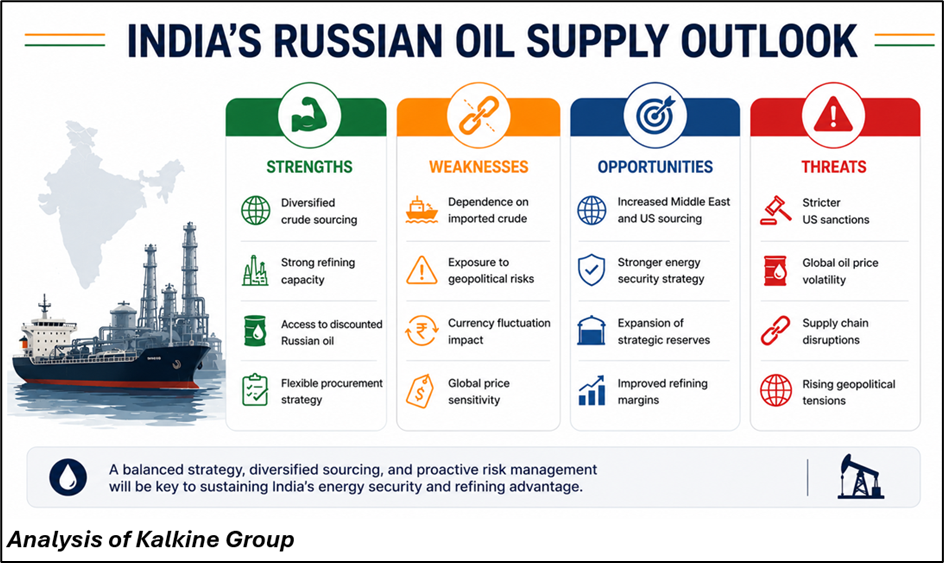
Diversified Crude Sourcing Supports Supply Stability
Analysts believe that softer global oil demand conditions, combined with ample availability of crude from the Middle East and the United States, could help cushion any short-term reduction in Russian shipments.
India has gradually expanded its sourcing network across multiple oil-producing regions, allowing refiners to adjust procurement strategies depending on pricing, logistics, and geopolitical developments. This diversification has improved supply security while reducing dependence on any single export market.
In recent years, Indian refiners have demonstrated strong operational flexibility by rapidly adjusting crude baskets to optimise refining margins and manage market volatility efficiently.
Russian Crude Remains Economically Attractive
Despite regulatory uncertainty, India is unlikely to significantly reduce Russian oil imports in the near term. Russian crude continues to offer attractive pricing advantages compared to several benchmark global grades, making it commercially beneficial for Indian refiners.
The availability of discounted Russian crude has supported refining profitability and helped India manage imported energy costs during periods of elevated global oil prices. Industry observers believe that unless tighter sanctions or payment restrictions are introduced, Indian refiners may continue maintaining Russian crude purchases wherever economically viable.
India has emerged as one of the largest importers of Russian crude in recent years, reshaping global trade flows and reinforcing its strategic approach toward energy affordability and supply diversification.
Markets Monitor Possibility of Further US Flexibility
Market participants also believe there remains a possibility that the United States could provide additional flexibility or extend certain waivers to avoid disruption in global crude markets and maintain supply stability among major consuming economies.
The expectation of potential policy adjustments has helped prevent panic across energy markets despite lingering geopolitical uncertainty. Traders and refiners continue to closely track diplomatic developments, sanctions policy decisions, and international shipping trends for further clarity.
India’s Long-Term Energy Strategy Gains Importance
India’s broader energy strategy increasingly focuses on balancing affordability, supply security, and geopolitical resilience. The country has continued strengthening refining infrastructure, expanding strategic petroleum reserves, and diversifying long-term energy partnerships across multiple producing nations.
Experts believe India’s large refining ecosystem and flexible import capabilities place the country in a relatively strong position to manage short-term external disruptions while maintaining stable domestic fuel availability.
As global energy markets continue evolving amid geopolitical tensions and shifting trade patterns, India’s adaptive procurement model and diversified supply strategy are expected to remain key pillars supporting long-term energy security.
FAQs
- Why is the Russian oil waiver important for India?
The waiver supports transactions involving Russian energy exports, allowing Indian refiners continued access to competitively priced Russian crude.
- Will India reduce Russian oil imports after the waiver expires?
India is unlikely to sharply reduce Russian crude imports in the near term unless stricter sanctions or operational restrictions emerge.
- How can India manage potential oil supply disruptions?
India can offset disruptions through diversified crude sourcing from the Middle East, the US, and other producing regions, along with strong refining flexibility and strategic energy planning.