

Highlights
- India’s benchmark 10-year bond yield opened higher following fresh crude oil price concerns.
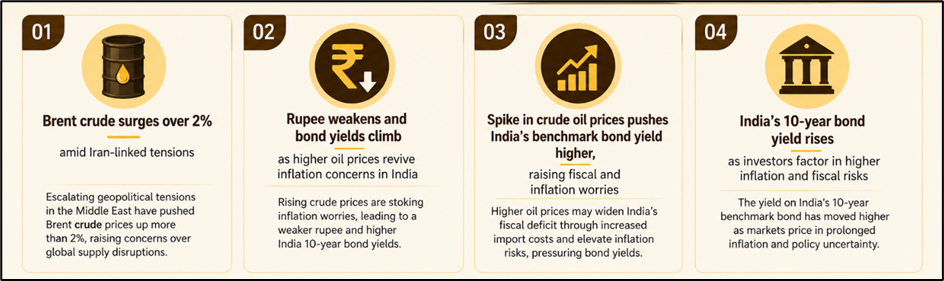
- Brent crude prices surged over 2 percent after reported US strikes linked to Iran tensions.
- Rupee weakened against the US dollar as investors tracked inflation and fiscal risks.
India’s benchmark 10-year government bond yield moved higher during early trade on May 26, 2026, amid rising concerns over global crude oil prices and inflationary pressure. The benchmark yield was trading at 7.0358 percent after opening on a firm note, reflecting cautious sentiment in the debt market.
Market participants closely tracked developments in global energy markets after Brent crude prices climbed more than 2 percent following reports of US strikes linked to Iran. Rising crude oil prices are generally viewed as negative for India because the country remains heavily dependent on energy imports.
Higher oil prices can increase imported inflation, widen the current account deficit, and put pressure on government finances. Bond investors typically respond to such developments by demanding higher yields on government securities.
Source: Analysis by Kalkine
Rupee Weakens Against US Dollar
The Indian rupee also witnessed pressure in early trade. The domestic currency opened 15 paise lower at 95.38 against the US dollar as traders evaluated the impact of rising oil prices and global risk sentiment.
A weaker rupee can further increase the cost of imports, particularly crude oil purchases, potentially adding to inflationary concerns. Currency weakness and elevated oil prices together often influence bond market sentiment negatively.
Inflation Concerns Return To Focus
Economists indicated that sustained increases in crude oil prices could complicate India’s inflation outlook. Higher fuel costs can affect transportation, manufacturing, and consumer prices across sectors.
Investors are also monitoring the possible implications for monetary policy. Persistent inflationary pressure could reduce expectations of aggressive policy easing by the Reserve Bank of India in the near term.
The RBI has remained focused on balancing inflation management and economic growth. However, any prolonged spike in commodity prices may increase uncertainty around future policy direction.
Technical Indicators Reflect Cautious Momentum
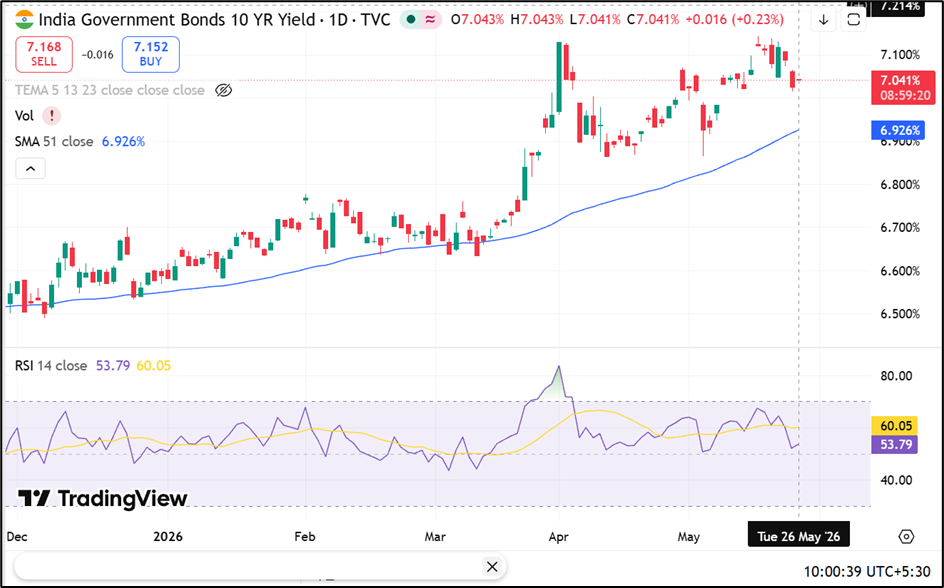
Market data showed the India Government Bond 10-year yield trading near 7.04 percent levels, while technical indicators reflected mixed momentum. The RSI indicator remained around neutral territory, indicating the market has not entered overbought conditions despite recent gains.
The 51-day moving average remained below current yield levels, suggesting yields have continued to trend higher in recent weeks. Traders are expected to monitor global crude movements, currency trends, and inflation data for further direction.
Source: Trading View
Global Developments Influence Domestic Debt Markets
Indian bond markets remain sensitive to international geopolitical developments and commodity price fluctuations. Global oil supply concerns often lead to volatility across emerging market assets, including bonds and currencies.
Investors are expected to remain cautious as geopolitical developments unfold and as markets assess the broader economic implications of elevated energy prices.
Key Risks
- Rising crude oil prices may accelerate domestic inflationary pressures.
- Weakening rupee could increase India’s import-related financial burden.
- Geopolitical tensions may trigger volatility across bond and currency markets.
- Elevated yields may increase government borrowing costs over time.
Summary
India’s benchmark 10-year government bond yield opened higher on May 26, 2026, amid a sharp rise in Brent crude oil prices following geopolitical developments involving Iran. The rupee weakened against the US dollar as investors assessed inflation and economic risks.
Economists cautioned that persistent oil price increases could affect inflation, monetary policy expectations, and broader market sentiment across India’s debt and currency markets.
FAQs
Q: Why did India’s 10-year bond yield rise on May 26, 2026?
A: The yield increased due to rising Brent crude oil prices and inflation-related concerns among investors.
Q: How did the Indian rupee react to higher crude oil prices?
A: The rupee opened 15 paise lower against the US dollar during early trade.
Q: Why are crude oil prices important for India’s bond market?
A: Higher oil prices may increase inflation, fiscal pressure, and borrowing costs, affecting bond yields.