

Higher Fuel Prices May Push Consumer Inflation Closer to RBI’s Comfort Threshold
India’s retail inflation is expected to have edged higher in April 2026 as elevated global energy prices and fuel-related costs gradually started feeding into household and business expenses, according to a Reuters survey of economists.
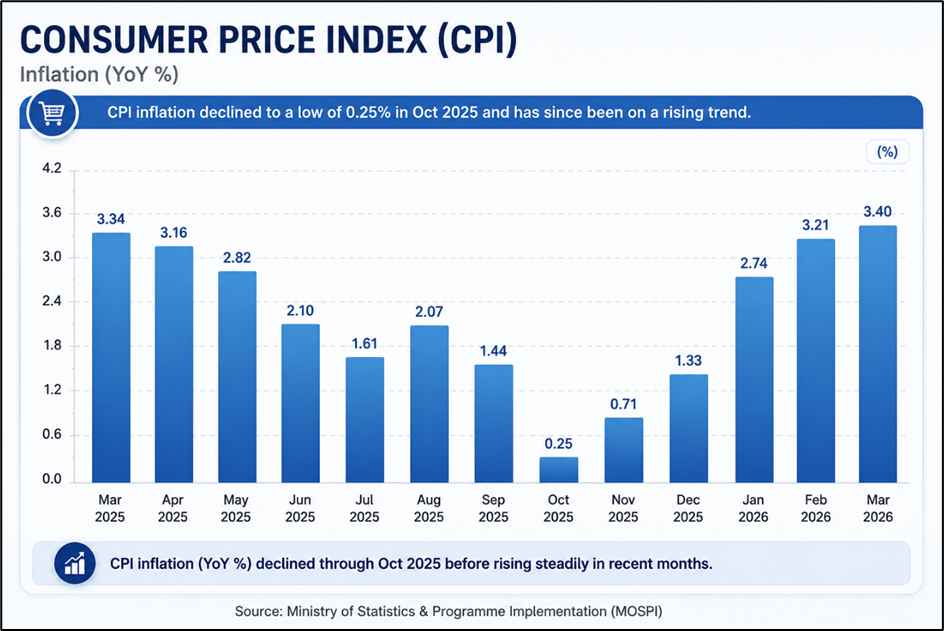
Economists polled expect consumer inflation to rise to around 3.8% in April from 3.4% recorded in March, bringing inflation closer to the Reserve Bank of India’s medium-term target of 4%.
However, these figures remain estimates, and the official inflation data is scheduled to be released by the Ministry of Statistics and Programme Implementation (MoSPI) on May 12, 2026.
The anticipated increase comes after a prolonged period of relatively moderate inflation supported by softer food prices and favourable statistical base effects. However, the recent surge in crude oil prices following geopolitical tensions in the Middle East is now emerging as a significant inflationary risk for the Indian economy.
Crude Oil Shock Raises Macro Concerns
Global crude oil prices have remained sharply elevated amid ongoing geopolitical uncertainty linked to the U.S.-Iran conflict. Brent crude continues to trade substantially above pre-conflict levels, increasing pressure on oil-importing economies such as India.
As one of the world’s largest crude importers, India remains particularly sensitive to energy price fluctuations. Rising oil prices typically impact the economy through:
- Higher transportation and logistics costs
- Increased cooking fuel expenses
- Rising manufacturing input prices
- Elevated service-sector inflation
- Pressure on household disposable income
Economists believe the impact of higher LPG prices implemented earlier this year likely extended into April, contributing to the expected rise in inflation readings.
Inflation Risks Begin Broadening Beyond Food
While food inflation has remained relatively contained in recent months, economists note that energy-linked inflationary pressures are now becoming increasingly visible across multiple sectors.
The gradual transmission of higher fuel prices into restaurant services, accommodation expenses, transportation, and daily consumer goods could lead to broader pricing pressure over the coming quarters.
At the same time, analysts caution that India’s inflation outlook could become more complicated if global energy prices remain elevated for an extended period.
RBI Policy Outlook Remains Under Focus
The Reserve Bank of India is expected to closely monitor incoming inflation data as policymakers balance economic growth concerns with price stability risks.
Although inflation remains below historically elevated levels, sustained increases in crude oil prices could challenge the current benign inflation environment. Economists believe prolonged energy market disruptions may eventually force higher retail fuel prices if global costs remain elevated.
Core inflation — which excludes food and fuel components is also expected to show mild upward movement, reflecting gradual pass-through effects across the broader economy.
Monsoon Concerns Add Additional Uncertainty
Apart from energy prices, weather conditions are also emerging as a critical variable for India’s inflation outlook.
Forecasts indicating the possibility of below-normal monsoon rainfall have increased concerns over food supply disruptions and agricultural output risks. Any sustained rise in food prices alongside elevated fuel costs could intensify inflationary pressure and complicate monetary policy decisions.
Food inflation has played a major role in keeping overall inflation moderate over the past year. A weaker monsoon could alter that trend significantly.
Markets Watch Energy Prices and Inflation Trends Closely
Investors and policymakers are expected to closely track:
- Official CPI inflation data release on May 12
- Global crude oil movements
- Domestic fuel pricing decisions
- Inflation trajectory
- Monsoon developments
- RBI policy guidance
- Currency market stability
The coming months may prove critical in determining whether inflation remains manageable or begins moving closer toward levels that require tighter monetary intervention.
Conclusion
India’s inflation outlook is beginning to reflect the impact of elevated global energy prices, with fuel-related costs gradually feeding into the broader economy. While inflation remains relatively contained, sustained crude oil strength and potential monsoon-related risks could increase pressure on policymakers, influencing future monetary decisions and broader economic stability.
FAQs
- Why is India’s inflation expected to rise in April?
Higher crude oil and LPG prices are likely contributing to increased transportation, fuel, and service-sector costs, pushing inflation slightly higher.
- When will the official inflation data be released?
The Ministry of Statistics and Programme Implementation (MoSPI) is scheduled to release the official CPI inflation data on May 12, 2026.
- Why are global oil prices important for India?
India imports a large portion of its crude oil requirements, making the economy highly sensitive to fluctuations in international energy prices.