

India Strengthens Semiconductor Ambitions with Global Collaboration
India’s semiconductor ambitions received a major boost as Tata Group and Dutch semiconductor equipment leader ASML signed a strategic agreement during Prime Minister Narendra Modi’s visit to the Netherlands. The development marks another important milestone in India’s efforts to position itself as a key player in the global semiconductor value chain.
The partnership between Tata Electronics and ASML is expected to focus on semiconductor manufacturing capabilities, supply chain development, technology collaboration, and talent creation in India. The agreement comes at a time when countries worldwide are accelerating investments in semiconductor ecosystems to reduce dependence on limited manufacturing hubs.
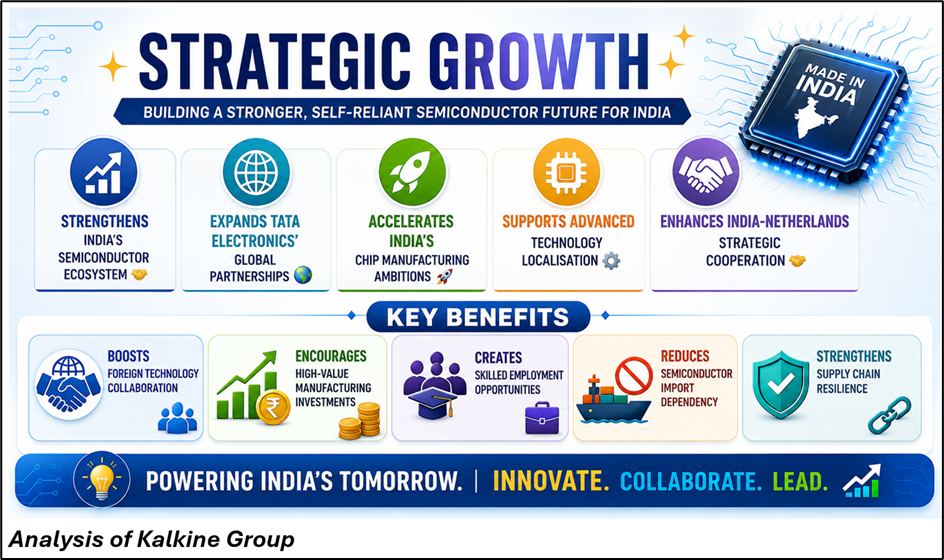
PM Modi and Dutch Leadership Discuss Strategic Cooperation
During his discussions with Dutch Prime Minister Dick Schoof, PM Modi highlighted the growing strategic relationship between India and the Netherlands. According to Modi, the talks focused on strengthening cooperation across critical sectors including semiconductors, defence, security, clean energy, and advanced technologies.
The visit underlined the increasing importance of technology-led partnerships between India and European nations amid evolving geopolitical and economic dynamics.
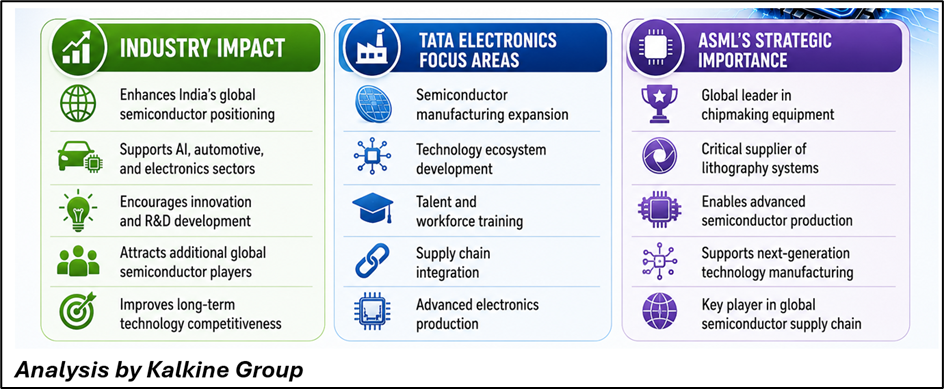
ASML’s Role in the Global Semiconductor Industry
ASML, headquartered in the Netherlands, is globally recognised for its advanced lithography systems used in semiconductor manufacturing. The company supplies highly sophisticated equipment that is essential for producing advanced semiconductor chips used in smartphones, artificial intelligence infrastructure, automotive electronics, data centres, and defence systems.
The company holds a strategically important position within the global semiconductor ecosystem, making its collaboration with Tata Electronics a significant development for India’s long-term technology goals.
Tata Group Expands Presence in India’s Chip Manufacturing Ecosystem
The collaboration aligns with the Indian government’s broader vision of transforming the country into a semiconductor manufacturing hub. Over the last few years, India has introduced multiple incentive schemes aimed at attracting global semiconductor investments and strengthening domestic electronics production.
Tata Group has emerged as one of the leading Indian conglomerates aggressively investing in semiconductor and electronics manufacturing. Industry experts believe that collaboration with a global technology leader like ASML could accelerate India’s semiconductor ecosystem development and strengthen its global competitiveness.
Strategic Importance of Semiconductor Partnerships
The semiconductor sector has become a strategic priority globally due to its importance in digital infrastructure, artificial intelligence, industrial automation, automotive technology, and national security. Countries are increasingly seeking resilient and diversified supply chains to minimise disruptions and geopolitical risks.
India’s partnership with ASML signals the country’s intent to establish a stronger presence in the global semiconductor industry while attracting technology transfer opportunities, foreign investments, and high-skilled employment generation.
The agreement is also expected to support India’s long-term objective of becoming a reliable alternative manufacturing destination within the global technology supply chain.
FAQs
- What is the significance of the Tata-ASML semiconductor agreement?
The agreement strengthens India’s semiconductor manufacturing ambitions and enables collaboration with one of the world’s leading semiconductor equipment companies.
- What does ASML do in the semiconductor industry?
ASML develops advanced lithography systems used in semiconductor chip manufacturing. Its technology is critical for producing high-performance processors and electronic components.
- Why is India focusing on semiconductor manufacturing?
India aims to reduce import dependence, strengthen technology security, attract global investments, create high-skilled jobs, and become a major participant in the global semiconductor supply chain.