

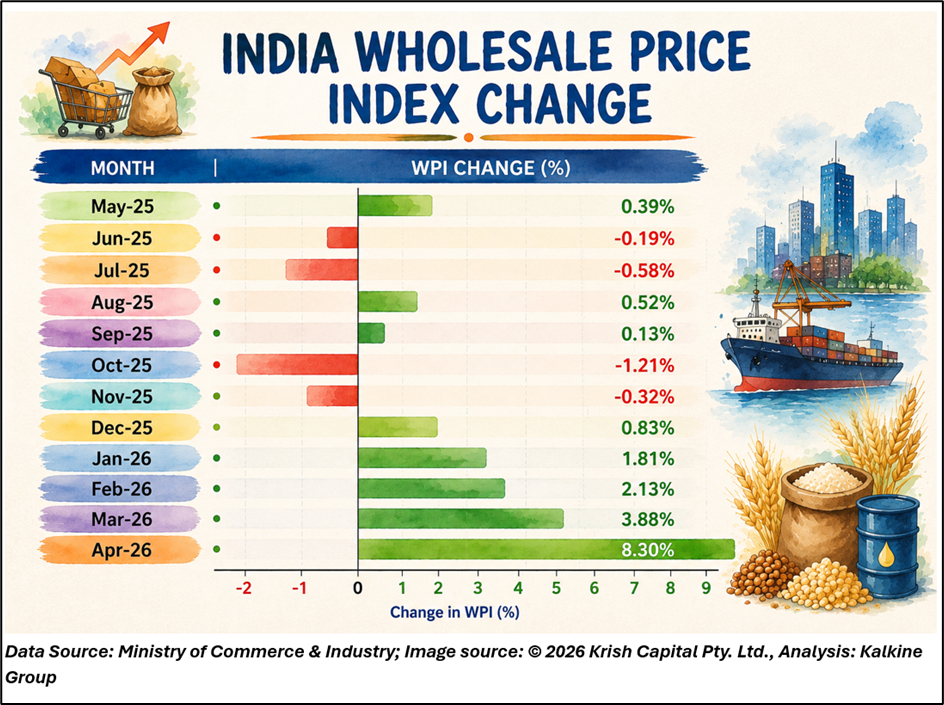
India’s wholesale inflation accelerated sharply in April, touching a 42-month high of 8.3%, driven primarily by a steep rise in crude oil and energy prices. The sharp increase has renewed concerns over input cost pressures across manufacturing, transportation, and industrial sectors.
The latest rise in wholesale price inflation (WPI) reflects the growing impact of elevated global commodity prices and geopolitical tensions on India’s production ecosystem.
Crude Oil Emerges as the Biggest Inflation Driver
The strongest upward pressure came from the fuel and energy segment, particularly crude petroleum and natural gas.
Inflation in crude petroleum and natural gas reportedly surged to 67.18% in April, compared to 35.98% in March, reflecting the sharp escalation in global energy prices.
The rise follows ongoing geopolitical instability in key oil-producing regions, which has increased concerns around global supply disruptions and transportation costs.
Higher crude prices are now beginning to impact several parts of the economy simultaneously, including logistics, manufacturing, aviation, chemicals, and industrial production.
Manufacturing Sector Faces Rising Cost Pressure
The increase in wholesale inflation also indicates mounting cost pressures for manufacturers across sectors.
Higher energy and raw material prices tend to raise production expenses for businesses, particularly industries dependent on fuel-intensive operations.
Sectors likely to feel the impact include:
- Transportation and logistics
- Chemicals and petrochemicals
- Cement and construction materials
- Aviation and travel
- Consumer goods manufacturing
- Industrial production
If elevated input costs persist for a prolonged period, companies may eventually pass some of the burden to consumers through higher product prices.
Food Inflation Remains Relatively Stable
Despite the sharp rise in fuel-driven inflation, food inflation remained comparatively moderate during the month.
This helped partially offset the broader inflationary pressure at the wholesale level. However, economists caution that prolonged increases in transportation and energy costs could eventually affect food supply chains and retail pricing in the coming months.
Higher fuel prices often increase storage, packaging, and distribution expenses, which may gradually feed into consumer inflation.
Impact on Monetary Policy Expectations
The spike in wholesale inflation may complicate future monetary policy decisions for policymakers.
While retail inflation trends remain an important focus area, persistent wholesale price pressures can influence broader inflation expectations and industrial profitability.
Economists believe the Reserve Bank of India may continue closely monitoring:
- Global crude oil movements
- Supply chain disruptions
- Currency volatility
- Imported inflation risks
- Food and fuel price transmission
Any sustained increase in commodity inflation could influence interest rate expectations and liquidity conditions going forward.
Global Factors Continue to Influence Domestic Inflation
India remains heavily dependent on imported crude oil, making the economy vulnerable to global energy price fluctuations.
Current inflationary trends are being shaped by multiple external factors, including:
- Geopolitical tensions in West Asia
- Supply-side disruptions in global energy markets
- Shipping and freight cost increases
- Currency market volatility
- Global commodity price movements
Analysts believe energy prices will remain one of the key variables influencing India’s inflation trajectory over the next few quarters.
Conclusion
India’s sharp rise in wholesale inflation highlights the growing pressure from elevated global crude oil prices and energy-related costs. While food inflation remains relatively contained for now, sustained fuel inflation could gradually spill over into broader consumer prices and industrial costs. The coming months will likely depend heavily on global energy market stability and geopolitical developments.
FAQs
- Why did India’s wholesale inflation rise sharply in April?
The surge was mainly driven by a steep increase in crude oil and natural gas prices.
- What is wholesale inflation?
Wholesale inflation measures price changes at the producer or wholesale level before products reach consumers.
- Can higher wholesale inflation affect consumers?
Yes. Rising fuel and manufacturing costs may eventually increase retail prices for goods and services.