

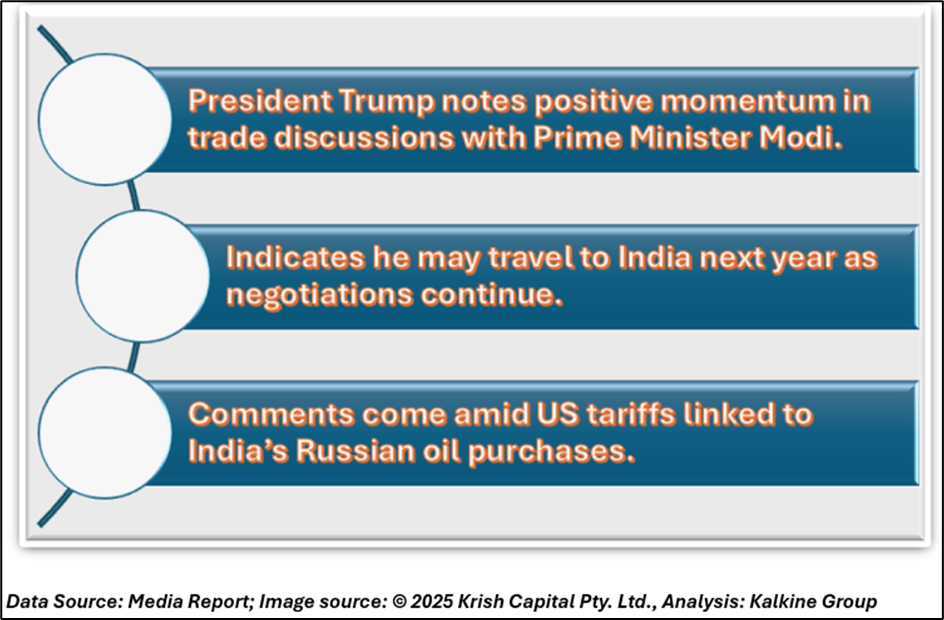
US President Donald Trump has said that his discussions with Prime Minister Narendra Modi regarding an India-US trade deal are progressing positively. Speaking at a press briefing in Washington, he described Modi as a “friend” and confirmed that they have been in regular contact..
Trump also claimed that India has “largely” reduced its imports of Russian crude oil, presenting it as a factor contributing to smoother negotiations. When asked whether he plans to visit India next year, he replied that such a trip is “possible,” suggesting that diplomatic engagement could intensify in the coming months.
Tariffs Remain the Key Issue
The comments arrive at a time when both sides are dealing with heightened tariffs. The United States recently imposed duties of up to 50 percent on specific Indian shipments, including an additional 25 percent levy, citing ongoing purchases of discounted Russian oil by New Delhi.
India has been urging Washington to adopt a more flexible approach, arguing that energy procurement decisions are shaped by domestic needs and volatile global markets.
Meanwhile, White House spokesperson Caroline Leavitt said that India remains a “critical partner” in America’s strategic framework. She noted that Trump and Modi spoke recently, including during the President’s Diwali celebration with senior Indian-American officials at the Oval Office.
Economic Consequences of the Negotiations
Higher US tariffs temporarily weigh on India’s export performance, particularly for sectors such as pharmaceuticals, textiles, and industrial goods. American companies sourcing from India may also face rising procurement costs.
Conclusion
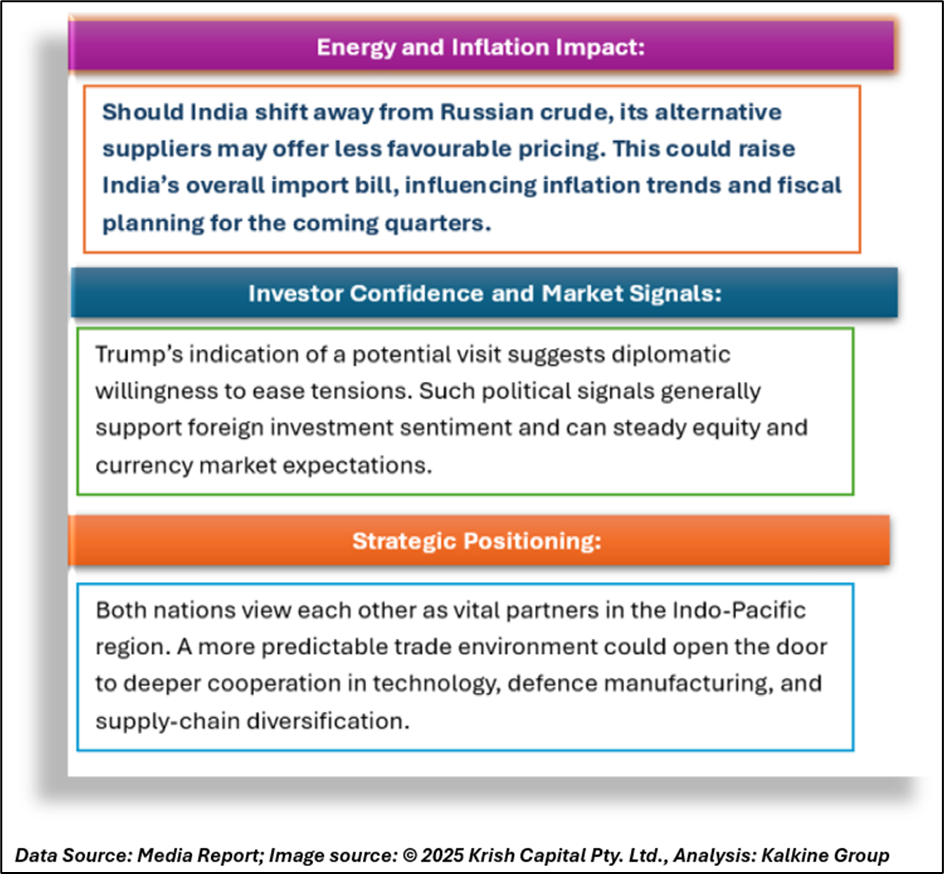
Overall, President Trump’s latest remarks indicate that both governments are attempting to stabilise the relationship despite ongoing tariff pressures. While the trade dispute over Russian oil-linked duties remains unresolved, the tone from Washington suggests room for negotiation and a willingness to rebuild momentum.
A potential visit by Trump to India could serve as a catalyst for narrowing outstanding differences on tariffs, market access, and long-term strategic cooperation. The coming months will be important in determining whether both sides can translate this diplomatic outreach into a more predictable and balanced economic framework.