

India recorded a strong pickup in merchandise exports in November 2025, driven by a sharp increase in shipments to China and a recovery in exports to the United States, even as higher tariffs remained in place. The improvement helped reduce the country’s trade deficit to its lowest level in five months, following a weak performance in October.
China Emerges as a Key Growth Market
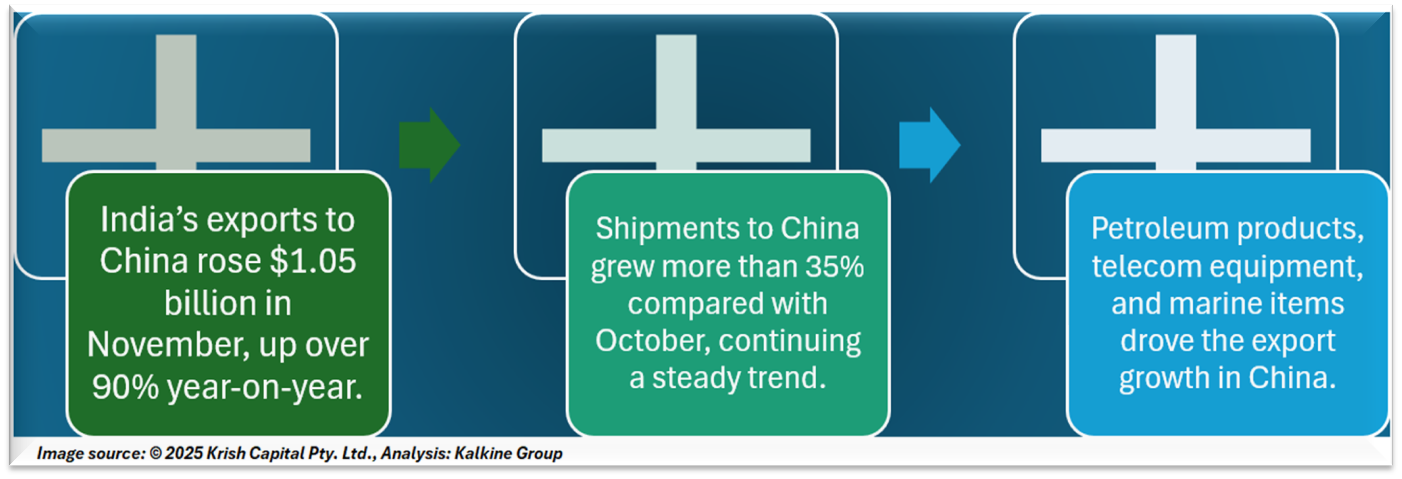
Exports from India to China rose sharply in November, increasing by $1.05 billion year-on-year to $2.20 billion. This translated into growth of more than 90% compared with the same month last year. Shipments to China also expanded by over 35% compared with October, extending a steady upward trend seen throughout the financial year.
The rise in exports to China has been supported by higher demand for petroleum products, telecom equipment, and marine items. Consistent growth in this market has helped Indian exporters manage slower momentum in some other global destinations.
US Shipments Recover After Earlier Decline
Exports to the United States increased by over 22% year-on-year to $6.98 billion in November, despite elevated reciprocal tariffs that have been in effect since late August. Shipments had fallen sharply in September, declining 21% to $5.43 billion, as exporters adjusted to higher trade barriers.
The recovery began in October and strengthened further in November, with exports rising both year-on-year and sequentially by nearly 10%. Demand for products less impacted by tariffs, including smartphones, pharmaceuticals, and petroleum goods, helped support the rebound.
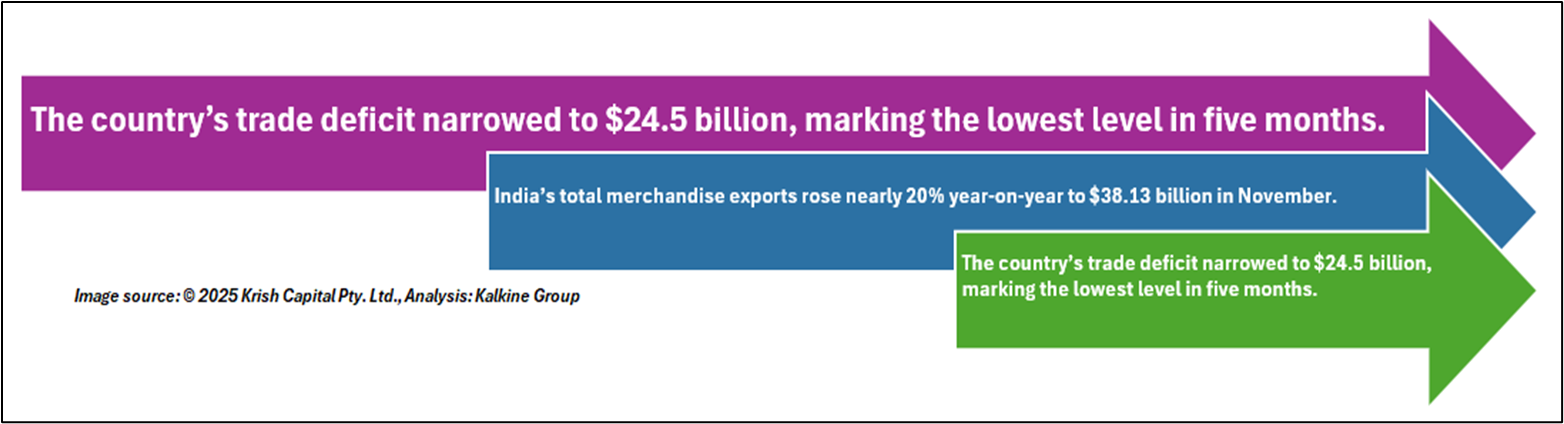
India’s total merchandise exports rose nearly 20% year-on-year to $38.13 billion in November, reversing a decline of almost 12% recorded in October. The stronger export performance helped narrow the trade deficit to $24.5 billion, marking a five-month low.
Labour-Intensive Exports Stage a Comeback
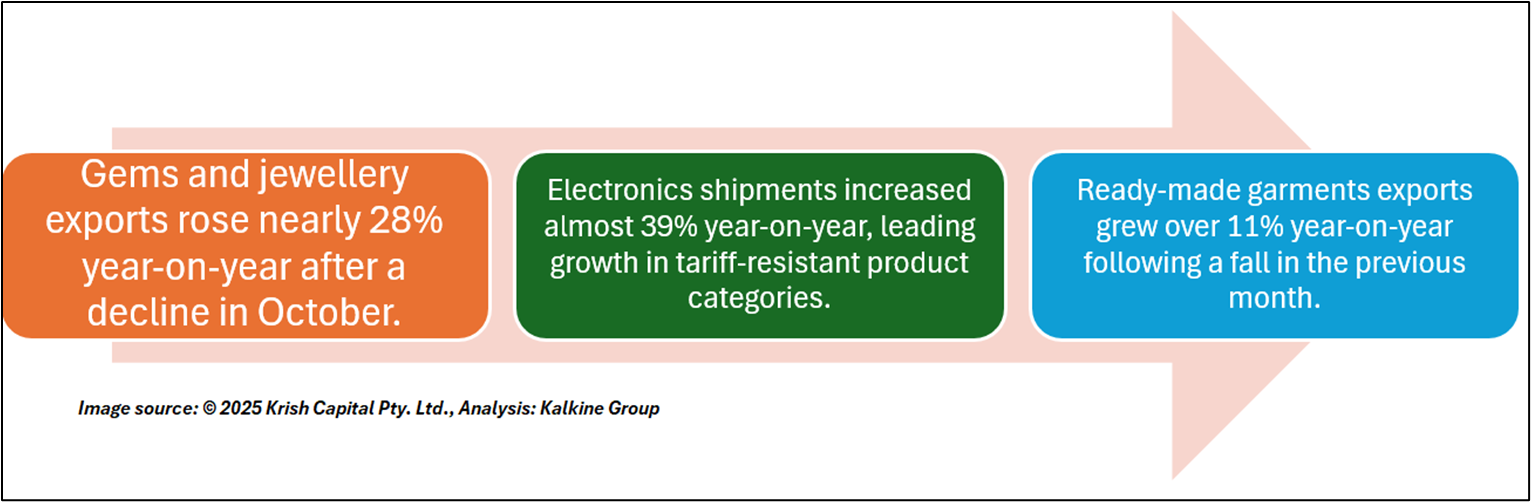
Several labour-intensive sectors showed a noticeable recovery in November after contracting in the previous month. Gems and jewellery exports increased nearly 28% year-on-year, following a drop of close to 30% in October. Engineering goods also rebounded, rising almost 24% after declining earlier.
Exports of ready-made garments across textiles grew over 11% year-on-year, reversing a nearly 13% fall in October. Leather product exports rose close to 6% after previously declining by around 16%.
Product groups less exposed to higher tariffs continued to post solid gains. Electronics exports jumped almost 39% year-on-year, while drugs and pharmaceuticals rose about 21%. Petroleum product shipments increased by more than 11%, further supporting overall export growth.
Gradual Adjustment to Global Trade Conditions
The November export data suggests that Indian exporters are gradually adapting to shifting global trade conditions by diversifying markets and focusing on resilient product categories. While tariff-related challenges persist, the broad-based improvement in November points to stabilising export momentum heading into the coming months.
Conclusion
India’s merchandise exports showed broad-based growth in November, led by strong shipments to China and a recovery in the US. Labour-intensive sectors and key product categories like electronics and pharmaceuticals supported the rebound. The improvement helped narrow the trade deficit to a five-month low. Overall, the data indicates that Indian exporters are adjusting effectively to global trade challenges while sustaining momentum.