

Diplomatic Progress Raises Hopes for Stability in Global Oil Trade
A fresh diplomatic breakthrough between the United States and Iran has sparked optimism across global financial and energy markets, after reports suggested both nations have agreed on a phased easing of tensions surrounding the strategically critical Strait of Hormuz.
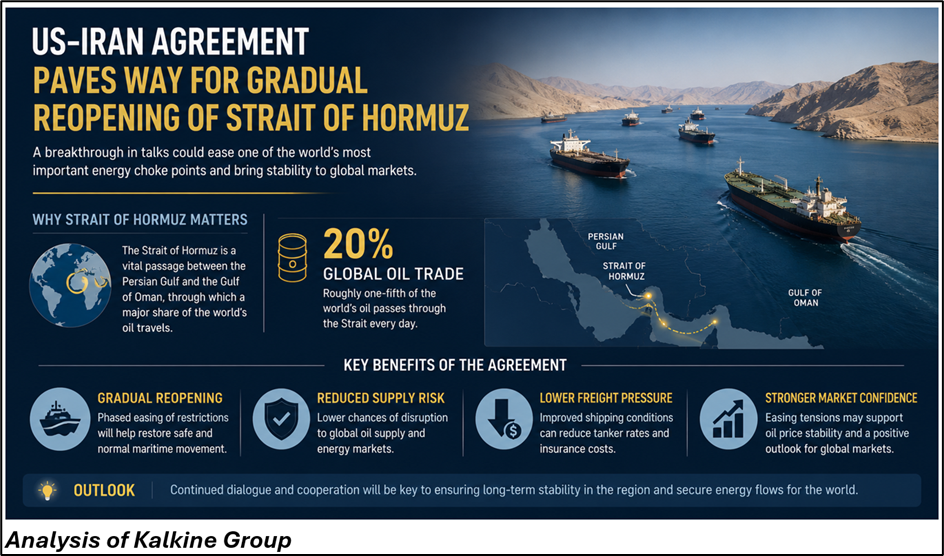
According to regional media reports, discussions between Washington and Tehran have resulted in an understanding aimed at gradually restoring maritime movement through the narrow waterway, which handles a substantial portion of the world’s crude oil shipments. The reported arrangement is expected to involve a calibrated reduction in military restrictions alongside coordinated measures to ensure safe commercial navigation.
The development arrives at a crucial moment for global markets, which have remained volatile amid fears of prolonged geopolitical conflict in the Middle East. Investors had closely monitored the situation after disruptions in the Strait raised concerns over oil supply security, shipping costs, and inflationary pressure across major economies.
Earlier in the day, US President Donald Trump indicated that negotiations with Iran were progressing positively. Speaking to reporters, Trump stated that discussions had been “very constructive” and suggested the broader conflict could de-escalate faster than initially anticipated.
Why the Strait of Hormuz Matters
The Strait of Hormuz remains one of the world’s most important energy transit chokepoints, linking the Persian Gulf with international shipping lanes. A major share of crude exports from countries including Saudi Arabia, Iraq, the UAE, Kuwait, and Iran moves through this corridor daily.
Any disruption in the region tends to trigger immediate reactions in global commodity markets. Oil prices had previously surged amid fears of restricted tanker movement and potential military escalation. Analysts believe that even a gradual reopening could help stabilize crude prices, ease freight insurance premiums, and improve investor confidence globally.
Market participants are now assessing whether the diplomatic progress could reduce pressure on central banks battling inflation driven by elevated energy costs.
Global Markets Watching Closely
Energy traders, shipping companies, and institutional investors are expected to monitor the implementation phase carefully. While the reported agreement marks a positive shift, analysts caution that geopolitical negotiations in the region remain highly sensitive and could still face setbacks.
However, the possibility of improved maritime access has already strengthened expectations of smoother oil supply flows in the coming weeks. Asian economies, particularly large energy importers such as India, China, Japan, and South Korea, could benefit significantly from reduced supply-chain uncertainty.
For India, easing tensions in the Gulf may help moderate crude import costs, support currency stability, and improve visibility for sectors heavily dependent on fuel prices, including aviation, logistics, paints, chemicals, and oil marketing companies.
Strategic Implications Beyond Energy
Beyond commodity markets, the reported understanding between the US and Iran may also reshape broader geopolitical dynamics in the Middle East. Improved communication channels between both sides could reduce risks of military confrontation in the Gulf region and encourage renewed diplomatic engagement among regional powers.
The development may further influence defense positioning, maritime security policies, and international trade routes tied to the Persian Gulf.
Although official confirmation and operational details are still awaited, markets are likely to treat the reported breakthrough as an important step toward restoring regional stability after weeks of uncertainty.
Conclusion
The reported US-Iran understanding on the Strait of Hormuz signals potential easing of geopolitical tensions and improved energy supply visibility. The development could stabilize crude oil prices, reduce shipping disruptions, and support global equity sentiment. Energy-importing nations, including India, may benefit from lower inflationary pressure and improved macroeconomic stability.