

Highlights
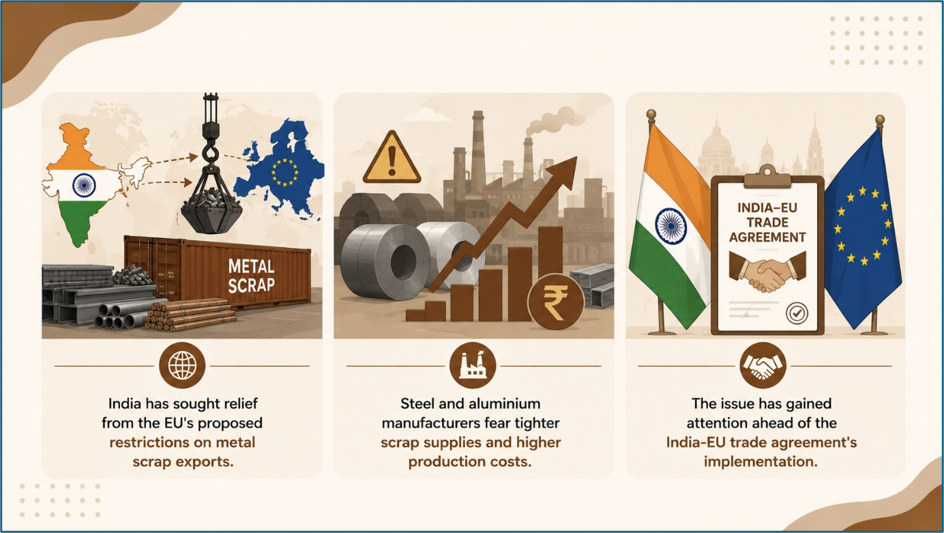
- India has requested exemption from proposed EU metal scrap export restrictions.
- Domestic steel and aluminium industries fear tighter scrap supplies and higher production costs.
- The issue has emerged alongside implementation of the India-EU trade agreement.
India has asked the European Union (EU) to provide relief from planned restrictions on metal scrap exports, arguing that the proposed measures could tighten the supply of critical raw materials for domestic industries. According to government and industry officials, India has formally sought continued access to recyclable metals as the country prepares for the implementation of the India-EU trade agreement. The concerns come as the EU moves ahead with new regulations governing waste and scrap exports.
Source: Analysis by Kalkine
What Are the Proposed EU Scrap Export Curbs?
Under the EU's revised Waste Shipment Regulation, exports of non-hazardous waste to countries outside the Organisation for Economic Co-operation and Development (OECD) will be restricted from May 2027 unless importing countries receive approval by November 2026. Separately, the European Commission is also considering additional measures to limit aluminium scrap exports, although discussions on these proposals have been delayed until September 2026.
Why Is India Concerned?
India's steel and aluminium industries depend on imported recyclable metal scrap as an important raw material for manufacturing. Industry representatives believe that any reduction in supplies from the EU could increase procurement costs and tighten the availability of quality scrap. The Engineering Export Promotion Council of India has stated that the EU remains a major supplier of high-quality ferrous scrap, making uninterrupted access important for domestic manufacturers.
Relief Measures Under Discussion
Government officials indicated that India has formally applied to retain access to recyclable materials under the new EU regime. One possible option being discussed is the use of export quotas instead of a complete restriction on scrap shipments. The proposal is intended to allow continued trade while addressing the EU's policy objectives regarding waste management and recycling. The Ministry of Commerce has not publicly commented on the matter.
Impact on the India-EU Trade Agreement
The issue has gained attention because the India-EU trade agreement is expected to take effect early next year. While the agreement does not directly address the EU's carbon-related measures or scrap export policies, Indian officials expect that future trade arrangements should not create additional challenges for domestic industries. Industry participants have raised concerns that tighter scrap export rules could reduce some of the expected benefits of closer trade ties between India and the EU.
India's Dependence on Imported Scrap
India is among the world's largest importers of recyclable metal scrap. Industry estimates indicate that the country imported around 366,000 tonnes of aluminium scrap from the EU during 2025, making it the bloc's largest buyer during the first quarter of 2026. At the same time, the EU reported record aluminium scrap exports of about 1.27 million metric tonnes in 2025, with a significant share shipped to Asian markets. Industry groups have also pointed to the UAE's recent export ban as another factor that could tighten global scrap supplies.
What It Means for Manufacturers
If the proposed restrictions are implemented without exemptions, Indian steel and aluminium manufacturers could face higher raw material costs and greater competition for recyclable metals from alternative suppliers. Industry associations have also warned that increasing "resource nationalism" across countries may affect the global availability of recycled metals such as aluminium and copper, potentially influencing procurement strategies and production costs. The final impact will depend on the EU's policy decisions and the outcome of discussions with trading partners.
Risks
- Reduced scrap imports could increase manufacturing input costs.
- Supply shortages may affect steel and aluminium production.
- Global competition for recycled metals could intensify.
- Policy uncertainty may influence long-term sourcing strategies.
Summary
India has sought relief from the EU's proposed metal scrap export restrictions, citing concerns over raw material availability for steel and aluminium producers. The government has requested continued access to recyclable metals, with export quotas being discussed as a possible solution. The outcome could influence production costs and the benefits expected from the India-EU trade agreement.
FAQs
Q: Why is India seeking relief from the EU's scrap export rules?
A: India fears the proposed restrictions could reduce metal scrap supplies and increase raw material costs for domestic manufacturers.
Q: When will the EU's new waste shipment regulation take effect?
A: The revised regulation is scheduled to apply from May 2027, subject to the EU's implementation framework.
Q: How could the proposed curbs affect Indian industries?
A: Steel and aluminium manufacturers may face tighter scrap supplies, higher procurement costs and increased sourcing competition.