

Highlights
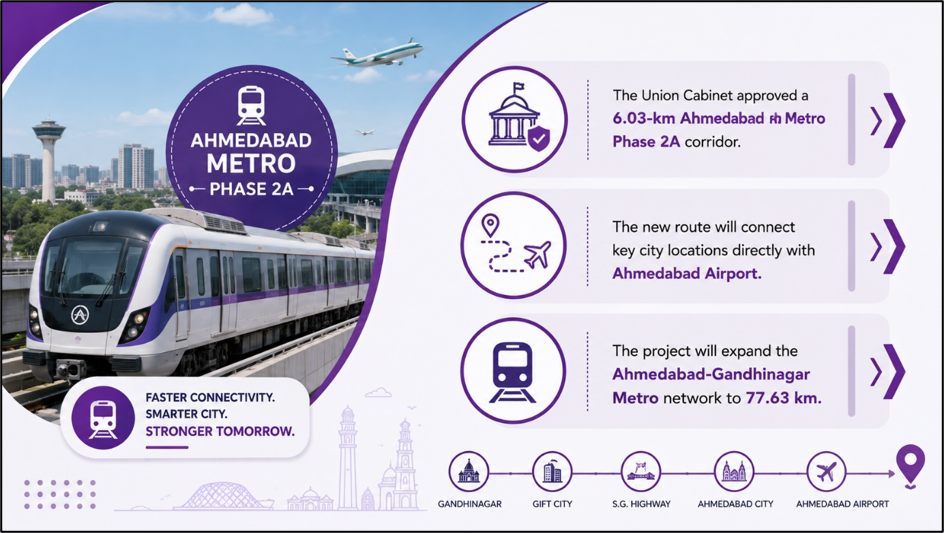
- Union Cabinet approved a 6.03-km Ahmedabad Metro Phase 2A corridor.
- New route will connect key city locations with Ahmedabad Airport.
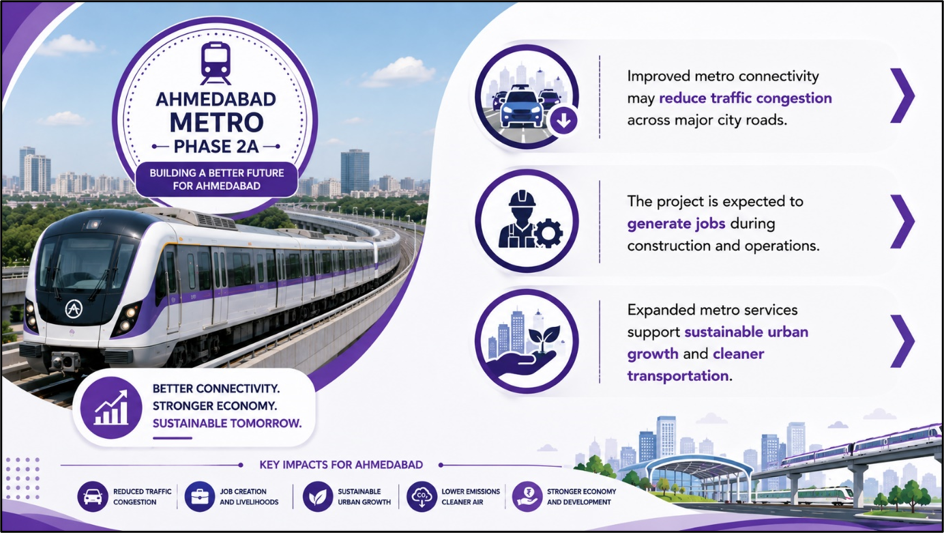
- Project is expected to generate jobs during construction and operations.
The Union Cabinet has approved Phase 2A of the Ahmedabad Metro Rail Project, paving the way for a new corridor connecting Koteshwar Road to Ahmedabad Airport. The approved stretch will add 6.032 km to the city's metro network and include five stations designed to improve connectivity between important residential, commercial, and transport hubs.
The project is expected to further strengthen urban mobility in Ahmedabad while supporting the growing transportation needs of the city and surrounding regions.
 Source: Analysis by Kalkine
New Corridor to Extend Metro Reach
Under the approved plan, the new metro corridor will comprise four elevated stations and one underground station. The stations proposed along the route are Ashram Road, Koteshwar Prachin Mandir, Sabarmati River, Sardar Nagar, and Airport.
Following the completion and operationalisation of Phase 2A, the Ahmedabad-Gandhinagar Metro network will expand to approximately 77.63 km, making it one of the larger urban transit systems in the country. The project has been approved at a total cost of Rs 2,169.04 crore, including interest incurred during the construction period.
Airport Connectivity Takes Centre Stage
One of the primary objectives of the project is to provide direct metro access to Ahmedabad Airport. Improved airport connectivity is expected to benefit residents, business travellers, tourists, and daily commuters by offering a reliable alternative to road-based transport.
The corridor is also intended to connect areas that currently have limited access to efficient public transportation. By integrating these locations with the existing Ahmedabad-Gandhinagar Metro network, the project aims to improve overall accessibility across the urban region.
The proposed route may also support future infrastructure developments linked to major sporting events expected in the coming years.
Expected Impact on Urban Mobility
The metro extension is anticipated to play an important role in reducing dependence on private vehicles and road-based transportation. Improved public transit options could help ease traffic congestion on major city roads and contribute to smoother travel within Ahmedabad.
Reduced traffic volumes may also lower travel times for commuters and improve road safety by decreasing pressure on existing transport infrastructure.
As urban populations continue to grow, expanding mass transit networks remains an important component of city planning and sustainable mobility strategies.
Environmental Advantages of Metro Expansion
The expansion of the metro network is also expected to contribute to environmental goals by encouraging greater use of public transport. Metro rail systems generally offer a lower carbon footprint compared to conventional fossil fuel-based transportation modes.
With increased network coverage, authorities expect a larger share of commuters to shift from personal vehicles to public transport, helping reduce emissions and supporting cleaner urban mobility.
The project aligns with broader efforts to develop sustainable transport solutions in rapidly expanding cities.
Economic and Business Benefits
Improved connectivity often creates opportunities for commercial activity around transport corridors. Easier access to airports, railway stations, and business districts can enhance movement of people and support economic activity across different parts of the city.
Areas located near metro stations may also witness increased commercial interest as improved accessibility can encourage investment and infrastructure development.
The project is expected to contribute to economic activity during both construction and operational phases.
Employment Opportunities to Be Created
The Ahmedabad Metro Phase 2A project is projected to generate employment across various stages of implementation. During peak construction activity, around 2,000 people are expected to be engaged in project-related work.
After the corridor becomes operational, approximately 500 individuals are likely to be employed in operations and maintenance activities associated with the metro system.
The employment generated is expected to span engineering, construction, technical services, operations, and support functions.
Supporting Long-Term Urban Development
The metro expansion forms part of broader efforts to strengthen public transport infrastructure in Ahmedabad and Gandhinagar. By improving connectivity between key locations, the project seeks to address transportation challenges while supporting future urban growth.
The additional corridor is expected to enhance accessibility, improve commuter convenience, and contribute to a more integrated transport network for the region.
 Source: Analysis by Kalkine
Key Risks
- Construction delays could impact project completion timelines.
- Cost escalations may affect overall project expenditure.
- Ridership growth may take time after commissioning.
- Traffic disruptions could occur during construction activities.
Summary
The Union Cabinet has approved Ahmedabad Metro Phase 2A, a 6.032-km corridor connecting Koteshwar Road to Ahmedabad Airport at a cost of Rs 2,169.04 crore. The project includes five stations and will expand the Ahmedabad-Gandhinagar Metro network to 77.63 km. The metro extension is expected to improve airport connectivity, reduce road congestion, support environmental goals, generate employment, and contribute to long-term urban development in the region.
FAQs
Q: What is the length of Ahmedabad Metro Phase 2A?
A: The approved Phase 2A corridor will span approximately 6.032 km and include five stations.
Q: How much investment has been approved for the project?
A: The total approved project cost, including construction-related interest, is Rs 2,169.04 crore.
Q: How will the metro extension benefit commuters?
A: The project will improve airport access, reduce travel time, and enhance connectivity across key city locations.