

Highlights
- India's core sector growth eased to 0.5% in May from 1.8% in April.
- Weakness in energy-related industries weighed on overall infrastructure output.
- Steel, cement and electricity sectors continued to record positive growth.
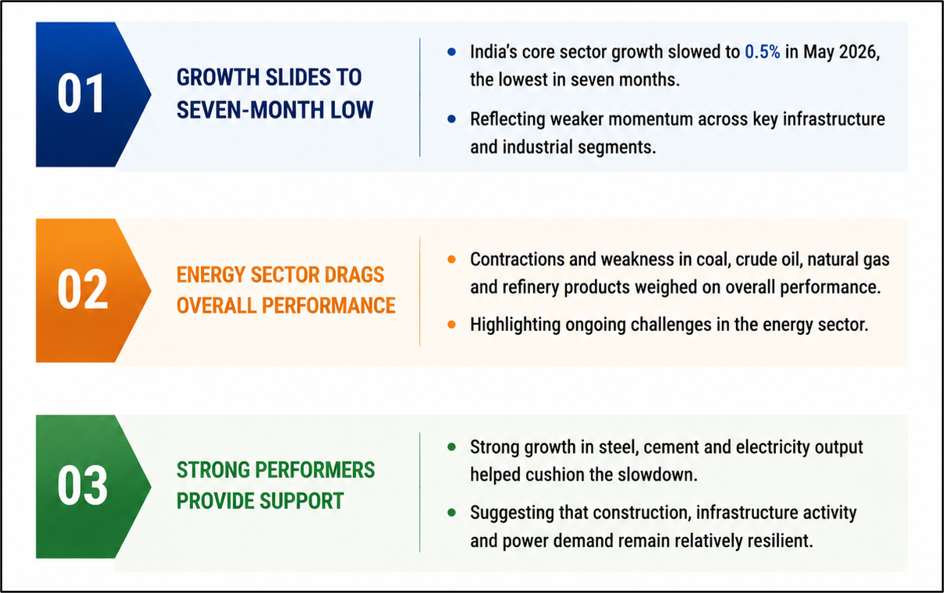
India's core infrastructure sector growth slowed sharply to a seven-month low of 0.5% year-on-year in May 2026, highlighting a loss of momentum in key industrial segments. The latest data showed a significant decline from the 1.8% growth recorded in April, with weakness across several energy-related sectors dragging down overall performance. The reading marks the slowest expansion since October 2025, when the eight core industries had registered a contraction.
The Index of Eight Core Industries (ICI) tracks the performance of coal, crude oil, natural gas, refinery products, fertilisers, steel, cement and electricity. Together, these sectors account for about 40% of the weight in the Index of Industrial Production (IIP), making them an important indicator of broader industrial activity.
Source: Analysis by Kalkine
Energy Sectors Drag Overall Performance
The slowdown was primarily driven by weaker output in energy-related industries. Coal, crude oil, natural gas and refinery products either recorded contractions or remained under pressure during May, offsetting gains in other sectors. The performance suggests that challenges in the energy segment continue to weigh on infrastructure activity and industrial momentum.
Energy industries play a critical role in supporting manufacturing, transportation and broader economic activity. Therefore, sustained weakness in these sectors can have implications for industrial production and economic growth in the coming months.
Steel, Cement And Electricity Offer Support
Despite the overall slowdown, some sectors continued to show resilience. Cement production expanded by 8.4%, electricity generation increased by 8.7% and steel output grew by 5% during May. These sectors helped prevent a sharper decline in the overall core sector index.
Growth in cement and steel production may indicate ongoing activity in construction and infrastructure projects, while higher electricity generation reflects continued demand from industrial and commercial users. However, these gains were insufficient to fully offset weakness elsewhere.
What The Data Signals For Industrial Activity
The core sector data is often viewed as an early indicator of industrial performance because it captures trends in industries that form the foundation of economic activity. A slowdown in core industries can influence future IIP growth and provide clues about broader economic momentum.
The latest figures come at a time when other indicators have also pointed to moderation in economic activity. Recent surveys have suggested softer demand conditions and a more cautious business environment, raising questions about the pace of industrial expansion in the near term.
Outlook Hinges On Energy Recovery
Going forward, the performance of energy-related sectors will be closely monitored. Recovery in coal production, refinery output and oil and gas activity could help improve core sector growth. At the same time, policymakers and businesses will watch global commodity prices, domestic demand conditions and infrastructure spending trends for signals about future industrial activity.
The core sector remains a key component of India's industrial landscape, and sustained improvement across multiple industries will be important for maintaining economic momentum during the rest of FY27.
Key Risks
- Continued contraction in energy sectors may affect industrial output.
- Weak crude oil and natural gas production could weigh on growth.
- Slower infrastructure activity may impact future demand.
- Global commodity volatility could affect industrial performance.
Summary
India's core sector growth slowed to a seven-month low of 0.5% in May 2026, down from 1.8% in April, as weakness in energy-related industries weighed on overall performance. Coal, crude oil, natural gas and refinery products remained under pressure, while steel, cement and electricity sectors recorded positive growth. Since the eight core industries account for a significant portion of industrial production, the slowdown may indicate softer momentum in broader economic activity.
FAQs
Q: What was India's core sector growth rate in May 2026?
A: India's core sector growth slowed to 0.5% in May 2026.
Q: Which sectors supported growth despite the slowdown?
A: Cement, steel and electricity recorded positive growth during May.
Q: Why is the core sector important for the economy?
A: The eight core industries account for around 40% of the IIP and indicate industrial activity trends.