

Highlights
- India's forex reserves declined to USD 681.4 billion during the May 22, 2026.
- RBI intervention and lower gold valuations contributed to the reserve decline.
- The rupee recovered from a record low following central bank support.
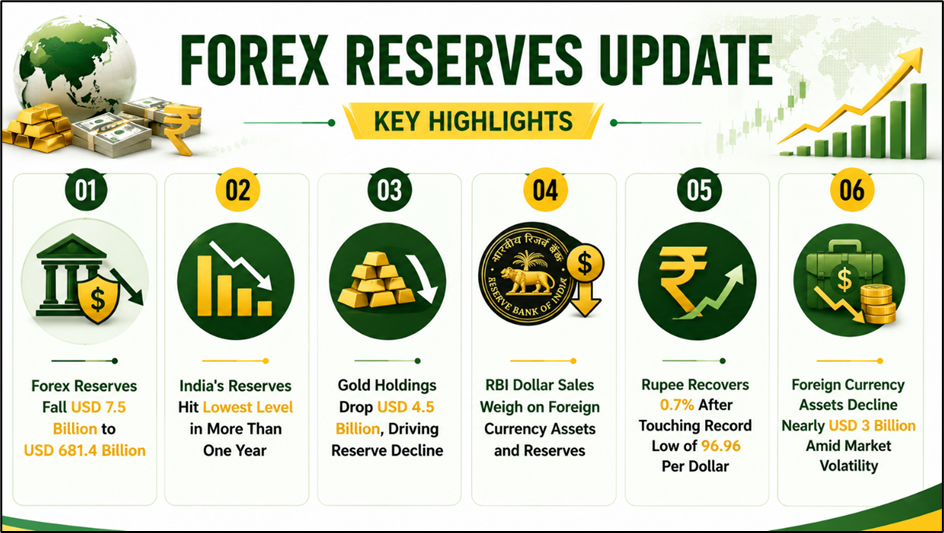
India's foreign exchange reserves fell to their lowest level in more than a year during the May 22, 2026, reflecting the impact of Reserve Bank of India (RBI) intervention in the currency market and a decline in the valuation of gold reserves. According to RBI data, the country's total forex reserves declined by USD 7.5 billion to USD 681.4 billion from USD 688.9 billion in the previous week.
The decline comes at a time when the RBI has been actively supporting the rupee amid heightened volatility in global financial markets. Rising energy prices, capital outflows, and geopolitical tensions have increased pressure on the domestic currency, prompting intervention by the central bank to contain excessive fluctuations.
Source: Analysis by Kalkine
Gold Holdings and Foreign Currency Assets Decline
The decline in reserves was largely driven by a reduction in the value of the RBI's gold holdings. Gold reserves fell by approximately USD 4.5 billion during the week to USD 114.8 billion from USD 119.3 billion previously. In addition, foreign currency assets, which represent the largest component of India's reserve portfolio, declined by nearly USD 3 billion to USD 543 billion.
Foreign currency assets are influenced not only by RBI operations but also by valuation changes arising from movements in global currencies held within the reserve basket. As a result, fluctuations in international currency markets can have a significant impact on the overall reserve position.
RBI Steps Up Efforts to Stabilize the Rupee
RBI has been selling US dollars in the foreign exchange market to support the rupee, which has weakened amid concerns over rising crude oil prices and the broader economic implications of the ongoing U.S.-Iran conflict. Since the escalation of the conflict, the rupee has depreciated by around 4%, highlighting the pressure faced by emerging market currencies during periods of geopolitical uncertainty.
During the week under review, the rupee touched a record low of 96.96 against the US dollar before recovering on the back of sustained RBI intervention across multiple trading sessions. The currency ultimately closed the week at 95 per US dollar, representing a gain of 0.7% compared with the previous week.
Importance of Forex Reserves
Foreign exchange reserves serve as a critical financial buffer for the economy, helping the country meet external obligations, manage currency volatility, and maintain investor confidence during periods of uncertainty. Adequate reserves also provide flexibility to central banks in responding to external shocks such as commodity price spikes, capital flow volatility, and geopolitical disruptions.
While a decline in reserves often attracts market attention, economists generally view the use of reserves for currency stabilization as a routine policy measure, particularly during periods of elevated market stress.
Key Risks
- Continued rupee weakness could lead to further reserve depletion.
- Elevated crude oil prices may increase pressure on external balances.
- Sustained capital outflows could impact foreign exchange reserves.
- Geopolitical tensions may heighten currency market volatility.
Summary
India's foreign exchange reserves declined by USD 7.5 billion to USD 681.4 billion in the May 22, 2026, marking their lowest level in more than a year. The decline was primarily driven by lower gold valuations and a reduction in foreign currency assets.
RBI has been actively selling dollars to support the rupee amid rising energy prices, capital outflows, and geopolitical uncertainties. Despite touching a record low during the week, the rupee recovered following central bank intervention, underscoring the RBI's efforts to maintain currency stability amid challenging global conditions.
FAQs
Q: Why did India's forex reserves decline in the latest reported week?
A: Lower gold valuations and RBI dollar sales contributed to the USD 7.5 billion decline in reserves.
Q: What was India's total foreign exchange reserve level as of May 22, 2026?
A: India's forex reserves stood at USD 681.4 billion, according to RBI data.
Q: How is the RBI supporting the rupee amid recent volatility?
A: RBI has been intervening in the foreign exchange market by selling US dollars to support the rupee.