

Highlights
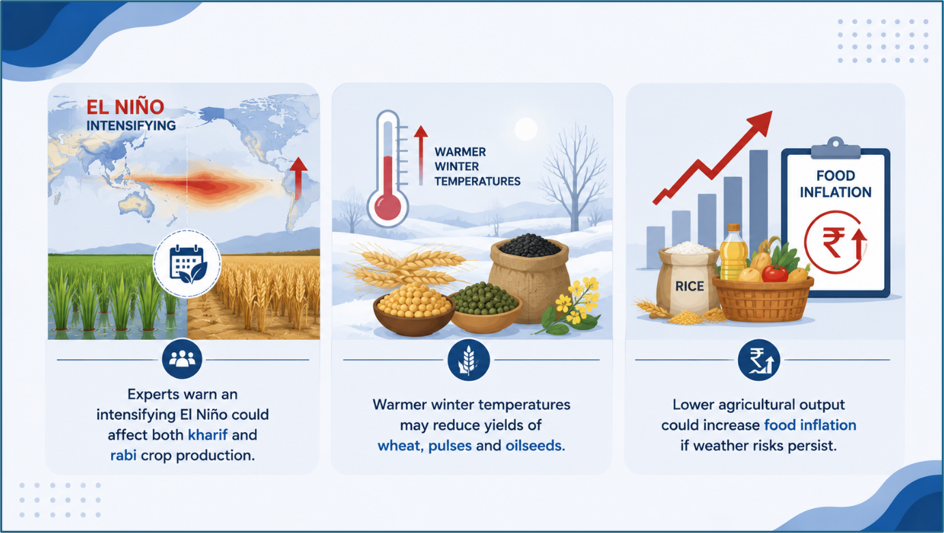
- Experts warn an intensifying El Niño could affect both kharif and rabi crop production.
- Warmer winter temperatures may reduce yields of wheat, pulses and oilseeds.
- Lower agricultural output could increase food inflation if weather risks persist.
India may face prolonged weather-related risks to agriculture as an intensifying El Niño could extend its impact beyond the monsoon season and affect winter crops as well, according to climate and agriculture experts. While El Niño is typically associated with weaker monsoon rainfall, experts now caution that unusually warm winter conditions could also influence rabi crop production, increasing the possibility of higher food inflation in the coming months.
Source: Analysis by Kalkine
Why Are Experts Concerned About El Niño?
Meteorologists and agricultural experts expect the current El Niño event to strengthen over the coming months, with some forecasting it could become one of the strongest in recent decades. El Niño is associated with warmer-than-normal sea surface temperatures in the Pacific Ocean, which can alter rainfall patterns and raise temperatures across several regions, including India. These changes can affect crop growth, soil moisture and water availability during multiple agricultural seasons.
Impact May Extend Beyond the Monsoon Season
The immediate concern is the effect on kharif crops that depend heavily on southwest monsoon rainfall. However, experts say the risks may not end with the monsoon. If El Niño leads to warmer-than-normal winter temperatures, rabi crops such as wheat, mustard, gram and other pulses could also experience lower yields. Winter crops require relatively cool weather during key growth stages, and prolonged warmth may affect productivity.
Food Inflation Could Face Fresh Pressure
Lower agricultural production across successive crop seasons could tighten the supply of essential food items, creating upward pressure on prices. Food inflation has moderated in recent months, but weather-related disruptions to cereal, pulse, vegetable and edible oil production could reverse that trend if crop output declines significantly. Experts note that the final impact will depend on the intensity of El Niño and rainfall distribution during the remaining monsoon period.
Reservoir Levels and Soil Moisture Will Be Important
Apart from rainfall, reservoir storage and soil moisture will play a key role in determining agricultural output. Adequate water availability can help reduce the impact of below-normal rainfall during crop growth. However, if rainfall remains uneven and reservoirs do not replenish sufficiently, irrigation availability for both kharif and rabi crops could become a challenge in several regions.
Government and Farmers May Need to Prepare
Experts believe early planning could help reduce some of the risks associated with El Niño. Measures such as efficient water management, timely sowing, drought-tolerant crop varieties and continuous monitoring of weather conditions may help farmers manage uncertain climatic conditions. Policymakers are also expected to closely monitor food supplies and inflation trends if weather conditions deteriorate further.
What It Means for Consumers
Consumers may not experience immediate price increases, but prolonged weather disruptions affecting multiple crop seasons could influence the prices of cereals, pulses, vegetables, milk and edible oils. Economists indicate that the extent of food inflation will depend on crop outcomes, domestic supply management and government interventions during the agricultural season.
Risks
- Weak monsoon may reduce kharif crop production.
- Warmer winters could affect rabi crop yields.
- Lower food supplies may increase retail inflation.
- Uneven rainfall may reduce irrigation availability.
Summary
Experts warn that an intensifying El Niño could affect both India's kharif and rabi crop seasons by bringing weaker monsoon rainfall and warmer winter temperatures. Lower agricultural output may increase food inflation if production of cereals, pulses and oilseeds declines. The overall impact will depend on weather conditions, water availability and crop performance during the coming months.
FAQs
Q: Why is El Niño a concern for India's agriculture?
A: El Niño can weaken monsoon rainfall and raise temperatures, affecting crop production across multiple agricultural seasons.
Q: Which crops could be affected by a stronger El Niño?
A: Kharif crops, along with rabi crops such as wheat, pulses and oilseeds, may face weather-related production risks.
Q: How can El Niño influence food inflation?
A: Lower crop production can tighten food supplies, potentially increasing prices of cereals, pulses, vegetables and other essentials.