

Highlights
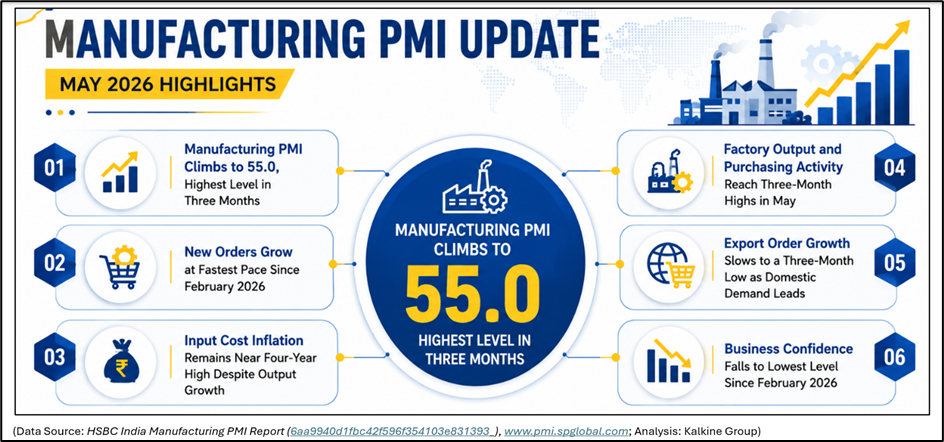
- India's manufacturing PMI rose to 55.0 in May from 54.7 in April.
- New orders expanded at the fastest pace since February 2026.
- Input cost inflation remained among the highest levels in nearly four years.
India's manufacturing sector expanded at its fastest pace in three months during May 2026, supported by sustained demand and stronger order inflows, according to the HSBC India Manufacturing Purchasing Managers' Index (PMI) compiled by S&P Global.
The PMI increased to 55.0 in May from 54.7 in April, exceeding the preliminary estimate of 54.3. A reading above 50 indicates expansion in manufacturing activity, while a reading below 50 signals contraction. The latest data suggests that manufacturing activity continued to grow despite rising cost pressures and softer business sentiment.
New Orders Drive Expansion
A key contributor to the improvement in manufacturing activity was the growth in new orders, which expanded at the fastest pace since February 2026. According to the survey, demand was supported by civil engineering projects, competitive pricing strategies, and favorable market conditions.
Domestic demand remained the primary growth driver during the month. While export orders continued to expand at a solid pace, the rate of growth slowed to a three-month low, indicating that domestic markets contributed more significantly to overall demand.
Output Growth Improves Across Key Segments
Factory production increased at the quickest pace in three months, led by intermediate goods and capital goods manufacturers. However, growth in the consumer goods segment moderated compared with previous months. The survey also showed continued hiring activity, although the pace of job creation slowed from April levels.
Manufacturers increased purchasing activity at the fastest rate in three months as firms sought to build inventory buffers and contingency stocks amid an uncertain cost environment.
Cost Pressures Remain Elevated
Input cost inflation remained a significant challenge for manufacturers. The survey showed that input prices increased at one of the fastest rates seen in nearly four years, excluding April's reading.
Higher spending on energy, fuel, raw materials, and transportation contributed to the increase in production costs. Survey participants also cited the ongoing conflict in the Middle East as a factor influencing costs.
Capital goods producers experienced the sharpest rise in input expenses among the major manufacturing categories covered by the survey.
Although companies continued to raise selling prices, output price inflation eased from April and remained below input cost inflation, indicating that competitive pressures limited the ability of manufacturers to fully pass higher costs on to customers.
Business Confidence Softens
Business optimism declined to its lowest level since February 2026, though overall sentiment remained positive. Manufacturers expressed expectations that cost pressures could ease in the coming months.
Confidence was supported by healthy order books, ongoing marketing initiatives, and expectations of continued demand growth. The moderation in sentiment suggests that while current activity remains strong, businesses are monitoring cost-related challenges and external uncertainties closely.
Key Risks
- Elevated input costs may pressure manufacturing margins.
- Geopolitical tensions could disrupt supply chains.
- Slower export growth may affect production momentum.
- Weakening business confidence could impact future investment.
Summary
India's manufacturing PMI rose to 55.0 in May 2026 from 54.7 in April, marking the fastest pace of expansion in three months. Growth was supported by stronger domestic demand, rising new orders, and higher factory output.
However, manufacturers continued to face elevated input cost inflation driven by higher energy, fuel, transportation, and material expenses. While business confidence softened to a three-month low, overall sentiment remained positive.
FAQs
Q: What was India's manufacturing PMI in May 2026?
A: India's HSBC Manufacturing PMI rose to 55.0 in May 2026 from 54.7 in April.
Q: What drove manufacturing growth in May 2026?
A: Strong domestic demand, higher new orders, civil engineering activity, and increased factory output supported growth.
Q: What challenges are manufacturers currently facing?
A: Rising input costs, geopolitical uncertainties, and slower export growth remain key challenges for manufacturers.