

Highlights
- Mumbai faces flood alerts even as several farm regions report rainfall deficits.
- The Centre has prepared contingency plans for hundreds of vulnerable districts.
- Uneven rainfall distribution could affect crops, food prices and rural demand.
India's 2026 southwest monsoon is presenting a contrasting picture. While Mumbai and parts of western India are facing heavy rainfall alerts and concerns over waterlogging, several agricultural regions continue to grapple with below-normal rainfall. The divergence highlights a challenge that often matters more than total rainfall figures: the timing and distribution of rain.
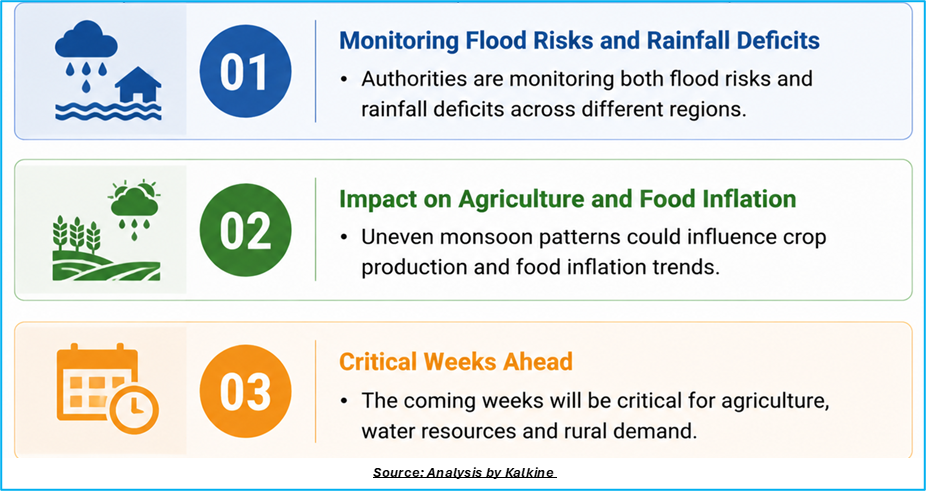
The situation has prompted authorities to issue flood-related warnings in urban centres while simultaneously preparing drought-management strategies for rain-deficit farming districts. The developments underscore the importance of monsoon performance for agriculture, food inflation, water resources and overall economic activity.
Two Different Monsoon Stories
Heavy rainfall and weather alerts in Mumbai suggest the monsoon has become active over parts of Maharashtra. However, this localised intensity does not reflect conditions across the country.
At the same time, the Centre has drawn up contingency plans for 315 districts considered vulnerable to weak rainfall. Rainfall during the current season has remained significantly below normal in many regions, raising concerns about crop sowing and agricultural output.
The contrasting developments demonstrate that a monsoon can create flood risks in one area while generating moisture stress in another.
Why Rain Distribution Matters More Than Total Rainfall
Agricultural experts often focus not only on the quantity of rainfall but also on when and where it falls.
A season may record near-normal rainfall overall, yet farmers can still face difficulties if rains arrive late, remain unevenly distributed, or occur in concentrated bursts. Crops require moisture at specific stages of growth, and prolonged dry spells between rainfall events can affect productivity.
For India's agricultural economy, consistent rainfall across key farming regions is often more beneficial than isolated episodes of intense precipitation.
Government Activates Contingency Measures
To reduce risks associated with weak rainfall, authorities have prepared district-level contingency plans covering more than 300 districts.
The government has identified several districts with limited irrigation coverage as particularly vulnerable. States have been advised to encourage farmers in rain-fed regions to shift towards shorter-duration and less water-intensive crops where necessary.
Officials have also emphasised water conservation measures, including the maintenance of ponds, check dams and rainwater harvesting structures. These steps are intended to minimise the impact of prolonged rainfall shortages if weather conditions remain unfavourable.
Implications For Food Prices
Monsoon performance remains closely linked to food inflation because a large share of India's agricultural land depends on seasonal rainfall.
Any prolonged weakness in rainfall can affect sowing activity and crop yields for commodities such as rice, pulses, oilseeds, cotton and sugarcane. Lower agricultural output can influence supply levels and potentially place upward pressure on food prices.
While current grain inventories remain comfortable, policymakers and markets are expected to closely monitor rainfall trends through the peak sowing period.
Rural Demand Under Watch
The monsoon's impact extends beyond agriculture. Rural incomes, consumer spending and demand for products ranging from two-wheelers to farm equipment are often influenced by rainfall outcomes.
A favourable monsoon generally supports farm earnings and rural consumption. Conversely, uneven rainfall can create uncertainty in agricultural regions, affecting spending patterns and business activity linked to the rural economy.
As a result, monsoon developments remain a closely watched indicator for economists, policymakers and industry participants.
What Happens Next?
Recent reports indicate that the monsoon has regained momentum after a temporary slowdown and is advancing into additional parts of the country. However, rainfall deficits remain a concern in several regions, and weather forecasts continue to be monitored closely.
The coming weeks will be crucial for assessing crop sowing progress, reservoir replenishment and rainfall distribution. The ultimate economic impact will depend not only on how much rain falls but also on how evenly it reaches key agricultural areas.
Key Risks
- Prolonged rainfall deficits could affect kharif crop yields.
- Uneven rain distribution may disrupt sowing schedules.
- Food inflation risks could rise if production declines.
- Rural consumption may weaken in drought-affected regions.
Summary
India's monsoon is currently delivering two contrasting signals: heavy rainfall and flood concerns in some regions, alongside rainfall deficits and drought-preparedness measures in several farming districts. The key issue is not only the volume of rainfall but also its distribution. Crop output, food prices, rural demand and economic activity will depend on how monsoon conditions evolve during the crucial sowing season.
FAQs
Q: Why is the monsoon creating both flood and drought concerns?
A: Rainfall is unevenly distributed, causing excessive rain in some areas and deficits in others.
Q: Why are contingency plans being prepared for districts?
A: Authorities are seeking to reduce agricultural risks from weak rainfall and limited irrigation coverage.
Q: How can a weak monsoon affect the economy?
A: It can influence crop production, food prices, rural incomes and overall consumer demand.