

OMCs Absorb Rising Costs to Shield Airlines from Fuel Price Shock
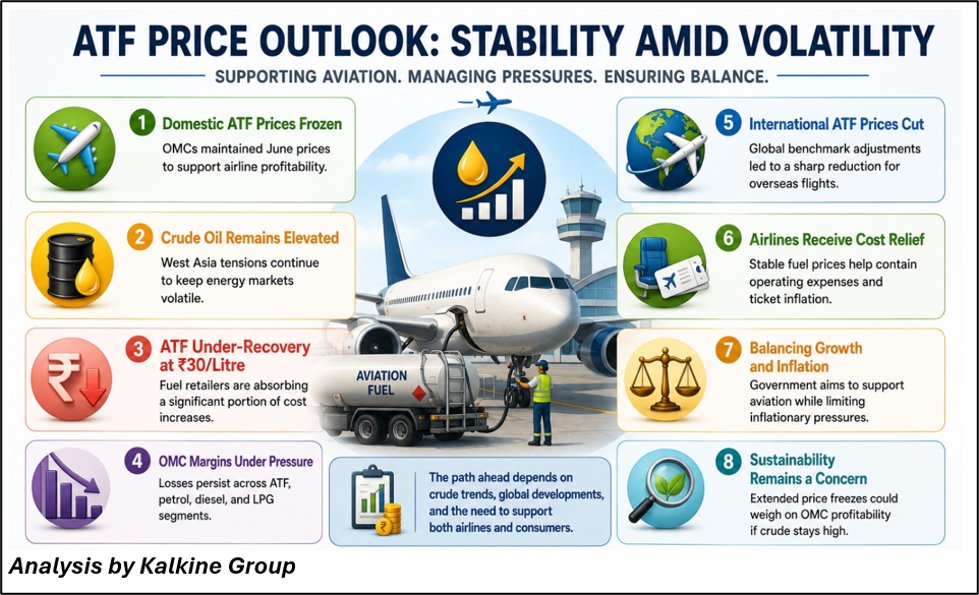
State-owned oil marketing companies (OMCs) have chosen to keep aviation turbine fuel (ATF) prices for domestic airlines unchanged for June, despite mounting financial pressure from rising crude oil prices and widening fuel losses. The move highlights the balancing act between protecting the aviation sector and managing the profitability of fuel retailers.
The decision comes at a time when global energy markets remain volatile due to geopolitical tensions in West Asia. While international fuel prices have experienced significant fluctuations, domestic airlines have been largely insulated from the full impact of rising jet fuel costs.
Supporting the Recovering Aviation Sector
Fuel represents one of the largest operating expenses for airlines, often accounting for a substantial share of total costs. A sharp increase in domestic ATF prices could directly affect airline profitability and potentially lead to higher ticket prices for passengers.
To avoid additional pressure on carriers, OMCs have continued the price freeze for domestic aviation fuel. Industry participants believe the move is intended to support passenger demand and maintain stability in the aviation sector during a period of elevated global uncertainty.
Rising Under-Recoveries Add Pressure
While airlines benefit from stable fuel prices, OMCs are absorbing a growing gap between procurement costs and selling prices. According to government officials, under-recoveries on domestic ATF sales have climbed to around ₹30 per litre.
The pressure is not limited to aviation fuel. Fuel retailers are also facing losses on petrol, diesel, and domestic LPG sales as retail prices have not fully reflected the increase in global crude oil prices.
Why International ATF Prices Were Reduced
Interestingly, OMCs lowered jet fuel prices for international airline operations in June. The reduction was largely driven by changes in international benchmark pricing mechanisms and export-linked fuel calculations rather than domestic market considerations.
As a result, domestic and international aviation fuel prices moved in different directions, reflecting the distinct pricing frameworks applicable to each segment.
Government’s Balancing Strategy
The current pricing approach reflects a broader policy objective of cushioning consumers and key industries from the impact of global energy shocks. Similar measures have been seen in petrol, diesel, and LPG pricing, where fuel retailers have absorbed part of the cost increase to limit inflationary pressures on the economy.
However, prolonged price restraint could increase the financial burden on OMCs if crude oil prices remain elevated for an extended period.
Outlook
The freeze on domestic ATF prices may provide short-term relief to airlines, but it also raises concerns about the sustainability of fuel retailers’ margins. If global crude prices remain high and geopolitical tensions persist, policymakers may eventually need to reassess the current pricing framework.
For now, OMCs appear willing to absorb part of the cost burden in an effort to support the aviation industry, control inflationary pressures, and maintain broader economic stability.
Frequently Asked Questions (FAQs)
1. Why have OMCs not increased domestic ATF prices?
OMCs are keeping domestic ATF prices unchanged to protect airlines from rising fuel costs and prevent additional pressure on ticket prices and profitability.
2. What are under-recoveries in ATF?
Under-recovery refers to the difference between the actual cost of supplying fuel and the price at which it is sold. OMCs are currently reporting under-recoveries of around ₹30 per litre on domestic ATF sales.
3. How are OMCs affected by the current pricing policy?
OMCs are facing losses across multiple fuel categories, including petrol, diesel, LPG, and ATF, as rising crude oil prices are not being fully passed on to consumers.