
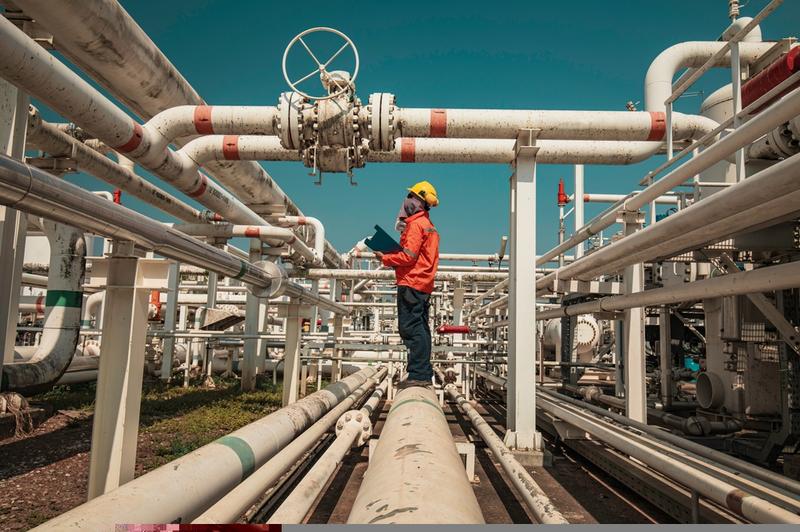
A landmark LNG carrier charter agreement with Alpha Gas through Pantheon Maritime Services positions GAIL at the centre of India's energy transition — and the market is taking notice.
Key Highlights
- GAIL (India) Ltd (NSE: GAIL) closed at ₹153.30, gaining +₹7.92 (+5.45%) on 8 April 2026, touching an intraday high of ₹156.50 — the strongest single-day performance for the stock in recent weeks.
- GAIL announced a long-term LNG carrier charter agreement with Alpha Gas through its affiliate Pantheon Maritime Services, marking a strategic leap in the company's global LNG logistics and supply chain infrastructure.
- The deal directly supports India's national energy policy objective of raising natural gas's share in the primary energy mix — a target that places GAIL at the intersection of energy security and infrastructure investment.
- GAIL's market capitalisation stands at ₹1.01 lakh crore, reaffirming its status as a large-cap public sector undertaking (PSU) with systemic importance to India's energy infrastructure.
- The stock offers a dividend yield of 3.91% — one of the most attractive yields among NSE-listed PSU energy stocks — with a quarterly dividend amount of ₹1.50, reflecting management's commitment to consistent shareholder returns.
- At a P/E ratio of just 11.74, GAIL remains one of the most attractively valued large-cap energy names on the NSE, offering a compelling risk-reward profile for value-oriented investors.
Company Overview
GAIL (India) Limited is India's largest natural gas company, operating at the heart of the country's energy infrastructure with diversified interests across natural gas trading, transmission, LPG production and transmission, LNG shipping, LNG re-gasification, petrochemicals, and city gas distribution. Established in 1984 and headquartered in New Delhi, GAIL has evolved from a domestic gas transmission utility into a fully integrated energy conglomerate with a growing international logistics footprint.
The company owns and operates a network of over 18,001 kilometres of natural gas pipelines spread across the length and breadth of India — the backbone of domestic natural gas distribution, connecting upstream producers to consumers across industry, power generation, fertilisers, and city gas distribution networks. This infrastructure scale gives GAIL a structural competitive moat that few private sector players can replicate or bypass.
GAIL's role in India's energy landscape is not merely commercial — it is strategic. As India pursues its target of increasing natural gas's share in the primary energy mix from the current approximately 6% to 15% by 2030, GAIL's transmission infrastructure, LNG import capabilities, and now its expanded global logistics footprint through the Alpha Gas charter agreement are indispensable to realising that ambition.
Beyond domestic operations, GAIL has been steadily building its international energy credentials — through long-term LNG supply agreements with US exporters, equity stakes in overseas gas fields, and now a direct foray into LNG shipping logistics through its affiliate Pantheon Maritime Services. The Alpha Gas charter agreement is the most recent and arguably most strategically significant expression of this internationalisation strategy.
The Alpha Gas LNG Charter Agreement — Strategic Significance Unpacked
The centrepiece of today's market-moving news is GAIL's announcement of a long-term LNG carrier charter agreement with Alpha Gas, a leading Greece-based shipping company offering a comprehensive in-house suite of LNG ship management services. The chartered vessel is the Energy Fidelity — an LNG carrier with a capacity of 174,000 cubic metres, equipped with advanced propulsion and fuel-efficiency technologies specifically designed to lower emissions. The strategic implications of this agreement are substantial and warrant detailed examination.
What is an LNG carrier charter agreement? An LNG carrier is a specialised vessel designed to transport liquefied natural gas at cryogenic temperatures (-162°C) across ocean routes. These vessels are among the most technically sophisticated and capital-intensive assets in global shipping, with construction costs typically exceeding $200 million per vessel. Long-term charter agreements provide both parties with cost certainty and supply security: the charterer (GAIL) locks in vessel availability at predictable rates, while the shipowner (Alpha Gas) receives guaranteed revenue over the charter period.
The Energy Fidelity — A Next-Generation Vessel: At 174,000 cubic metres capacity, the Energy Fidelity sits in the upper tier of modern LNG carrier sizes, capable of transporting substantial volumes of LNG per voyage. Critically, the vessel's advanced propulsion and fuel-efficiency technologies are aligned with the global shipping industry's decarbonisation agenda — reducing emissions per tonne of LNG transported and ensuring the vessel remains compliant with tightening international maritime environmental regulations. For GAIL, chartering a technologically advanced, low-emission vessel also strengthens its ESG credentials at a time when institutional investors are scrutinising the carbon footprint of energy infrastructure companies.
Why does this matter for GAIL? GAIL holds long-term LNG supply agreements with US exporters under which it receives fixed volumes of LNG for delivery to India. The logistics of transporting these volumes from export terminals to Indian regasification facilities requires dedicated shipping capacity. By securing the Energy Fidelity under a long-term charter, GAIL reduces its dependence on the volatile spot shipping market — where LNG freight rates can swing dramatically based on seasonal demand, geopolitical disruptions, and global LNG supply-demand dynamics — and locks in predictable, cost-effective logistics for its contracted LNG volumes.
Alpha Gas — A Credible Partner: The choice of Alpha Gas as the counterparty is strategically significant. As a leading Greek shipping company with comprehensive in-house LNG ship management capabilities, Alpha Gas brings operational depth and technical expertise to the partnership. Greece is home to one of the world's largest and most experienced merchant shipping industries, and Alpha Gas's in-house management model — covering technical, crew, and commercial operations — provides GAIL with a single, accountable counterparty for the vessel's performance throughout the charter period.
Strategic alignment with India's energy policy: GAIL has explicitly stated that this deal is part of its strategy to strengthen LNG shipping capacity and support India's long-term energy security. India is committed to expanding its LNG import infrastructure as part of a broader natural gas expansion agenda, and the government has been actively encouraging investment across the entire LNG value chain. GAIL's securing of dedicated shipping capacity through the Energy Fidelity charter directly supports this policy direction, ensuring that logistics constraints do not impede India's growing LNG import volumes.
Competitive positioning: The Energy Fidelity charter also strengthens GAIL's position as a potential LNG trader and logistics optimiser — a role that several Asian national energy companies have successfully developed into significant profit centres. The infrastructure being assembled is consistent with such a strategic evolution over the medium term.
Price Performance
Data Source: REFINITIV, Analysis: Kalkine Group
GAIL's intraday price action on 8 April is notable for both its magnitude and its character. The stock opened at ₹152.71 — already a meaningful gap above the previous close of ₹145.38, representing an overnight appreciation of approximately ₹7.33 (5.04%). This gap-up open reflects institutional positioning ahead of the LNG charter announcement, suggesting that informed market participants were anticipating a significant corporate development.
The intraday high of ₹156.50 was achieved in the early part of the trading session, after which the stock underwent a measured consolidation, trading in the ₹151–₹153 range through the afternoon before closing at ₹153.30. This pattern — a strong opening gap, early high, and orderly consolidation — is characteristic of news-driven institutional buying rather than speculative retail momentum. The fact that the stock held comfortably above the previous close of ₹145.38 through the entire session is technically significant.
52-Week Context: The 52-week range of ₹134.36 to ₹202.79 places GAIL's current price of ₹153.30 in the lower half of its annual trading band — approximately 25% below its 52-week high. This positioning is critical for investors assessing the stock's medium-term recovery potential. The gap between current price and the 52-week high represents approximately 32.3% upside — a recovery that would require sustained
positive news flow, earnings delivery, and a re-rating of the PSU energy sector more broadly.
The proximity of the current price to the 52-week low of ₹134.36 — approximately 14% below current levels — provides a degree of downside context. GAIL is not at a cyclical peak; it is recovering from a period of significant underperformance, and today's move may represent the beginning of a more sustained re-rating if the LNG logistics strategy delivers as anticipated.
Financial Insights
Data Source: REFINITIV, Analysis: Kalkine Group
Valuation — The PSU Discount Opportunity: GAIL's P/E ratio of 11.74 is remarkably modest for a company of its scale, infrastructure dominance, and strategic importance. For context, private sector energy and utility peers typically trade at P/E multiples of 20x to 35x, reflecting the market's willingness to pay a premium for earnings visibility and management quality. GAIL's discount to this range reflects a combination of PSU sector risk perception, government dividend extraction concerns, and historical capital allocation questions — all of which are familiar to investors in the Indian public sector space.
However, the valuation discount also represents an opportunity. If GAIL's earnings trajectory improves — driven by higher gas transmission volumes, petrochemical margin recovery, and the strategic value of its LNG logistics infrastructure — a re-rating toward 15x–18x earnings would imply very significant share price appreciation from current levels.
Dividend — Exceptional Income Profile: A dividend yield of 3.91% at current prices is exceptional by NSE large-cap standards. The quarterly dividend of ₹1.50 provides a predictable income stream that makes GAIL an attractive holding for income-oriented investors — institutional and retail alike. PSU companies in India have historically maintained strong dividend payout ratios, partly driven by the government's requirement for dividend income from its public sector holdings, and GAIL's track record in this regard is consistent and reliable.
Market Capitalisation and Scale: At ₹1.01 lakh crore, GAIL is a genuine large-cap — one of the handful of NSE-listed companies that carries systemic significance for the domestic energy infrastructure. Its scale gives it access to capital markets on favourable terms, the ability to negotiate long-term supply and logistics agreements from a position of strength, and the balance sheet capacity to fund large infrastructure projects without excessive leverage.
Gas Transmission Volume Sensitivity: GAIL's core transmission business earns tariff-regulated revenues that are largely volume-dependent. As India's natural gas consumption grows — driven by city gas distribution expansion, industrial demand recovery, and power sector usage — GAIL's transmission volumes should grow commensurately, driving top-line revenue expansion without proportionate cost increases. This operating leverage is a key feature of the earnings model that analysts tend to underappreciate at times of volume cyclicality.
Petrochemical and LPG Segments: Beyond transmission, GAIL operates significant petrochemical manufacturing capacity at its Pata plant in Uttar Pradesh and produces substantial LPG volumes as a byproduct of gas processing. These segments add earnings diversity but also commodity price sensitivity — margins in petrochemicals and LPG are correlated with global polymer and crude oil prices, introducing cyclicality that the regulated transmission business does not carry.
Management Outlook
GAIL's management has articulated a multi-year strategic vision anchored in three pillars: expanding domestic gas transmission infrastructure, deepening LNG import and logistics capabilities, and building a meaningful renewable energy portfolio as part of India's energy transition.
LNG Logistics and International Strategy: The Alpha Gas charter agreement through Pantheon Maritime Services is the most tangible recent expression of GAIL's international logistics ambitions. Management has consistently signalled its intent to move up the LNG value chain — from being a buyer of delivered LNG at Indian terminals to a company that controls shipping logistics, and potentially trading and optimisation capabilities. This evolution, if successfully executed, would add a new and potentially high-margin earnings stream to a business currently valued primarily on regulated transmission returns.
Domestic Infrastructure Investment: GAIL continues to invest in domestic pipeline expansion, connecting new production basins and demand centres to its national grid. The Jagdishpur–Haldia–Bokaro–Dhamra pipeline — one of India's most significant recent gas infrastructure projects — and various expansion programs in East India represent multi-year capital programs that will support volume growth through the next decade.
Renewable Energy Transition: Consistent with government policy and ESG investment frameworks, GAIL has been building a renewable energy portfolio — primarily solar — to reduce its own carbon footprint and develop capabilities in clean energy. While this segment remains small relative to the core gas business, it signals management's awareness of the long-term energy transition and GAIL's intention to be relevant in a lower-carbon energy mix.
Earnings Visibility: Management's combination of regulated transmission revenues, long-term LNG supply contracts, and now dedicated shipping logistics creates a layered earnings visibility profile that is more resilient than a pure commodity price play. The 3.91% dividend yield is consistent with management's confidence in sustaining earnings at levels that support the current payout — a meaningful signal in the context of PSU capital allocation.
FAQ
Q: What is the significance of GAIL's LNG charter agreement with Alpha Gas?
GAIL has signed a long-term charter for the Energy Fidelity — a 174,000 cubic metre LNG carrier operated by Alpha Gas, a leading Greece-based LNG ship management company. The vessel is equipped with advanced propulsion and fuel-efficiency technologies to reduce emissions. The deal secures dedicated LNG shipping capacity for GAIL, reducing its exposure to volatile spot freight rates and ensuring reliable, cost-effective logistics for India's growing LNG import volumes — a direct expression of GAIL's long-term energy security strategy.
Q: Why is GAIL's P/E ratio of 11.74 so low compared to private sector peers?
PSU companies in India typically trade at a discount to private sector peers due to perceived government intervention risk, historically conservative capital allocation, and dividend extraction by the government as a major shareholder. GAIL's 11.74x P/E reflects this PSU discount, but also represents a potential re-rating opportunity if earnings growth accelerates.
Q: Is GAIL's 3.91% dividend yield sustainable?
GAIL's dividend history as a PSU is consistent and government-backed shareholder return requirements provide structural support for the payout. However, dividend sustainability ultimately depends on earnings generation, and investors should monitor quarterly results for any material deterioration in profitability.
Q: What are the key risks to GAIL's investment case?
Primary risks include natural gas price volatility, regulatory changes to transmission tariffs, delays in domestic pipeline projects, petrochemical margin cycles, and any adverse developments in LNG supply agreements. Currency risk is also relevant given USD-denominated LNG contracts and shipping charters.
Q: With GAIL trading 32% below its 52-week high, is now a good entry point?
The stock's position in the lower half of its 52-week range, combined with a sub-12x P/E and near-4% dividend yield, presents an objectively attractive valuation entry point. The LNG charter announcement adds a strategic catalyst. However, a full recovery to 52-week highs would require sustained earnings improvement and broader PSU sector re-rating — neither of which is guaranteed in the near term.
Q: How does India's natural gas expansion target affect GAIL's business?
India's target of raising natural gas's share in the primary energy mix from ~6% to 15% by 2030 would, if achieved, require a near-tripling of gas volumes flowing through the national infrastructure system. As the owner and operator of India's dominant national gas grid, GAIL would be the primary transmission beneficiary of this volume growth — a structural tailwind for the core regulated business over the next decade.