

Highlights
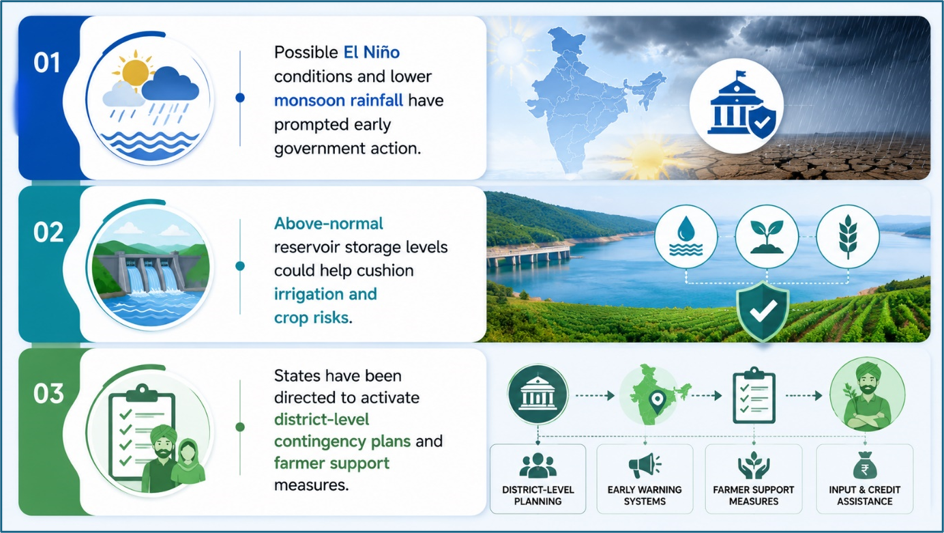
- The Centre has intensified preparations amid concerns over a below-normal monsoon.
- Reservoir storage levels remain above normal, supporting Kharif crop planning.
- States have been directed to activate contingency plans and strengthen monitoring.
The Central Government has stepped up preparations for the 2026 Kharif season amid forecasts of a potentially below-normal Southwest Monsoon and the possibility of El Niño conditions developing during the season. During a high-level review meeting in New Delhi, Union Agriculture Minister Shri Shivraj Singh Chouhan reviewed weather forecasts, water availability, seed preparedness, crop planning, and state-level readiness.
The meeting focused on minimizing the impact of adverse weather conditions on agricultural activities and ensuring timely support for farmers. Officials discussed strategies related to water management, seed availability, moisture conservation, and alternative crop planning.
Source: Analysis by Kalkine
Monsoon Forecast Raises Caution
According to information presented during the meeting, the India Meteorological Department has indicated that seasonal rainfall during the 2026 Southwest Monsoon could be around 90 percent of the Long Period Average. Forecasts also suggest the possibility of El Niño conditions emerging during the monsoon period.
Shri Chouhan stated that weather forecasts are being monitored closely and that both central and state governments are working on coordinated measures to address potential challenges. He emphasized that advance planning and timely interventions would be essential in reducing risks to agricultural production.
Reservoir Levels Offer Relief
One of the positive developments highlighted during the review was the current status of reservoir storage across the country. Officials informed the meeting that water storage levels stand at 127.01 percent of the normal level for this period.
Higher reservoir levels could help meet irrigation requirements during the Kharif season and reduce the risk associated with moisture shortages in agricultural fields. The government believes this could provide support to farming activities even if rainfall remains below expectations.
Focus on District-Level Preparedness
A key theme of the meeting was the need for local-level implementation of contingency plans. Shri Chouhan directed officials to closely monitor states and districts that may face low rainfall, prolonged dry spells, or a greater impact from El Niño conditions.
He stressed that contingency plans should not remain limited to documentation and must be implemented on the ground. District-specific strategies are expected to consider local water resources, crop patterns, rainfall trends, sowing progress, and seed availability.
The government also plans to encourage area-specific and crop-specific interventions where necessary. This includes promoting alternative crops, delayed sowing strategies, and drought-resistant crop varieties in regions facing adverse weather conditions.
Seed Availability Remains Adequate
Officials informed the meeting that seed availability for both Kharif and Rabi seasons is currently sufficient. In addition, a National Seed Reserve has been established to address emergency requirements that may arise due to weather-related disruptions.
The Agriculture Minister emphasized the importance of maintaining seed quality alongside availability. States have been instructed to ensure that certified seeds reach farmers and that short-duration and low-water-consuming crop varieties remain available for resowing when required.
Water Conservation Takes Centre Stage
The government is placing significant emphasis on moisture conservation and efficient water management practices. Discussions covered measures such as water harvesting, farm pond construction, strengthening local water structures, and maximizing the use of available resources.
Officials were also directed to ensure scientific and balanced utilization of reservoir water. Particular attention is being given to the effective distribution of water through canal systems and protecting the largest possible area under cultivation.
Technology and Communication for Farmers
The review highlighted the role of technology in supporting farmers during uncertain weather conditions. The government plans to strengthen systems that provide mobile advisories, weather warnings, crop recommendations, and pest-management information directly to farmers.
Authorities have also been instructed to prepare advance strategies for managing disease and pest outbreaks that may arise due to changing weather patterns. Monitoring mechanisms and treatment-related advisories are expected to be shared with states and farmers in a timely manner.
Integrated Approach Across Departments
Shri Chouhan emphasized the need for greater coordination among departments handling weather, water resources, irrigation, agriculture, rural development, and pest management. The government aims to ensure that all stakeholders work using shared data and integrated planning mechanisms.
The broader objective is to maintain agricultural activity, support farmers with timely information and resources, and reduce the impact of any weather-related disruptions during the Kharif season.
Key Risks
- Below-normal monsoon rainfall could affect crop sowing and yields.
- Extended dry spells may increase irrigation requirements significantly.
- Weather-driven pest and disease outbreaks may impact crops.
- Delays in local contingency implementation could affect preparedness.
Summary
The government has intensified preparations for the 2026 Kharif season amid forecasts of below-normal monsoon rainfall and possible El Niño conditions. With reservoir levels above normal, adequate seed availability, and a focus on water management, contingency planning, and farmer advisories, authorities are aiming to reduce agricultural risks. District-level monitoring and coordinated action remain central to the preparedness strategy.
FAQs
Q: What rainfall level is expected during the 2026 monsoon season?
A: Forecasts presented at the review meeting indicate rainfall may be around 90 percent of the Long Period Average.
Q: How are reservoir levels supporting Kharif crop preparations?
A: Reservoir storage currently stands above normal levels, helping meet irrigation requirements and reducing moisture-related risks.
Q: What measures are being taken to support farmers?
A: The government is focusing on seeds, water management, contingency planning, mobile advisories, and district-level monitoring.