

Highlights
- India increased effective gold and silver import duties to 15% from 6%.
- Government aims to reduce bullion imports and ease pressure on the rupee.
- Higher tariffs may increase domestic bullion prices and affect jewellery demand.
The Indian government has increased the effective import duty on gold and silver to 15%, reversing the tariff reduction introduced in mid-2024. The revised customs structure became effective from May 13 following notifications issued by the Ministry of Finance.
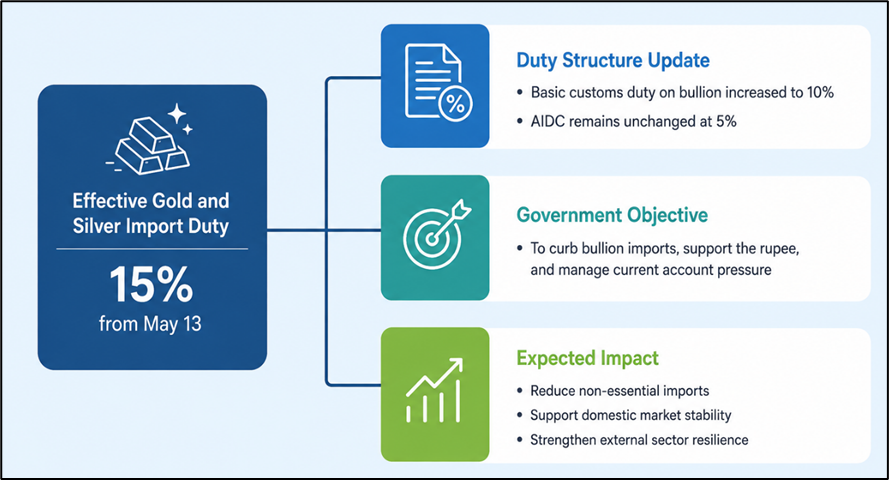
Under the new framework, the basic customs duty on gold and silver has been raised to 10%, while the Agriculture Infrastructure and Development Cess (AIDC) remains at 5%, taking the total effective import tax to 15%.
The decision comes as policymakers attempt to control rising bullion imports, stabilise the Indian rupee, and manage pressure on the country’s current account deficit.
Government Targets Import Pressure and Forex Outflows
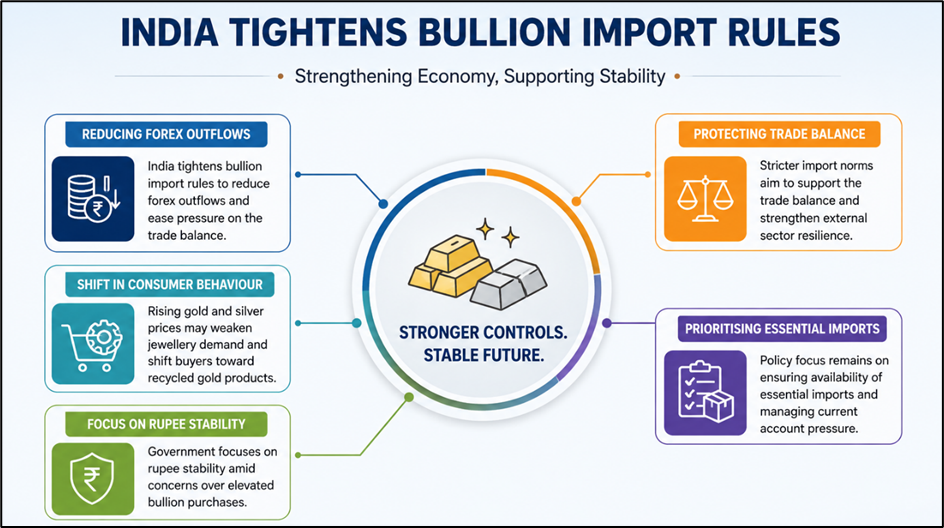
India remains one of the world’s largest consumers and importers of gold, with most domestic demand met through overseas purchases. Precious metal imports contribute significantly to the country’s trade deficit because of large dollar outflows.
Officials believe the recent rise in bullion imports has increased pressure on India’s current account balance at a time when global commodity prices remain elevated.
By increasing import duties, the government aims to discourage excessive purchases of gold and silver and redirect foreign exchange reserves toward essential imports including crude oil, industrial machinery, electronics, fertilisers, and defence equipment.
The policy decision follows recent remarks from Prime Minister Narendra Modi, who urged citizens to avoid unnecessary gold purchases for one year to support economic stability and conserve foreign exchange resources.
Bullion Prices React to Higher Duties
The tariff announcement triggered immediate reactions in domestic bullion markets as traders factored in the higher landed cost of imported metals.
Gold futures on the Multi Commodity Exchange (MCX) reportedly jumped more than 7% in early trading after the announcement, while silver futures also recorded significant gains. Jewellery retailers and bullion dealers expect physical gold prices in local markets to rise further because of the increased customs burden.
Industry participants expect customers to increasingly shift toward lower-weight jewellery products, exchange schemes, and recycled gold purchases to manage rising prices.
Jewellery Sector Faces Demand Concerns
The higher import duty structure may create fresh pressure for India’s jewellery industry, which had recently started recovering from slowing demand trends and global economic uncertainty.
Jewellers expect the increase in tariffs to reduce showroom footfalls and discretionary purchases, particularly among middle-income consumers.
Export-oriented jewellery manufacturers are also expected to monitor sourcing costs and working capital requirements closely as higher domestic bullion prices could affect competitiveness.
The government had reduced duties in 2024 partly to address smuggling concerns, but the latest policy shift suggests authorities are currently prioritising macroeconomic stability over illicit trade risks.
Investors Monitor Safe-Haven Demand
Gold has remained a preferred investment asset in India amid volatile equity markets, inflation concerns, and geopolitical uncertainty.Investment demand through gold exchange-traded funds and sovereign gold bonds had already increased over the past year as investors sought safer assets.
At the same time, elevated prices may moderate physical demand over the medium term if affordability pressures continue.
Broader Economic Impact Remains in Focus
The latest tariff revision reflects growing concern over India’s external account pressures amid global economic uncertainty. Policymakers are attempting to reduce imports of non-essential commodities and lower pressure on foreign exchange reserves.
Economists, however, caution that the effectiveness of higher import duties will depend on consumer behaviour and enforcement measures. If demand remains elevated or unofficial imports rise, the long-term benefits of the policy may remain limited.
Key Risks
- Higher duties may increase illegal gold smuggling through unofficial trade routes.
- Rising bullion prices could weaken jewellery demand during festive and wedding seasons.
- Elevated import costs may pressure jewellery retailers and inventory management cycles.
- Wider domestic premiums may impact bullion trading and consumer affordability levels.
Summary
India has increased effective import duties on gold and silver to 15% from 6% effective May 13. The revised structure includes a 10% customs duty and 5% AIDC. The government aims to reduce bullion imports, support the rupee, and manage current account pressures. The move has already pushed domestic bullion prices higher and may affect jewellery demand, consumer affordability, and import trends in the coming months.
FAQs
Q: What is the new import duty on gold and silver in India?
A: India increased the effective import duty on gold and silver to 15% from May 13.
Q: Why did the government increase bullion import duties?
A: The government aims to reduce imports and ease pressure on the rupee and trade deficit.
Q: How did bullion markets react after the announcement?
A: Gold futures jumped more than 7%, while silver futures also recorded significant gains.