

India’s telecom giant Reliance Jio is taking significant steps to attract investors as it prepares for one of the country’s most anticipated initial public offerings (IPOs). According to a recent Reuters report, the company is exploring the sale of stakes in multiple units as part of its broader strategy to generate interest and optimize valuation ahead of listing.
Ahead of its planned IPO, Reliance Jio is expected to allow existing investors to sell around 8% of their individual holdings, rather than a direct sale of the company’s overall stake, according to Reuters.
Strategic Stake Sales to Boost Appeal
Reliance Jio’s parent, Reliance Industries, is reportedly planning to sell minority stakes in as many as eight individual business units. These units span across Jio’s rapidly expanding digital ecosystem, which includes telecom services, broadband, enterprise solutions, and emerging technology ventures.
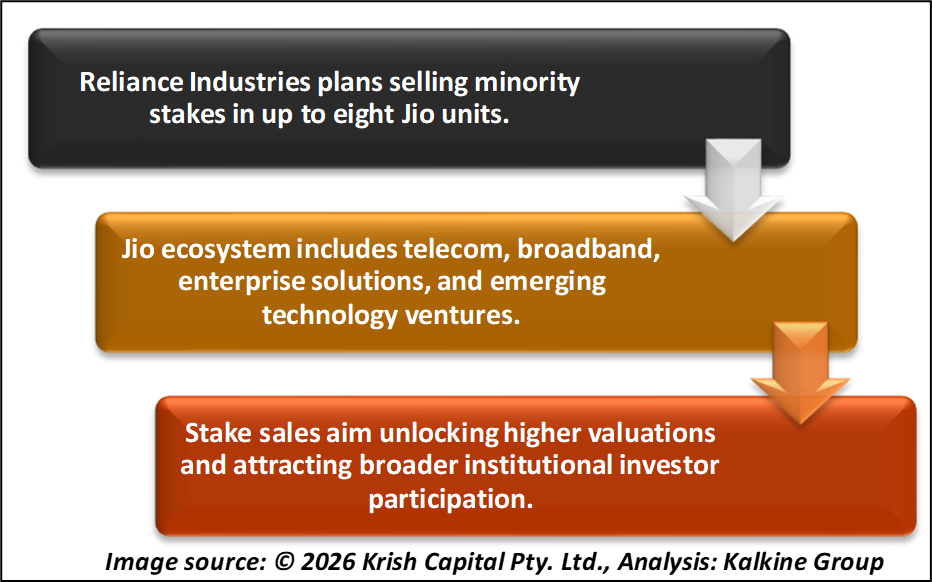
The idea behind these stake sales is to give investors a clearer and more focused view of each business segment’s value. By breaking down its vast operations into smaller, investable parts, Jio aims to unlock higher valuations and attract a broader pool of institutional investors. This approach is particularly relevant given Jio’s transformation from a pure telecom operator into a diversified digital services platform.
IPO Structure and Market Expectations
The upcoming IPO is expected to be one of India’s largest ever. Earlier reports suggest that Jio may float only around 2.5% of its equity, potentially raising over $4 billion, depending on valuation.
This relatively small stake sale is strategic. A limited float can create scarcity in the market, potentially driving stronger demand and better pricing. Additionally, recent regulatory changes in India allowing large companies to list with a minimum public float of 2.5% have made such a structure more feasible.
However, the exact structure of the IPO—whether it will involve fresh shares, an offer-for-sale, or a mix of both—remains under discussion.

Strong Fundamentals Back Investor Interest
Reliance Jio enters the IPO phase with strong fundamentals. It is India’s largest telecom operator, serving over 500 million users, and continues to dominate the country’s digital connectivity landscape.
Over the years, the company has expanded beyond telecom into areas such as artificial intelligence, cloud computing, and digital services. Despite this diversification, telecom still contributes the majority of its revenues—around 75% to 80%—highlighting the strength of its core business.
Jio has also attracted investments from global giants like KKR, Silver Lake, and the Abu Dhabi Investment Authority, reinforcing investor confidence in its long-term growth potential.

Outlook
The proposed IPO of Reliance Jio is expected to be a landmark event for India’s capital markets. With the country emerging as one of the world’s most active IPO destinations, Jio’s listing could further boost investor sentiment and global participation.
By restructuring its business through targeted stake sales, Reliance Jio is not just preparing for an IPO—it is reshaping how large technology-driven companies present themselves to investors. If executed successfully, the listing could set new benchmarks in valuation, scale, and investor engagement in India’s financial markets.