

Gold vs Equity Performance (Long-Term Perspective)
Analyst Insights
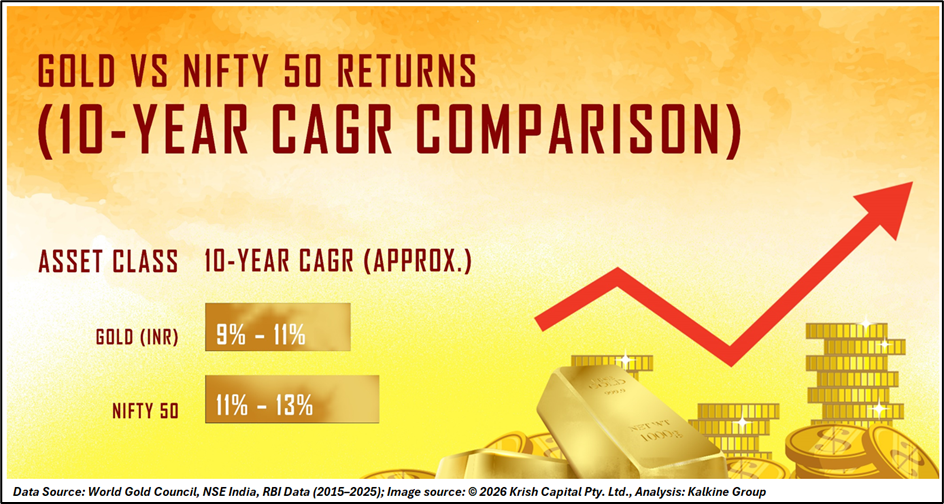
Gold and equities have delivered competitive long-term returns, with Nifty 50 marginally outperforming gold over the past decade. While equities remain linked to economic growth and earnings expansion, gold continues to serve as a diversification and risk-hedging asset. A balanced allocation across both asset classes may support portfolio stability over market cycles.
Gold Performance During Market Crashes
Analyst Insights
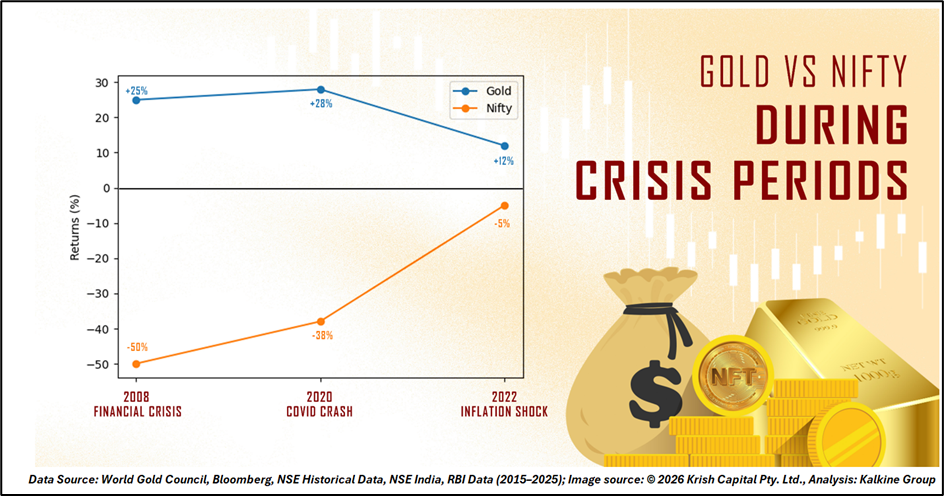
Historical crisis periods indicate gold often outperforms equities during market stress, acting as a defensive asset. In events such as the 2008 financial crisis and the 2020 pandemic-led decline, gold delivered positive returns while Nifty posted sharp losses. This trend highlights gold’s role as a hedge during periods of heightened volatility.
Gold ETF AUM Growth in India
Analyst Insights
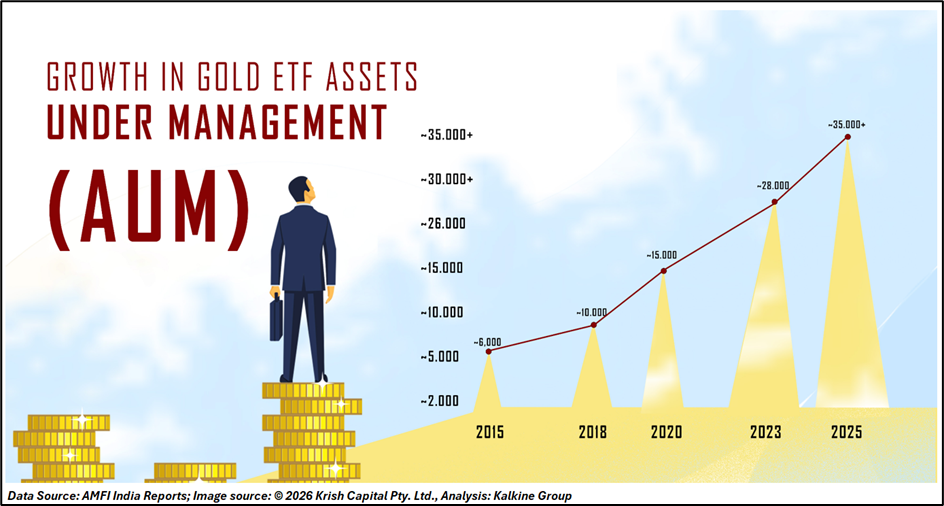
Gold ETF assets under management have shown steady expansion over the past decade, reflecting rising investor preference for digital and transparent gold investment avenues. The sharp increase after 2020 highlights heightened demand during uncertain periods. Continued growth in AUM indicates increasing institutional and retail participation, supporting gold’s role as a portfolio diversification asset.
Correlation with Equity Markets
Analyst Insights
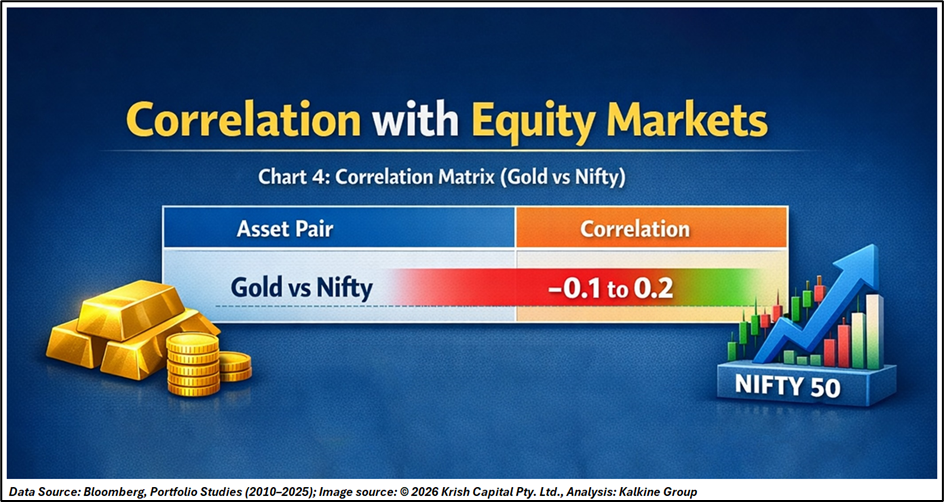
The low correlation range of -0.1 to 0.2 between gold and Nifty highlights their diversification benefits within portfolios. Gold typically moves independently of equities, particularly during volatile market phases. This relationship supports portfolio risk management, as including gold alongside equities may help reduce overall volatility and improve risk-adjusted returns over longer periods.
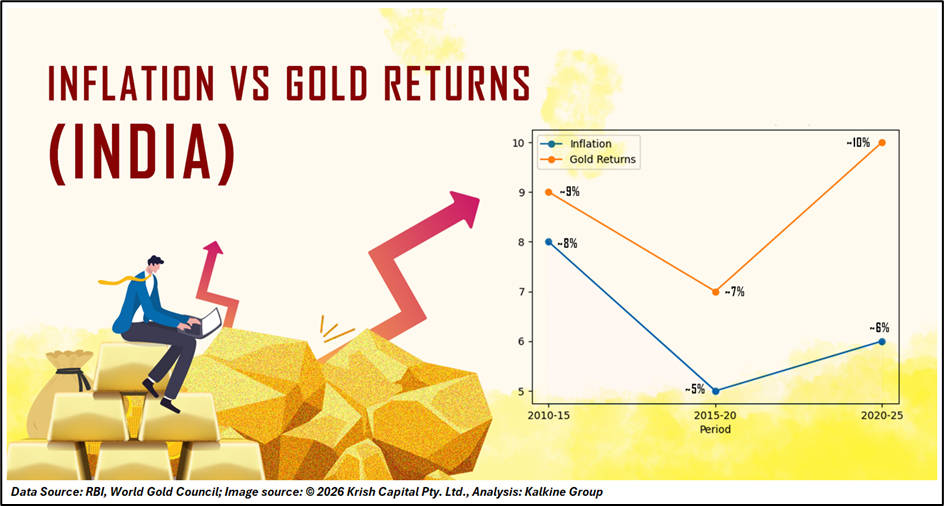
Inflation vs Gold Price Trend
Analyst Insights
Gold returns in India have broadly tracked inflation trends across periods, reinforcing its role as a potential hedge against rising prices. Higher returns during 2020–2025 alongside elevated inflation highlight increased demand for safe-haven assets. This trend indicates that gold allocation may help preserve purchasing power during periods of sustained inflationary pressure.
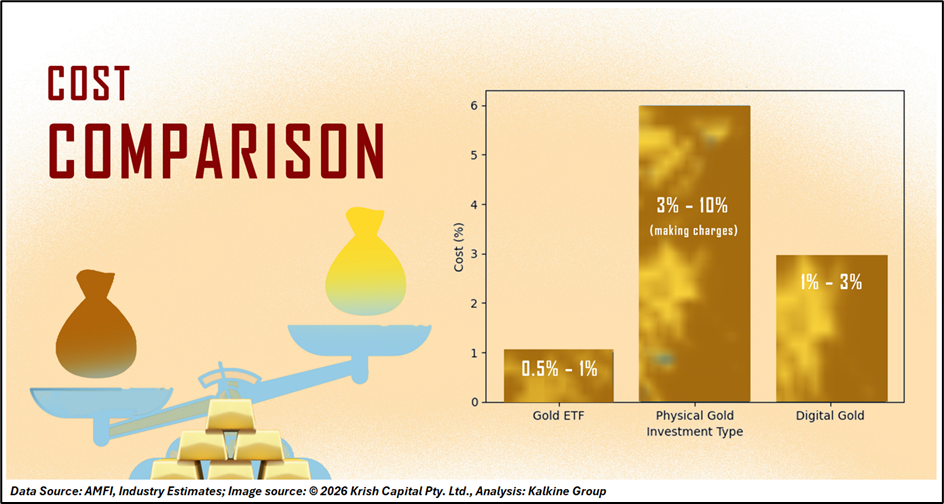
Expense Ratio Comparison
Analyst Insights
Investment costs vary significantly across gold formats, influencing overall returns. Gold ETFs generally offer lower expense ratios compared to physical gold, which includes making charges, and digital gold, which carries platform-related costs. Lower transaction and holding costs in ETFs may support efficiency, particularly for long-term investors seeking transparent and liquid exposure to gold.
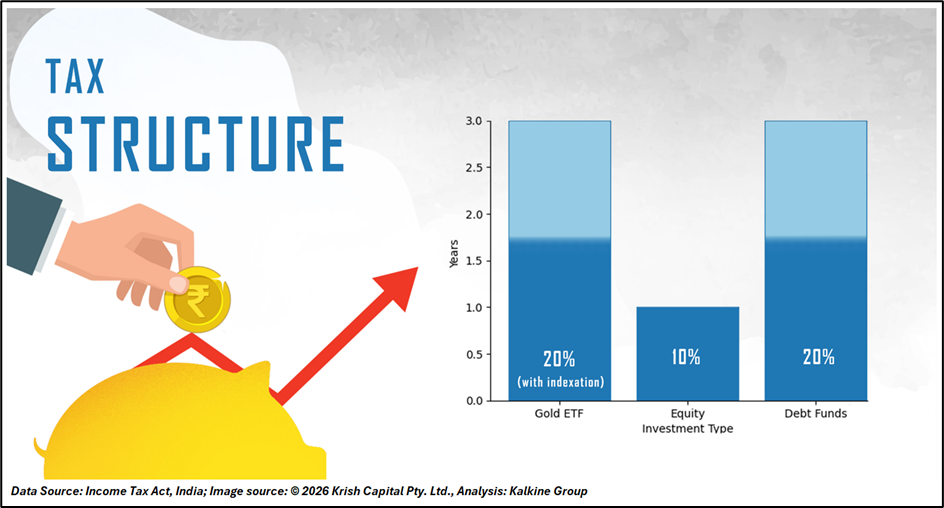
Tax Efficiency Comparison
Analyst Insights
Tax treatment plays a significant role in post-tax investment returns across asset classes. Equity investments benefit from shorter holding periods and comparatively lower LTCG tax rates, while gold ETFs and debt funds require longer holding durations for tax efficiency. Investors often evaluate tax implications alongside returns when structuring diversified, long-term investment portfolios.
Key Data-Driven Insights Supporting Gold Allocation
Empirical evidence across multiple market cycles highlights the structural role of gold as a portfolio stabilizer. Key observations include:
- Long-Term Return Profile: Gold has historically delivered approximately 9–11% annualized returns in INR terms, supporting wealth preservation over extended periods.
- Downside Protection: Gold typically exhibits strong performance during periods of financial stress, market drawdowns, and geopolitical uncertainty.
- Low Correlation with Equities: Its historically low correlation with equity markets enhances diversification benefits and reduces overall portfolio risk.
- Growing Institutional Adoption: Rising Assets Under Management (AUM) in Gold ETFs reflects increasing investor confidence and broader market acceptance.
- Inflation Hedging Capability: Gold has consistently served as an effective hedge against inflationary pressures and currency depreciation.
Conclusion: A Quantitative Case for Gold ETFs
From a financial analyst’s perspective, Gold ETFs should not be viewed as instruments designed solely for return enhancement. Instead, their strategic significance lies in their ability to optimize risk-adjusted portfolio performance.
Their primary portfolio benefits include:
- Mitigating portfolio drawdowns during market stress
- Enhancing diversification across asset classes
- Preserving capital amid macroeconomic and geopolitical uncertainty
In the context of heightened volatility and macroeconomic shifts expected in 2026, excluding gold exposure from a diversified investment strategy may represent a structural portfolio oversight rather than a tactical decision.