

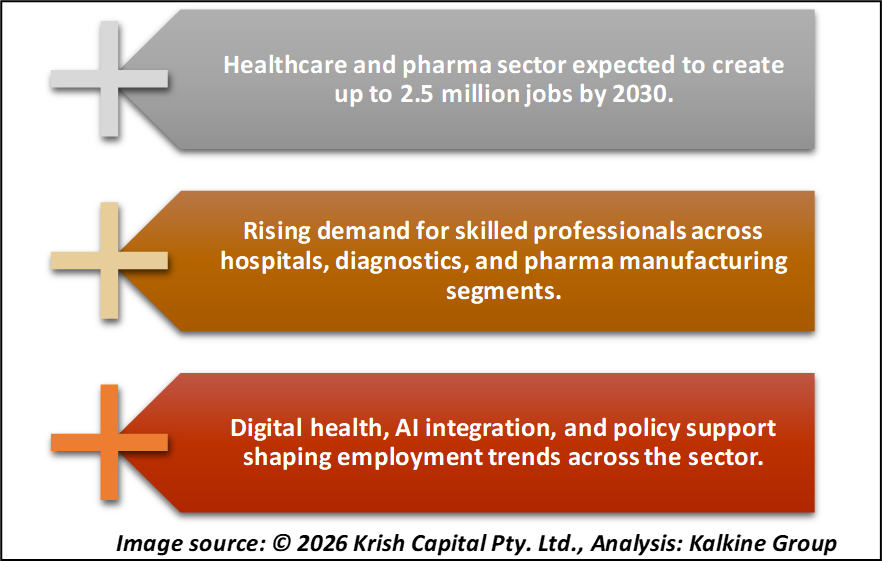
India’s healthcare and pharmaceutical sector is projected to generate between 2.2 million and 2.5 million new jobs by 2030, reflecting rising demand for healthcare services and manufacturing capabilities. The expansion spans hospitals, diagnostics, pharmaceuticals, and allied services, supported by increasing healthcare awareness and demographic shifts.
The demand is being driven by population growth, higher life expectancy, and a rising burden of chronic diseases. These factors are pushing both public and private stakeholders to expand healthcare infrastructure, leading to greater workforce requirements.
Skill Shift Reshaping Employment Landscape
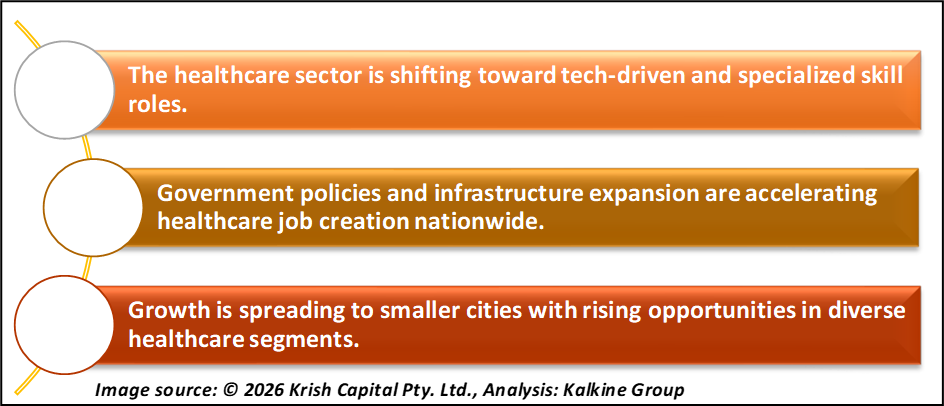
The sector is witnessing a transition in skill requirements, with increasing demand for specialized roles such as clinical research professionals, data analysts, and regulatory experts. Traditional roles like nurses, pharmacists, and lab technicians continue to see steady demand, but new-age roles linked to technology adoption are gaining traction.
Digital tools, including telemedicine platforms and AI-driven diagnostics, are changing how healthcare services are delivered. As a result, professionals with hybrid skill sets combining healthcare knowledge and technology expertise are becoming more relevant.
Policy Support and Infrastructure Push
Government initiatives aimed at improving healthcare access and infrastructure are contributing to job creation. Increased investments in medical colleges, hospitals, and rural healthcare facilities are expanding employment opportunities across urban and semi-urban regions.
In addition, policy frameworks encouraging domestic pharmaceutical manufacturing and research are supporting workforce growth in production, quality control, and research and development functions.
Regional Opportunities and Sector Diversification
Job creation is expected to be geographically diverse, with opportunities emerging not only in metropolitan areas but also in tier-2 and tier-3 cities. Expansion of healthcare networks and diagnostic chains into smaller cities is widening the employment base.
The sector is also diversifying into areas such as wellness, preventive healthcare, and home healthcare services. This diversification is contributing to new job roles and alternative career pathways within the broader healthcare ecosystem.
Key Risks
- Skill gap may limit employability despite rising job opportunities.
- Regulatory changes could affect hiring trends in pharmaceuticals and clinical research.
- Cost pressures may impact expansion plans of smaller healthcare providers.
- Technology adoption may reduce demand for certain traditional roles.
FAQs
- How many jobs are expected in the healthcare sector by 2030?
The sector is projected to create between 2.2 million and 2.5 million new jobs by 2030 across segments. - Which roles are most in demand in healthcare hiring trends?
Demand is rising for clinical professionals, technicians, and technology-integrated roles such as data analysts and telemedicine specialists. - What factors are driving job growth in the pharma sector?
Population growth, healthcare access expansion, policy support, and technology adoption are key drivers of employment growth.