

India's largest airline, InterGlobe Aviation (IndiGo), has unveiled an ambitious growth roadmap aimed at transforming itself from a dominant domestic carrier into a global aviation powerhouse. The airline is targeting a fleet size of more than 550 aircraft and annual passenger traffic of 200 million by FY30, nearly doubling its current scale.
Key Highlights
- Target fleet size of over 550 aircraft by FY30
- Passenger traffic goal of 200 million annually
- Strong focus on international and long-haul expansion
- Accelerated rollout of premium seating products
- Continued induction of Airbus A321XLR aircraft
- No plans to defer aircraft deliveries despite near-term industry challenges
- Increased focus on aircraft ownership and finance leasing strategies
IndiGo's Growth Ambitions Take Flight
IndiGo carried more than 123 million passengers during FY26 and operated a fleet of approximately 441 aircraft, reinforcing its position as India's largest airline. The company now aims to significantly scale operations over the next four years as rising incomes, expanding airport infrastructure, and increasing international travel demand fuel growth in the aviation sector.
The airline's management emphasized that growth will remain disciplined while leveraging opportunities in international markets, premium travel, cargo operations, and ancillary revenue streams.
International Expansion Becomes Core Growth Driver
A key pillar of IndiGo's FY30 strategy is its international expansion plan. The carrier is increasingly targeting long-haul destinations, moving beyond its traditional low-cost domestic model.
The induction of the long-range Airbus A321XLR aircraft is expected to open new routes across Europe, Asia, and other international markets. The airline has also placed orders for wide-body aircraft, including Airbus A350s, supporting its ambition to compete more aggressively on global routes.
Premium Travel Offering Gains Momentum
IndiGo is also expanding its premium travel proposition to attract higher-yield passengers. The airline has been gradually introducing premium seating products and enhanced travel services as part of its strategy to diversify revenue sources and improve profitability.
This marks a significant evolution for a carrier historically known for its no-frills, low-cost model.
No Aircraft Delivery Deferrals Despite Challenges
Despite reporting a loss in the March quarter due to foreign exchange impacts and industry headwinds, IndiGo remains committed to its fleet expansion plans. The airline has clearly stated that it does not intend to defer aircraft deliveries and continues to strengthen its asset ownership strategy.
Recently, the company's board approved an investment plan of up to $450 million for acquiring aircraft, engines, and aviation-related assets, highlighting management's confidence in long-term demand growth.
What It Means for Investors
IndiGo's aggressive expansion strategy underscores management's confidence in India's long-term aviation growth story. With a domestic market share exceeding 60%, growing international operations, a massive aircraft order book, and increasing premium offerings, the airline is positioning itself for sustained long-term growth.
However, investors should continue monitoring fuel prices, currency fluctuations, competitive pressures, and aircraft delivery schedules, which remain key factors influencing profitability.
Technical Summary
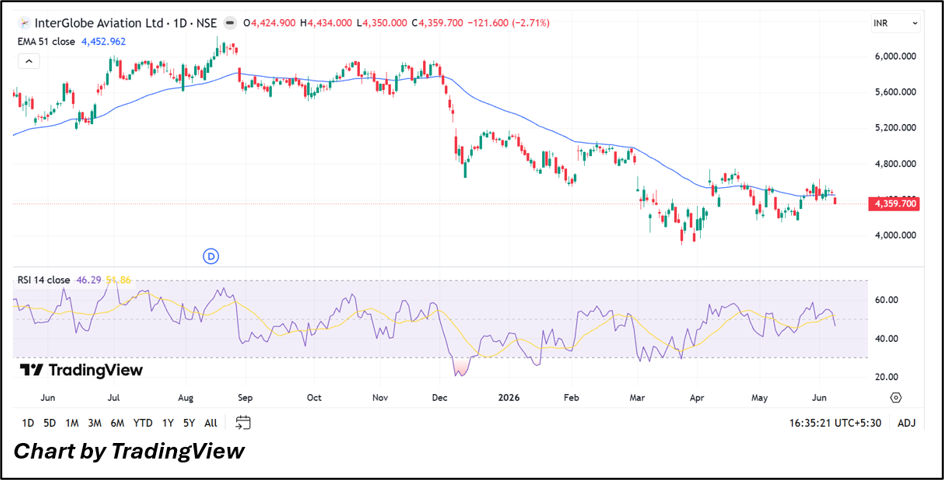
InterGlobe Aviation (IndiGo) remains in a short-term downtrend, trading below its 51-day EMA of ₹4,453. The stock closed at ₹4,360, down 2.7%, reflecting continued selling pressure. RSI at 46 suggests weak momentum without oversold conditions. Immediate support is near ₹4,300, while resistance is seen around ₹4,500. A decisive breakout is needed for trend reversal.
FAQs
Why is IndiGo targeting 200 million passengers by FY30?
The airline expects strong growth in domestic and international air travel demand, supported by rising incomes, expanding airport infrastructure, and increasing global connectivity.
How many aircraft does IndiGo currently operate?
IndiGo operated approximately 441 aircraft during FY26 and aims to expand its fleet beyond 550 aircraft by FY30.
What role will the Airbus A321XLR play in IndiGo's strategy?
The aircraft's extended range will enable IndiGo to launch new international and long-haul routes while maintaining operational efficiency.
Is IndiGo delaying aircraft deliveries?
No. The airline has indicated that it does not plan to defer aircraft deliveries despite near-term industry challenges.