
InterGlobe Aviation Ltd (NSE: INDIGO) slipped 1.85% to ₹4,818 on 23 January 2026 following the release of its Q3 FY26 results, as investors digested a sharp decline in profitability driven by one-time exceptional costs. Despite the post-results pressure, growing technical signals suggest the stock may be approaching a potential bottoming zone.
IndiGo Q3 Results: Profit Hit by Labour Code Costs
IndiGo reported a 78% year-on-year drop in net profit to ₹550 crore, even as revenue from operations rose 6.2% to ₹23,472 crore. The earnings decline was primarily driven by an exceptional charge of ₹1,547 crore, of which ₹969 crore was linked to the implementation of new labour codes. Additional operational disruptions in December led to costs of ₹577 crore, including losses from flight cancellations and delays.
While the earnings headline disappointed, the market reaction remained relatively contained, indicating that a significant portion of the one-off impact may already be priced in.
Technical View: Stabilisation Signals Emerge
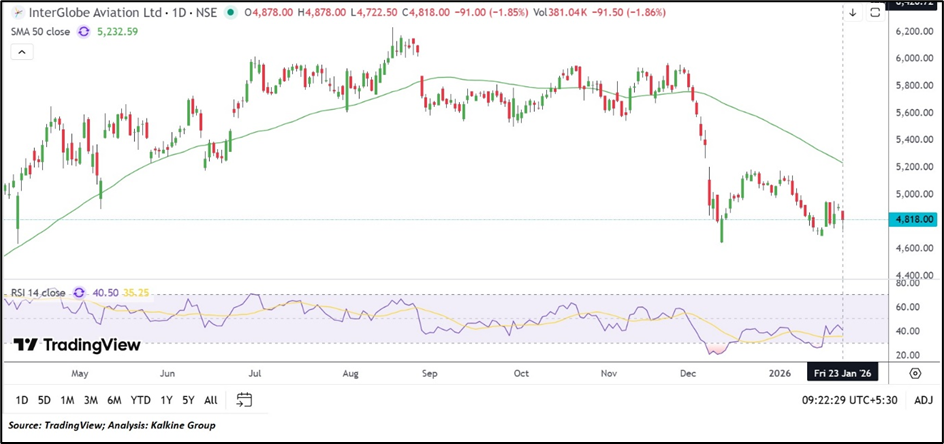
From a technical analysis standpoint, INDIGO continues to trade below its 50-day Simple Moving Average (₹5,232), which is acting as immediate resistance. However, the broader price structure suggests consolidation rather than breakdown following the recent decline.
The 14-day RSI is near 40.5, holding above oversold territory, signalling stabilising momentum. Key support levels are seen at ₹4,500 and ₹4,300, while resistance zones lie near ₹5,200 and ₹5,500. Sustained holding above support could pave the way for a technical rebound.
Bottom Line
Despite short-term earnings pressure from labour code implementation, InterGlobe Aviation Ltd (NSE: INDIGO) is showing early signs of base formation near key support levels. If stability persists and cost pressures normalise, the stock could attempt a recovery, with upcoming quarters acting as critical confirmation points.