

India’s currency market has seen major action recently as the Reserve Bank of India (RBI) stepped in to control volatility in the rupee. With the rupee facing continuous pressure due to global factors like rising oil prices and foreign fund outflows, RBI introduced strict limits on banks’ foreign exchange (forex) positions.
This move is aimed at stabilizing the rupee in the short term, but it has also raised concerns about the impact on bank profitability and overall market dynamics.
RBI’s Forex Curbs and Market Impact
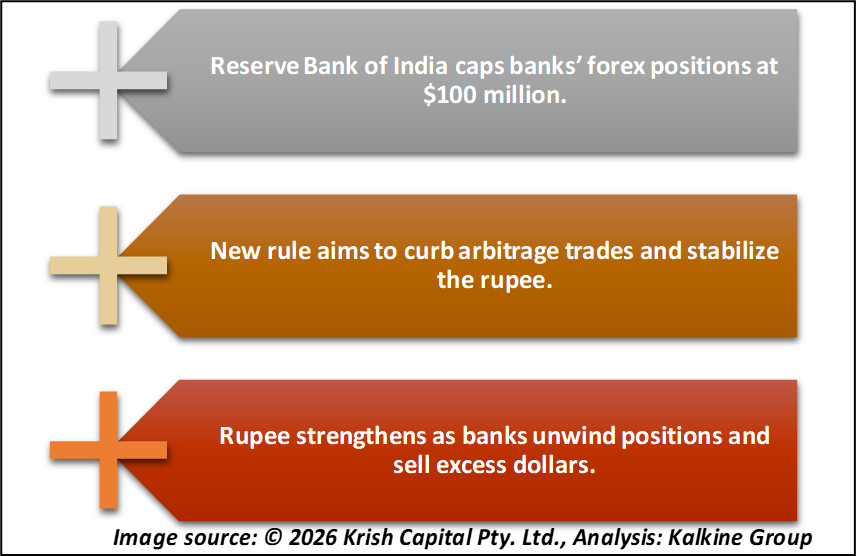
The RBI has capped banks’ net open forex positions at $100 million, forcing them to reduce large positions built over time. Earlier, banks were allowed to hold bigger positions based on their balance sheet strength, which they used to benefit from price differences between onshore and offshore currency markets.
These arbitrage opportunities were generating profits for banks but were also adding pressure on the rupee. By restricting these activities, RBI wants to reduce speculative trades and bring stability to the currency market.
Following this decision, the rupee saw a sharp recovery as banks rushed to unwind their positions and sell dollars. This led to a short-term strengthening of the currency, giving some relief to the market.
Temporary Relief for Rupee Stability
The immediate reaction of the rupee shows that RBI’s strategy worked in the short term. The currency gained nearly 1% in a single session, indicating strong impact from the regulatory move.
However, this relief appears temporary. Market participants, including corporates and importers, have started adjusting their strategies to take advantage of new price gaps. As a result, the rupee has again shown signs of weakness after the initial recovery.
This suggests that while regulatory actions can control volatility for some time, they may not fully address deeper structural issues affecting the currency.
Pressure on Bank Profitability
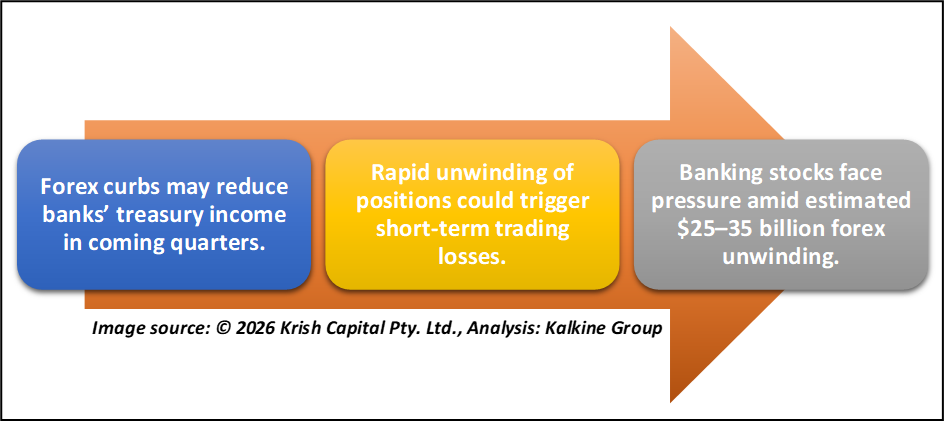
One of the key concerns emerging from this move is its potential impact on bank earnings. Banks had been actively leveraging forex arbitrage opportunities, which significantly boosted their treasury income in recent quarters. However, with stricter regulatory limits now in place, banks are being compelled to unwind these profitable positions at a faster pace.
This could lead to market dislocations and even short-term trading losses. As a result, treasury income is likely to decline in the coming quarters. With estimated forex positions of $25–35 billion, the unwinding process may have a notable financial impact, which is already being reflected in the pressure on banking stocks.
Broader Economic Challenges
While the RBI’s intervention offers temporary relief to the rupee, the broader challenges facing the currency remain largely unresolved. India’s heavy reliance on crude oil imports continues to expose it to external shocks, especially amid rising global oil prices. Additionally, persistent geopolitical tensions and ongoing foreign investor outflows are adding further pressure.
These structural issues have already contributed to a notable depreciation of the rupee over the past year. Unless there is a meaningful improvement in global economic conditions or a revival in capital inflows, the rupee is likely to stay volatile despite regulatory support measures.
Technical Summary

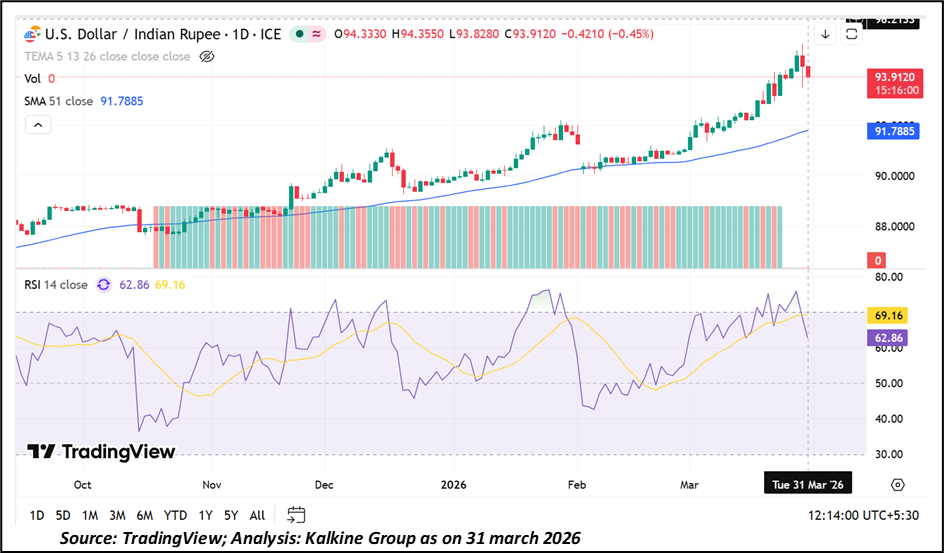
The USD/INR pair is currently trading near ₹93.91, positioned between key support at ₹92.00 and resistance at ₹95.60. The overall structure remains range-bound with a slight bullish bias as long as the price holds above ₹92.00.
A breakdown below this level could trigger further downside toward ₹90.00. On the upside, a sustained move above ₹95.60 may open the path toward ₹98.00, indicating strengthening momentum. Traders should watch for breakout confirmation or support breaches to determine the next directional move in the near term.
Market Outlook
Going forward, the currency market is likely to remain highly sensitive to both global and domestic developments. While the RBI may step in to manage excessive volatility, frequent regulatory interventions could also introduce a degree of uncertainty for market participants.
For banks, the priority will shift toward prudent risk management and adapting to a likely decline in forex-related income. Investors will be closely monitoring how these changes affect overall profitability in the upcoming quarters.
Meanwhile, companies engaged in imports and exports may need to reassess and recalibrate their hedging strategies to navigate the evolving currency landscape more effectively.