

Rising Crude Prices: Key Highlights
- Oil Prices Climb: Crude oil prices are approaching $90 per barrel, raising concerns for the aviation sector.
- Fuel a Major Cost: Aviation turbine fuel (ATF) accounts for about 20% of airline operating expenses.
- Margin Pressure Risk: Sustained increases in oil prices could affect airline profitability.
- Fare Adjustment Possibility: Airlines may consider ticket price revisions if fuel costs remain elevated.
- Expansion Plans in Focus: Higher operating costs could influence route additions and fleet expansion decisions.
Investor Watch: Aviation stocks tend to respond quickly to changes in crude oil prices.
Aviation Industry Faces Cost Challenges as Oil Prices Rise
The recent rise in global crude oil prices has drawn attention to the aviation industry, where fuel remains one of the largest cost components. Since aviation turbine fuel is derived from crude oil, any sustained increase in oil prices can affect airline operating economics.
Higher fuel costs may gradually influence pricing strategies and operational planning across the sector. Airlines often monitor energy markets closely, as prolonged volatility in crude oil can shape decisions related to capacity deployment, route networks, and fleet management. As a result, oil price movements remain an important factor influencing sentiment toward aviation stocks.
Oil Near $90 Puts Airline Stocks in Focus
Rising crude oil prices near $90 per barrel have raised concerns for the aviation sector, as higher fuel costs can pressure airline profitability. Aviation turbine fuel is one of the largest operating expenses for airlines. In India, stocks such as InterGlobe Aviation (IndiGo) and SpiceJet have come into focus as investors assess the potential impact. Sustained high oil prices could increase operating costs and weigh on margins across the airline industry.
The concerns reflect market expectations that:
• Higher crude oil prices could increase aviation turbine fuel (ATF) costs
• Airline operating margins may come under pressure if fuel prices remain elevated
• Carriers may raise ticket prices or fuel surcharges to offset rising expenses
• Profitability of airline companies could be impacted if crude sustains near current levels.
Key Indian Airline Stocks in Focus
- SpiceJet (BSE: SPICEJET)
SpiceJet is a low-cost airline primarily focused on domestic routes along with select international destinations. The airline has been working to stabilise operations and improve capacity utilisation as passenger travel demand gradually recovers. However, the company remains sensitive to rising aviation turbine fuel (ATF) prices, which form a major portion of operating expenses. Elevated crude oil prices could increase cost pressures for the airline, particularly amid intense competition and existing financial challenges within the sector.
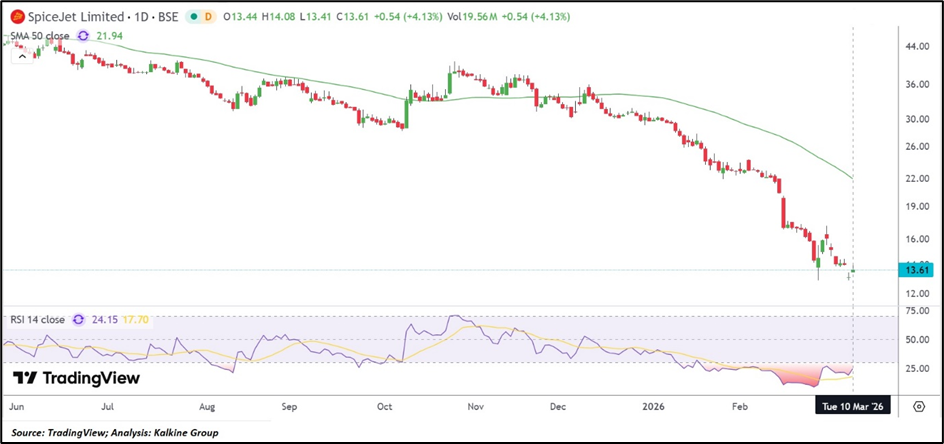
Technical Summary: SpiceJet is trading at ₹13.61 on March 10, 2026, gaining ₹0.54 or 4.13% in the session so far. Despite the intraday recovery, the stock remains in a broader downtrend, with the price trading significantly below its 50-day Simple Moving Average of ₹21.94, indicating weak short-term momentum. The 14-day RSI stands near 24.15, placing the stock in deep oversold territory, which reflects strong selling pressure in recent sessions. On the downside, the ₹12.80–₹12.00 range may act as a support zone if weakness persists. Meanwhile, ₹15.00–₹17.00 could act as a resistance band, with a move above the 50-day average potentially improving the near-term outlook. Overall, sentiment remains cautious, though oversold conditions may trigger short-term technical rebounds.
- InterGlobe Aviation (IndiGo) (NSE: INDIGO)
InterGlobe Aviation, the parent company of IndiGo, is India’s largest airline by market share and operates an extensive fleet across domestic and international routes. The airline has maintained a strong position through efficient operations and high aircraft utilisation. However, profitability in the aviation sector remains closely linked to fuel prices. If crude oil sustains near elevated levels, higher aviation turbine fuel costs could weigh on margins despite steady passenger demand and strong industry growth.
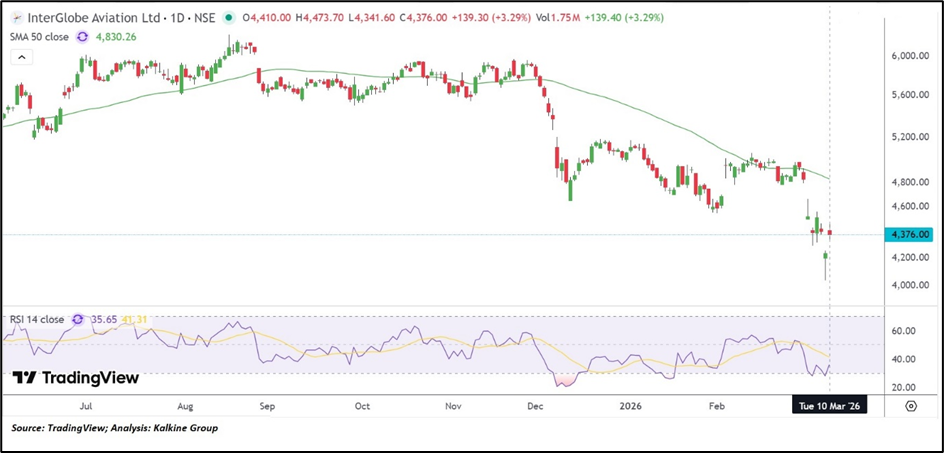
Technical Summary: From a technical perspective, InterGlobe Aviation, the parent company of IndiGo, is trading around ₹4,376.00 on March 10, 2026, up ₹139.30 or 3.29%. The stock continues to trade below its 50-day Simple Moving Average of ₹4,830.26, indicating weaker short-term momentum on the daily chart. The 14-day RSI stands near 35.65, suggesting momentum remains in the lower range despite the recent bounce. On the downside, the ₹4,200–₹4,000 zone may act as a key support area if weakness persists. Meanwhile, ₹4,800–₹5,200 could act as a resistance band, with a sustained move above this zone potentially improving the near-term price structure. Overall, market sentiment appears cautious in the near term.
These companies are expected to benefit from the growing localisation of defence manufacturing in India.
Sector Outlook
Fuel Cost Pressure: Aviation turbine fuel (ATF) forms a major share of airline operating expenses, making the sector highly sensitive to crude oil price movements.
- Margin Impact: Sustained high crude prices could increase operating costs and pressure airline profitability.
- Pricing Adjustments: Airlines may revise ticket prices or add fuel surcharges to offset rising fuel expenses.
- Operational Strategy: Carriers may review route networks, capacity deployment, and expansion plans depending on fuel cost trends.
- Investor Watch: Aviation stocks often react quickly to changes in crude oil prices and energy market trends.
Conclusion
Crude oil prices approaching $90 per barrel have placed airline stocks such as IndiGo and SpiceJet in focus, as rising fuel costs can influence operating margins across the aviation sector. Since aviation turbine fuel forms a major part of airline expenses, sustained increases in oil prices may affect profitability and strategic planning. Airlines may respond through pricing adjustments, operational optimisation, or careful capacity management to balance costs. While passenger demand remains an important driver for the industry, the near-term outlook for aviation companies will likely remain sensitive to energy market trends and volatility in global crude prices.