

Highlights
- Silver remained under pressure as hawkish Fed expectations strengthened the U.S. dollar.
- Weak safe-haven demand continued to weigh on precious metals.
- ETF outflows reflected cautious institutional positioning.
- Silver traded near multi-month lows despite a modest intraday rebound.
- Technical indicators continued to signal a weak near-term trend.
Overview
Silver prices remained under pressure as investors continued to reduce exposure to precious metals amid a stronger U.S. dollar and expectations that the U.S. Federal Reserve could keep interest rates elevated for longer. The metal traded around $57.57 per ounce, remaining close to recent lows as cautious investor sentiment and changing macroeconomic expectations weighed on the market.
Hawkish Fed Expectations Keep Pressure on Precious Metals
A key factor behind silver's weakness has been the increasingly hawkish outlook for U.S. monetary policy. Market participants continue to anticipate that interest rates could remain higher for longer, supporting the U.S. dollar and reducing the appeal of non-yielding assets such as silver. The stronger greenback has also made dollar-denominated precious metals relatively more expensive for overseas buyers, limiting demand.
Fading Safe-Haven Demand Reduces Buying Interest
Silver has also been impacted by easing geopolitical concerns, which have lowered demand for traditional safe-haven assets. Progress in diplomatic discussions has improved overall market sentiment, encouraging investors to rotate toward higher-risk assets instead of defensive commodities. Softer energy prices have further reduced inflation concerns, removing another important support for precious metals.
ETF Outflows Highlight Cautious Institutional Sentiment
Institutional investors have continued trimming exposure to silver-backed exchange-traded funds as market participants reassess portfolio allocations. The ongoing outflows suggest investors remain cautious toward precious metals while allocating capital toward other asset classes offering stronger near-term growth prospects. This shift in positioning has contributed to persistent selling pressure in silver prices.
Technical Perspective: Bears Continue to Control the Market Structure
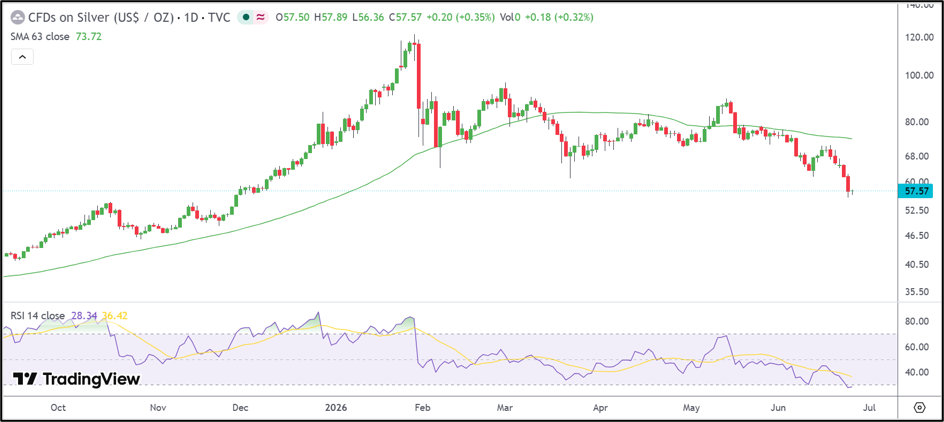
From a technical perspective, silver continues to exhibit a weak price structure after breaking decisively below its 63-day Simple Moving Average near 73.72, confirming that the broader trend remains bearish. Recent price action shows sellers maintaining control despite a modest recovery from today's intraday low. The 14-day Relative Strength Index (RSI) stands around 28.34, below its average of 36.42, indicating that bearish momentum remains dominant while the market has entered oversold territory. Although oversold conditions may encourage intermittent short-covering rallies, a sustained recovery would require stronger buying interest and a move back above key resistance zone.
Key Technical Levels
Silver is currently trading around $57.57 per ounce. Immediate support is seen near the recent intraday low of $56.36, while the next important downside support is located around $52.50. On the upside, the first resistance is placed near $60.00, followed by a stronger resistance zone around $68.00. Holding above immediate support could help stabilize prices, while a break below recent lows may result in additional downside pressure.
Market Outlook
Silver is expected to remain sensitive to developments surrounding U.S. monetary policy, inflation expectations, and movements in the U.S. dollar. Investors will also monitor upcoming economic data and central bank commentary for fresh clues regarding future interest-rate decisions. Until macroeconomic conditions become more supportive, volatility in silver prices is likely to remain elevated.
Risks to Watch
- Additional hawkish signals from the Federal Reserve.
- Continued strength in the U.S. dollar.
- Persistent outflows from silver-backed ETFs.
- Weakening industrial demand for silver.
- Renewed shifts in global geopolitical developments.
FAQ
Q: Why are silver prices falling today?
A: Silver remains under pressure due to a stronger U.S. dollar, expectations of higher interest rates, and weakening safe-haven demand.
Q: How do higher interest rates affect silver?
A: Higher interest rates increase the opportunity cost of holding non-yielding assets such as silver, reducing investor demand.
Q: Why are ETF outflows important for silver prices?
A: ETF outflows indicate declining institutional participation, which can increase selling pressure and weaken market sentiment.
Q: What does the current technical outlook suggest?
A: Silver remains in a bearish trend, trading below its major moving average while momentum indicators continue to reflect weakness.
Q: What factors will investors watch next?
A: Market participants will monitor U.S. economic data, Federal Reserve policy signals, movements in the U.S. dollar, ETF flows, and geopolitical developments.