

Indian pharmaceutical exporters are facing unprecedented logistical challenges due to the escalating conflict in the Middle East. Freight charges for shipments to Gulf and wider West Asian markets have doubled, with surcharges ranging from $4,000–$8,000 per shipment, according to the Pharmaceuticals Export Promotion Council of India (Pharmexcil). The surge in costs, combined with higher insurance premiums and rerouted shipping paths, is creating a potential loss of Rs 2,500–5,000 crore for Indian pharma in March alone.
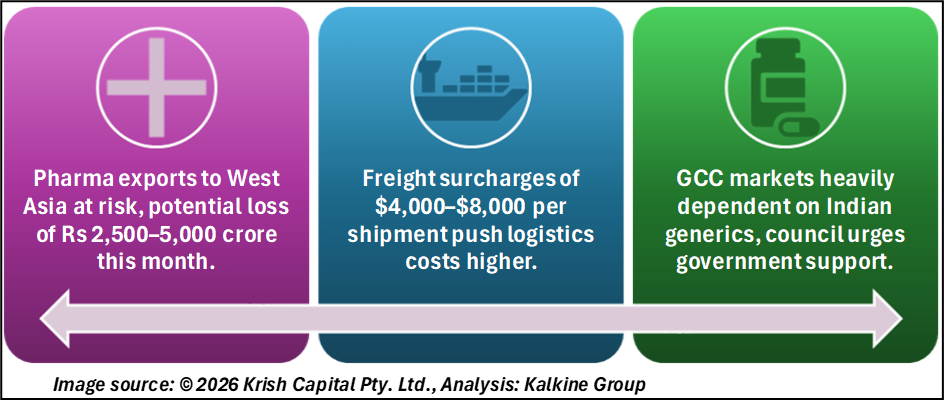
Middle East: A Key Market Under Stress
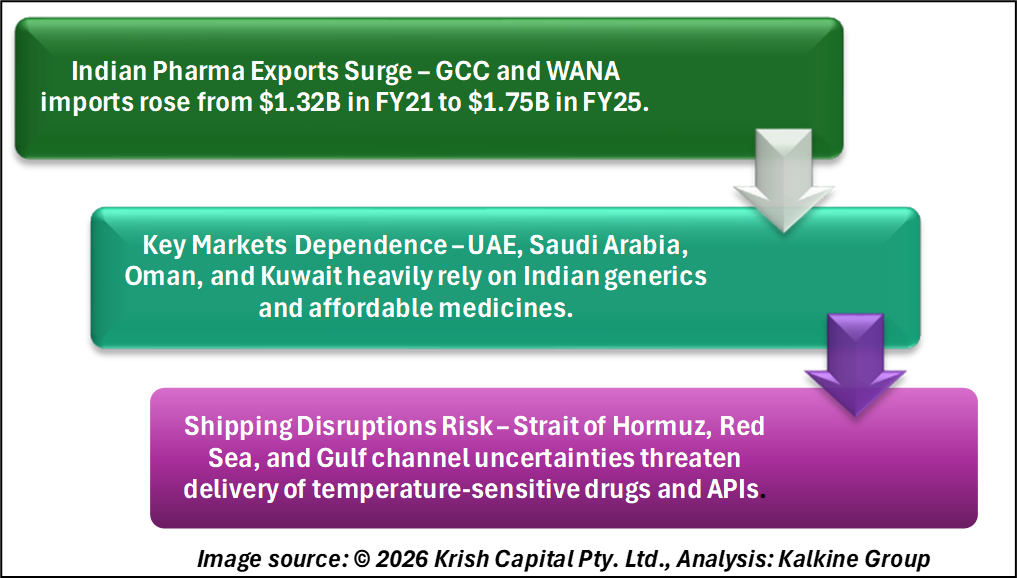
The Gulf Cooperation Council (GCC) and the broader West Asia–North Africa (WANA) region have become important markets for Indian pharmaceutical exports. According to Pharmexcil, shipments to these areas grew from $1.32 billion in FY21 to $1.75 billion in FY25. Major countries such as the UAE, Saudi Arabia, Oman, and Kuwait depend significantly on Indian generic and cost-effective medicines.
Namit Joshi, Pharmexcil Chairman, highlighted that disruptions in shipping corridors like the Strait of Hormuz, Red Sea, and Gulf channels are creating uncertainty in delivery schedules, especially for temperature-sensitive formulations and active pharmaceutical ingredients (APIs).
Crude Prices and Supply Chain Pressures
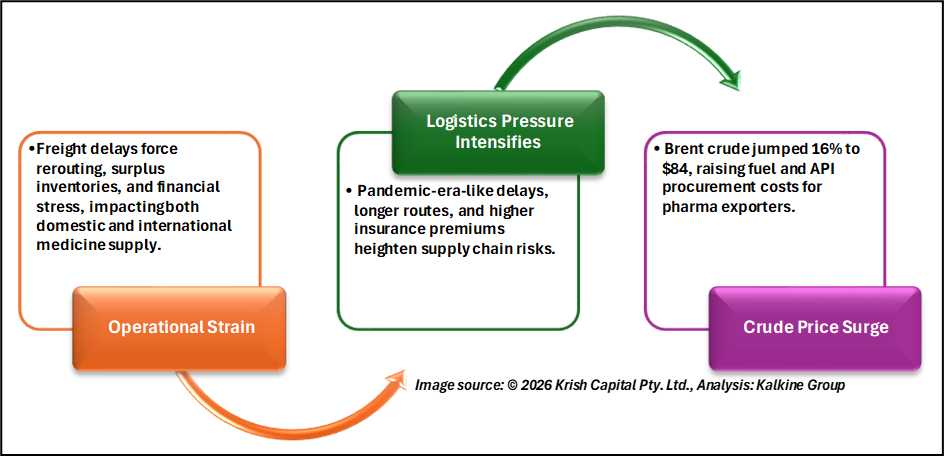
Global oil markets are also contributing to rising costs. Since February 28, Brent crude jumped nearly 16 percent, trading close to $84 a barrel on March 6, up from $72.48. Higher crude prices increase both fuel costs and procurement expenses for APIs, putting further strain on working capital cycles of pharma exporters.
Joshi noted that the current pace of logistical pressure is comparable only to pandemic-era disruptions, with longer routes, operational delays, and increased insurance premiums intensifying supply chain risks.
Impact on Pharma Inventory and Operations
Rising freight costs and delays are impacting the timely delivery of medicines, forcing companies to reroute shipments or maintain surplus inventories, which strains both finances and storage capacities. Bulk drug and intermediates exporters are particularly affected, as the API manufacturing sector relies heavily on petroleum-based inputs, making them vulnerable to crude price spikes.
Pharmexcil has emphasized that a prolonged disruption could ripple across both domestic and international markets, affecting not just export revenues, but also access to essential medicines in dependent regions.
Council Calls for Government Support
In response to the crisis, Pharmexcil has urged the government to provide freight-relief mechanisms, explore alternate logistics options, and ensure uninterrupted supply of essential medicines. The council is also engaging with logistics partners and international regulatory bodies to mitigate disruptions and maintain steady export flows.
With Indian pharma exports valued at around $30 billion, and GCC countries accounting for 5.58 percent of total exports, industry leaders stress the importance of diversified shipping routes, secure payment channels, and proactive contingency planning to protect growth.
Conclusion
The escalating Middle East conflict is creating a perfect storm for Indian pharmaceutical exporters, with soaring freight charges, insurance costs, and supply chain delays threatening Rs 2,500–5,000 crore in potential losses this month alone. With key Gulf and WANA markets heavily reliant on Indian generics, disruptions risk both revenue and timely access to medicines. Industry leaders are calling for government support, alternate logistics planning, and risk mitigation strategies to safeguard export continuity. Proactive measures are critical to maintain India’s position as a trusted supplier amid volatile geopolitical conditions.