

Highlights
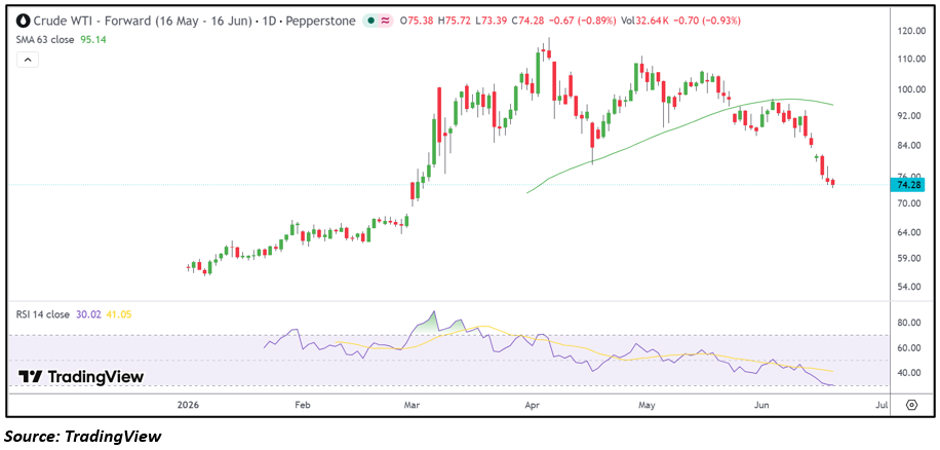
- Crude oil prices have fallen to multi-month lows, with WTI slipping below the $75 per barrel mark.
- Easing geopolitical tensions have reduced the risk premium previously built into energy markets.
- Expectations of increased global oil supply are weighing on price sentiment.
- Concerns about slower demand growth and higher interest rates are adding pressure to crude prices.
- Traders are reassessing the balance between future supply growth and global consumption trends.
Overview
Crude oil prices remained under pressure in recent trading sessions, extending their decline as market participants responded to a combination of geopolitical developments, rising supply expectations, and concerns over future demand growth. WTI crude fell below $75 per barrel, while broader energy markets experienced increased volatility as traders unwound positions built around earlier supply disruption fears.
The latest decline reflects a significant shift in market sentiment, with investors increasingly focusing on the possibility of improved global supply conditions and a moderation in geopolitical risks that had previously supported higher crude prices.
Why Are Oil Prices Falling?
One of the primary drivers behind the recent decline is the easing of geopolitical tensions in the Middle East. Reduced concerns over potential disruptions to key shipping routes and energy exports have lowered the risk premium that had pushed crude prices sharply higher in previous months.
At the same time, expectations that additional crude supplies could return to global markets have strengthened the view that supply growth may outpace demand over the medium term. This shift has encouraged traders to reduce bullish positions and reassess the outlook for energy prices.
Supply Outlook Remains a Key Concern
The market is increasingly focused on the possibility of a growing supply surplus. Expectations for higher production levels from major oil-producing regions have raised concerns that global inventories could build if demand growth fails to keep pace.
Investors are now closely monitoring production trends, export flows, and inventory data to determine whether the oil market could move into a more comfortably supplied environment during the coming quarters.
Demand Growth Uncertainty Adds Pressure
Beyond supply concerns, crude oil is also facing pressure from uncertainty surrounding global economic growth. Higher borrowing costs and tighter financial conditions have raised concerns that industrial activity and fuel consumption may expand at a slower pace than previously expected.
As a result, traders are becoming more cautious about future oil demand projections, particularly if economic activity softens across major consuming regions.
Fundamental View
The long-term outlook for crude oil remains dependent on the balance between supply growth and demand recovery. While geopolitical risks have eased for now, energy markets remain sensitive to any developments that could disrupt production or transportation networks.
At the same time, expectations of rising supply and concerns over slower demand growth have created a more challenging environment for crude prices in the near term. Future inventory trends, economic data, and energy consumption patterns are likely to remain key factors influencing market direction.
Important Price Zones
WTI crude is currently trading near $74.28. Immediate support is positioned around $72.42 and $70.57. On the upside, resistance is seen near $76.14 and $77.99. A sustained move above resistance levels could help improve short-term sentiment, while a break below support zones may keep pressure on prices.
Conclusion
Crude oil prices are facing significant pressure as easing geopolitical tensions reduce supply disruption fears and expectations of stronger global supply growth weigh on market sentiment. With traders also assessing the impact of slower demand growth and tighter financial conditions, the oil market remains highly sensitive to both economic and geopolitical developments.
FAQ
Why are crude oil prices falling today?
Crude oil prices are declining due to easing geopolitical tensions, expectations of improved global supply conditions, and concerns that demand growth may slow amid tighter financial conditions.
Why did WTI crude fall below $75 per barrel?
WTI crude moved below $75 as traders reduced risk premiums and reassessed the outlook for future supply and demand balances in the global oil market.
Are supply concerns affecting oil prices?
Yes. Expectations of increasing global oil production and improved export flows have raised concerns that supply growth could outpace demand growth.
What factors could support oil prices going forward?
Stronger-than-expected demand growth, lower inventories, production disruptions, or renewed geopolitical risks could provide support to crude oil prices.
What should investors watch next?
Investors should monitor inventory data, global economic indicators, energy demand trends, and developments affecting crude oil production and transportation.
Crude oil prices have fallen sharply as easing geopolitical tensions reduce supply disruption fears, while expectations of rising global production and slower demand growth continue to weigh on energy market sentiment.