

Highlights
- Gold climbed after softer-than-expected U.S. nonfarm payrolls data.
- Weaker U.S. dollar supported demand for bullion.
- Expectations for additional Federal Reserve rate hikes eased.
- Gold headed for its first weekly gain in five weeks.
- Silver and platinum also moved higher following the jobs report.
Gold Rebounds as Economic Data Changes Market Expectations
Gold prices moved higher on Friday after weaker-than-expected U.S. employment data reduced concerns over further interest rate increases by the Federal Reserve. Spot gold traded near USD 4,175.72 per ounce, while gold futures rose to around USD 4,189.59 per ounce. The recovery followed several weeks of pressure on precious metals, with bullion now positioned for its first weekly gain in five weeks.
Soft Payrolls Data Weighs on Dollar and Treasury Yields
The latest U.S. nonfarm payrolls report indicated slower hiring during June than markets had anticipated. The softer labour market data reduced expectations that the Federal Reserve would need to tighten monetary policy further in the near term. As a result, the U.S. Dollar Index retreated from recent highs, while Treasury yields eased, improving the investment appeal of non-yielding assets such as gold.
Second Quarter Decline Gives Way to Short-Term Recovery
Gold experienced a challenging second quarter as persistent inflation concerns and expectations of higher U.S. interest rates weighed on investor sentiment. The metal declined nearly 13.00% during the quarter and erased its gains for the year. However, the latest recovery suggests market participants are reassessing the interest rate outlook following signs of moderation in economic data.
Precious Metals Join the Recovery
The improvement extended across the broader precious metals market. Spot silver advanced to approximately USD 62.41 per ounce, while platinum also posted gains as the weaker dollar improved sentiment across the metals complex. Market participants continued to monitor upcoming economic releases that could influence monetary policy expectations during the coming months.
Federal Reserve Outlook Remains an Important Market Driver
Although the latest employment data reduced immediate concerns over another rate increase, Federal Reserve officials have continued to maintain a cautious stance on inflation. Policymakers have reiterated their commitment to achieving the central bank's inflation objective, suggesting future economic reports, including inflation and labour market data, will remain key factors shaping interest rate expectations and precious metal prices.
Technical View
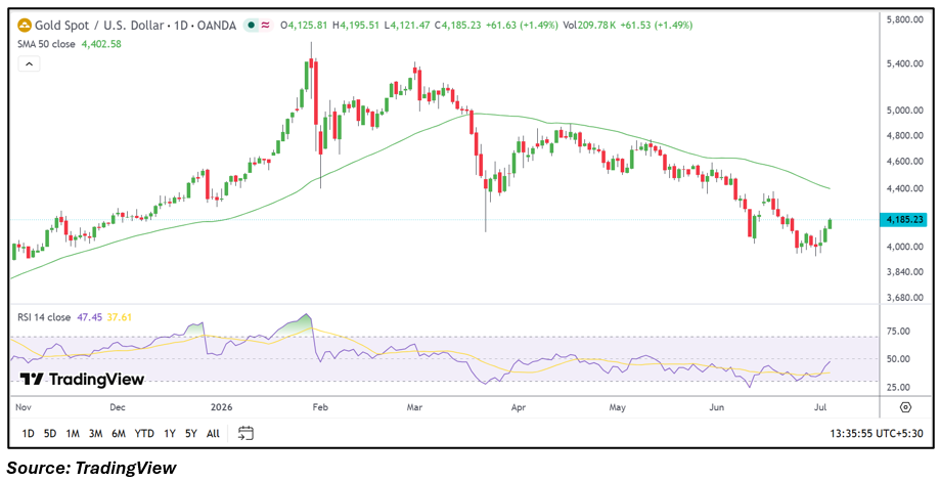
Gold Spot traded near USD 4,185.23 while remaining below its 50-day SMA at USD 4,402.58, indicating that the broader medium-term trend continues to face pressure despite the recent rebound. The 14-day RSI stood at 47.45, moving above its average of 37.61, suggesting improving short-term momentum after recovering from lower levels. Recent price action reflects a rebound following an extended decline, although prices continue to trade below the medium-term moving average, keeping the broader technical structure balanced.
Key Technical Levels
Immediate support is placed near USD 4,080.00, followed by USD 3,980.00. On the upside, the first resistance is seen around USD 4,250.00, while the next resistance is located near USD 4,400.00. A sustained move beyond these levels could influence the next phase of price direction.
Risks to Watch
- Upcoming U.S. inflation data.
- Federal Reserve policy commentary.
- U.S. Dollar Index movement.
- Treasury yield fluctuations.
- Geopolitical developments affecting safe-haven demand.
Summary
Gold prices recovered after softer U.S. employment data reduced expectations for additional Federal Reserve rate hikes, helping the U.S. dollar retreat from recent highs. While the latest rebound has improved short-term sentiment, the precious metal continues to trade below its 50-day moving average, indicating that investors remain focused on upcoming economic data and central bank policy signals for confirmation of the next broader market direction.
FAQs
Q: Why are gold prices rising today?
Gold prices increased after weaker-than-expected U.S. payrolls data reduced expectations of additional Federal Reserve rate hikes and weakened the U.S. dollar.
Q: Why do lower interest rate expectations support gold?
Lower interest rate expectations generally reduce the opportunity cost of holding non-yielding assets such as gold, making the metal relatively more attractive.
Q: What is supporting the recent recovery in gold prices?
A softer U.S. jobs report, a weaker dollar, easing Treasury yields, and improved sentiment across precious metals have contributed to the recent recovery.
Q: What should investors watch next?
Markets will closely monitor upcoming U.S. inflation data, Federal Reserve commentary, Treasury yields, and currency movements for further direction in gold prices.