

Highlights
- WTI crude oil traded near USD 69.18 per barrel.
- Reported attacks in the Strait of Hormuz renewed supply disruption concerns.
- Rising global crude production continued to weigh on the broader outlook.
- Traders monitored Middle East shipping activity and export flows.
- Markets awaited fresh U.S. energy demand and production forecasts.
Fresh Geopolitical Risks Return to Oil Markets
WTI crude oil prices edged higher after renewed geopolitical tensions in the Strait of Hormuz offset concerns surrounding rising global crude supplies. Reports indicated that Iran resumed attacks on commercial vessels transiting the strategic waterway after a week-long pause, raising fresh concerns over the security of one of the world's most important energy shipping routes. According to the reports, two commercial ships were struck by missiles and sustained damage, although no casualties were reported. Market participants also continued to monitor reports of another tanker incident near the Omani coast, where a projectile reportedly triggered a fire aboard a vessel.
Supply Outlook Continues to Limit Gains
Despite the renewed geopolitical concerns, the broader supply outlook remained relatively well supplied. Additional crude production is expected to enter global markets following the latest production increase announced by OPEC+, while recovering exports from Gulf producers continue to improve overall supply availability. These factors have prevented oil prices from posting larger gains even as geopolitical developments keep traders cautious.
Shipping Conditions Stay Under Close Watch
The Strait of Hormuz remains a vital transit route for global energy exports, and any disruption to shipping activity can influence crude oil prices. Although commercial traffic has gradually resumed following earlier regional tensions, shipping volumes remain below historical levels. The latest reported attacks have again shifted attention toward maritime security, with traders assessing whether isolated incidents could delay the normalization of export flows from the Gulf region.
Market Awaits Updated Energy Forecasts
Investors are also awaiting updated short-term energy projections from U.S. authorities for fresh guidance on production, consumption, and inventory trends. The report is expected to provide additional insight into global supply-demand balances, while traders continue monitoring developments in the Middle East and the pace at which higher production reaches international markets.
Technical View
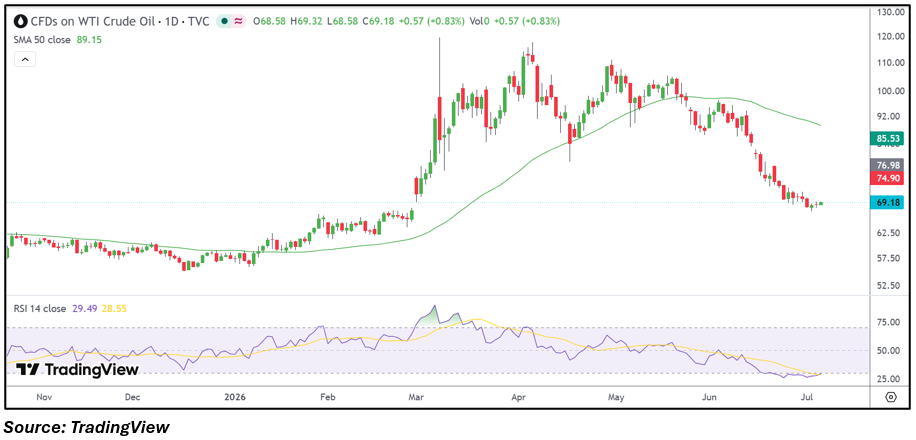
WTI crude oil traded near USD 69.18 after touching an intraday high of USD 69.32. Prices remain below the 50-day Simple Moving Average near USD 89.15, indicating that the broader medium-term trend continues to remain under pressure despite the recent recovery. The 14-day RSI stood around 29.49, suggesting momentum remains in the oversold region, although recent price action points to signs of short-term stabilization.
Key Technical Levels
Immediate support is placed near USD 68.50, followed by USD 67.20. On the upside, immediate resistance is seen around USD 70.50, while a sustained move above this level could bring the USD 72.00 region into focus.
Risks to Watch
- Further geopolitical developments in the Strait of Hormuz.
- Global crude oil production trends.
- Shipping disruptions across key export routes.
- Upcoming U.S. energy supply and demand forecasts.
- Changes in global fuel demand expectations.
Summary
WTI crude oil prices moved modestly higher as renewed security concerns in the Strait of Hormuz balanced expectations of increasing global crude supplies. While additional production and recovering exports continue to weigh on the broader market outlook, fresh geopolitical developments have reintroduced supply disruption risks. Traders are likely to remain focused on shipping conditions, energy market forecasts, and geopolitical developments for further direction.
FAQs
Q: Why are WTI crude oil prices rising today?
WTI crude oil prices gained after reported attacks in the Strait of Hormuz renewed concerns over potential supply disruptions despite expectations of higher global crude production.
Q: Why is the Strait of Hormuz important for oil markets?
The Strait of Hormuz is one of the world's busiest energy shipping routes, carrying a significant share of global crude oil exports.
Q: What is limiting further gains in oil prices?
Higher production from major oil-producing countries and expectations of increasing global crude supplies continue to limit upside momentum.
Q: What are traders watching next?
Market participants are monitoring geopolitical developments, shipping activity through the Strait of Hormuz, and upcoming U.S. energy market forecasts for further price direction.