

Highlights
- Nifty 50 slipped below 23,900 amid broad-based market selling pressure
• Rising crude oil prices triggered concerns over inflation and economic growth
• Brent crude climbed above $105 per barrel following renewed West Asia tensions
• Persistent foreign institutional selling continued to pressure Indian equities
• Domestic institutional buying helped limit deeper market losses
Overview
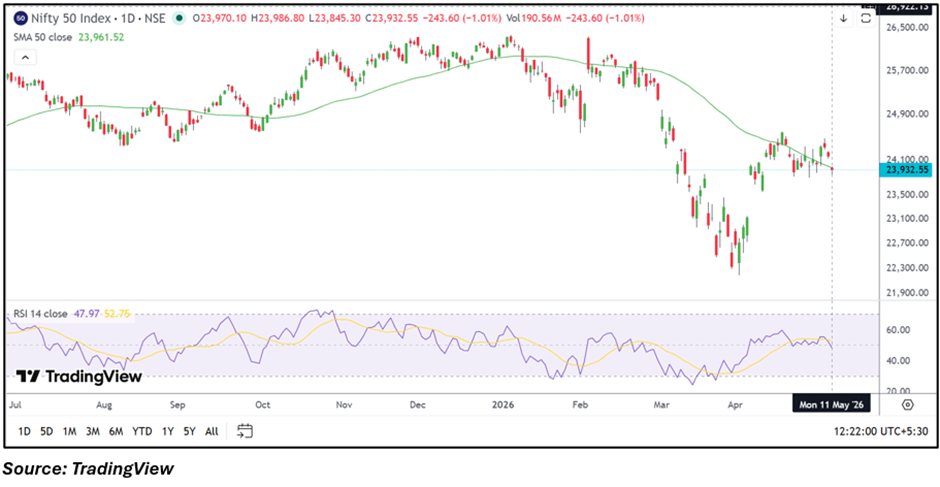
The Nifty 50 Index witnessed a sharp decline on Monday as rising crude oil prices, weak global cues, and sustained foreign institutional investor selling weighed heavily on market sentiment. The benchmark index traded near 23,932.55, down 243.60 points or 1.01%, after briefly slipping below the 23,900 marks during intraday trade.
Broader market weakness intensified after global concerns resurfaced around the ongoing West Asia conflict, especially after hopes for a peace agreement weakened. Rising energy prices triggered fresh worries over inflation risks, higher import costs, and potential pressure on India’s economic outlook.
The market correction was also amplified by continued foreign capital outflows, with overseas investors remaining cautious amid global macro uncertainty and rising bond yields.
What Triggered the Sharp Market Decline?
One of the biggest triggers behind the decline was the sharp rally in crude oil prices. Brent crude surged above $105 per barrel after geopolitical tensions escalated again following the lack of progress in US-Iran negotiations.
Markets remain sensitive to oil supply disruption fears because India is one of the world’s largest crude oil importers. Higher oil prices generally increase inflationary pressure, widen the current account deficit, and raise concerns regarding fiscal stability.
The possibility of prolonged disruptions around the Strait of Hormuz further added to investor caution. Energy markets reacted negatively as traders began reassessing the risk of tighter global oil supplies.
Weak global sentiment also affected Indian equities. Global investors turned defensive amid concerns that rising energy costs could slow economic activity while keeping inflation elevated for longer.
At the same time, persistent foreign institutional investor selling continued adding pressure to domestic markets. FIIs reportedly sold equities worth thousands of crores in recent sessions, extending the broader outflow trend seen throughout 2026.
The cumulative foreign selling this year has already crossed ₹2.00 lakh crore, reflecting continued caution toward emerging market assets amid global uncertainty and higher US bond yields.
Fundamental View
Market participants are increasingly monitoring the impact of rising crude oil prices on inflation, interest rates, and corporate profitability.
Higher energy prices can directly affect sectors such as aviation, paints, logistics, chemicals, and consumer goods due to increased transportation and raw material costs. Banking and rate-sensitive sectors may also remain volatile if inflation risks delay future monetary easing expectations.
Despite heavy foreign selling, domestic institutional investors continued supporting the market through consistent buying activity. Strong domestic participation has helped Indian equities avoid deeper corrections even during phases of elevated global volatility.
However, investor sentiment remains cautious as geopolitical developments, crude oil trends, and global monetary conditions continue influencing near-term market direction.
Technical View
The Nifty 50 Index is trading near 23,932.55 and is hovering close to its 50-day SMA around 23,961.52, indicating a weakening near-term structure after the recent recovery attempt.
Price action reflects renewed selling pressure after the index struggled to sustain momentum above the 24,100 zone. The broader structure remains volatile as markets react to geopolitical headlines and foreign outflows.
The 14-day RSI is positioned near 47.97, reflecting weakening momentum and a mildly cautious setup. RSI remains below the neutral 50 level, indicating reduced short-term strength.
Immediate support is placed around 23,500–22,800. A sustained hold above this range may help stabilize the current structure.
On the upside, resistance is seen near 24,500–24,800. A recovery above this region may improve sentiment and support renewed upward momentum.
Latest Market Developments
- Nifty 50 slipped below 23,900 during intraday trade
• Brent crude surged above $105 per barrel amid geopolitical tensions
• Foreign institutional investors continued aggressive selling activity
• Domestic institutional investors remained net buyers in the market
• Global risk sentiment weakened after stalled peace negotiations
• Inflation concerns resurfaced due to rising energy prices
Key Risks
- Sustained crude oil rally may pressure inflation and economic growth
• Continued foreign capital outflows could increase market volatility
• Escalating geopolitical tensions may weaken global investor sentiment
• Higher bond yields may reduce risk appetite for equities
Summary
The Nifty 50 came under pressure as rising crude oil prices, geopolitical uncertainty, and continued foreign investor selling triggered broad-based market weakness. Concerns over inflation, energy supply disruptions, and slowing global growth sentiment contributed to the decline below 23,900.
Although domestic institutional support has helped cushion the correction, near-term market direction may remain sensitive to crude oil trends, global policy developments, and foreign investment flows. Investors are likely to closely monitor geopolitical headlines and inflation indicators over the coming sessions.
FAQs
Why did Nifty 50 fall below 23,900?
The decline was driven by rising crude oil prices, weak global sentiment, geopolitical tensions, and continued foreign institutional investor selling.
How do rising crude oil prices affect Indian markets?
Higher crude oil prices can increase inflation, raise import costs, pressure corporate margins, and negatively impact economic growth expectations.
What are the important technical levels for Nifty 50?
Immediate support is placed around 23,500–22,800, while resistance is seen near 24,500–24,800.