

Highlights
- Gold prices have retreated sharply from recent highs amid changing market expectations.
- Rising interest rate expectations and a stronger US dollar have weighed on bullion demand.
- Silver has also declined as investors reassess both safe-haven and industrial demand prospects.
After a prolonged rally that pushed bullion prices to record levels earlier this year, gold and silver have come under selling pressure. Gold prices recently slipped below INR 1.50 lakh per 10 grams in the domestic market, while silver also recorded notable declines.
The correction reflects a combination of global economic developments, changing monetary policy expectations, and reduced demand for traditional safe-haven assets. Recent market movements suggest investors are reassessing the factors that previously supported precious metal prices.
Interest Rate Expectations Return To Centre Stage
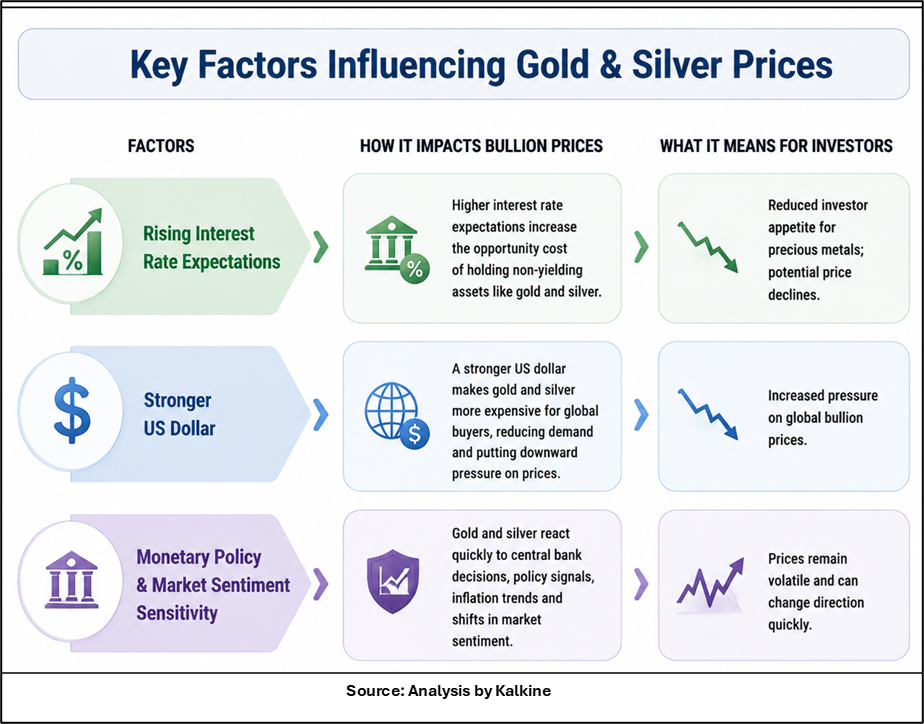
One of the biggest factors affecting precious metals is the outlook for interest rates in the United States. Market participants have increased expectations that the US Federal Reserve could maintain a restrictive policy stance for longer than previously anticipated.
Gold does not generate interest income, making it less attractive when bond yields and cash returns rise. As investors shift funds toward interest-bearing assets, demand for bullion can weaken. Recent comments and market expectations surrounding future US monetary policy have contributed to downward pressure on gold and silver prices.
Stronger Dollar Adds Pressure
A stronger US dollar has also affected bullion markets. Since gold is priced globally in dollars, an appreciating US currency increases the metal's cost for buyers using other currencies.
This often reduces international demand and can contribute to lower prices. Recent gains in the dollar have coincided with weakness across several precious metals, reinforcing the downward trend in bullion markets.
Easing Safe-Haven Demand
Gold typically attracts investors during periods of geopolitical uncertainty and financial market stress. However, signs of reduced geopolitical tensions in some regions have lowered immediate safe-haven demand.
As investors become more comfortable allocating capital to equities and other risk assets, demand for defensive investments such as gold can decline. This shift in sentiment has been another factor contributing to recent price weakness.
Silver Faces Additional Challenges
Silver often moves alongside gold, but it is also influenced by industrial demand because of its widespread use in manufacturing, electronics, and renewable energy technologies.
As a result, silver can experience larger price swings than gold during periods of changing economic expectations. Recent declines suggest investors are balancing concerns about economic growth alongside shifting monetary policy expectations.
What The Correction Means For Buyers
The recent decline has brought domestic gold prices closer to levels seen before some earlier policy changes and market rallies. Lower prices may encourage jewellery purchases and physical demand, particularly in markets such as India where gold remains an important savings and investment asset.
However, analysts note that future price direction will continue to depend on interest rate expectations, inflation data, currency movements, and geopolitical developments.
Key Risks
- Further US rate hikes may reduce bullion's investment appeal.
- Dollar strength could continue to pressure global gold demand.
- Weak investor sentiment may trigger additional profit booking.
- Economic uncertainty could increase volatility in precious metal prices.
Summary
Gold and silver prices have retreated from recent highs as markets respond to stronger US dollar levels, rising interest rate expectations, and easing demand for safe-haven assets. While lower prices may support physical buying demand, future movements will likely depend on inflation trends, central bank policy decisions, and global economic conditions. Precious metals remain sensitive to shifts in both investor sentiment and macroeconomic developments.
FAQs
Q: Why do higher interest rates affect gold prices?
A: Higher interest rates increase returns on competing assets, reducing the relative appeal of non-yielding gold.
Q: How does a stronger US dollar influence gold prices?
A: A stronger dollar makes gold more expensive for overseas buyers, potentially reducing global demand.
Q: Why is silver often more volatile than gold?
A: Silver is influenced by both investment demand and industrial usage, creating larger price fluctuations.