

Highlights
- Gold prices slipped below Rs 1.50 lakh per 10 grams after profit booking.
- Experts suggest staggered buying instead of aggressive fresh investments.
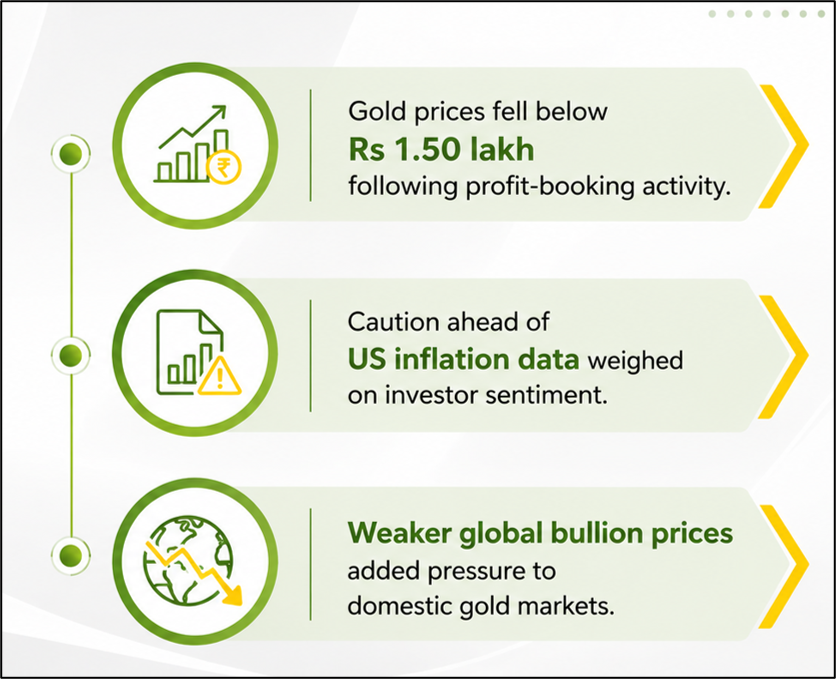
Gold prices experienced a notable correction on June 10, falling below the Rs 1.50 lakh per 10 grams mark in domestic markets. The decline followed profit-booking activity and cautious sentiment ahead of key US inflation data, which could influence future interest-rate expectations. Gold on MCX traded around Rs 1,47,489 per 10 grams, marking a significant drop from recent record highs.
The latest decline comes after a strong rally that pushed prices to around Rs 1,64,500 per 10 grams in May following changes in import duty policies. The correction has erased a portion of those gains as investors reassess global economic conditions and commodity market trends.
Source: Analysis by Kalkine
What Triggered the Fall?
Several factors contributed to the recent decline in gold prices.
Profit booking by traders emerged after the rapid surge witnessed in previous weeks. Additionally, investors turned cautious ahead of crucial US inflation data, which could shape expectations regarding interest rates and monetary policy. Higher inflation could potentially delay interest-rate cuts, reducing the appeal of non-yielding assets such as gold.
Global bullion prices also weakened during the period, reflecting broader market uncertainty and changing investor sentiment. International spot gold traded lower, adding pressure to domestic prices.
Should Investors Buy the Dip?
The recent correction has prompted many investors to reconsider their strategy. Gradual buying allows investors to average purchase costs and manage volatility more effectively. However, experts also caution that additional weakness cannot be ruled out if global economic data or interest-rate expectations continue to weigh on bullion prices.
Investors with a long-term perspective may choose to maintain exposure while avoiding aggressive short-term positioning.
Hold or Sell: What Makes Sense?
For existing investors, the decision often depends on investment objectives and time horizons.
Those holding gold as a portfolio diversifier or inflation hedge may prefer to stay invested, particularly if their allocation remains aligned with long-term financial goals. Gold continues to play a role as a safe-haven asset during periods of economic uncertainty and market volatility.
On the other hand, investors seeking short-term gains may remain cautious until clearer signals emerge regarding global interest rates, inflation trends, and commodity market sentiment.
Factors That Could Drive Future Prices
Several developments could influence gold prices in the coming weeks.
Market participants are watching US inflation readings, central bank policy decisions, currency movements, geopolitical developments, and overall risk sentiment. Changes in any of these factors can significantly affect demand for precious metals.
Domestic factors, including import duties and rupee movements, may also continue to impact local bullion prices.
Outlook Remains Dependent on Global Cues
Gold remains one of the most closely tracked asset classes despite recent volatility. While the correction has reduced prices from their recent highs, investor interest in the metal continues because of its traditional role as a store of value.
Future price direction is likely to depend on global economic data, inflation trends, and monetary policy developments. Until greater clarity emerges, investors may continue to adopt a measured approach toward fresh allocations.
Key Risks
- Further profit booking may pressure gold prices.
- Stronger US dollar can reduce bullion demand.
- Delayed rate cuts may affect investor sentiment.
- Global economic uncertainty can increase volatility.
Summary
Gold prices slipped below Rs 1.50 lakh per 10 grams after a sharp correction from recent highs. Profit booking, weaker global bullion prices, and caution ahead of US inflation data contributed to the decline. While some experts favour staggered buying, investors are advised to evaluate their goals, risk tolerance, and market conditions before making investment decisions.